College Kids, No Coaches, and a Gold Medal: The 1896 Athens Games Changed American Sport Forever
College Kids, No Coaches, and a Gold Medal: The 1896 Athens Games Changed American Sport Forever
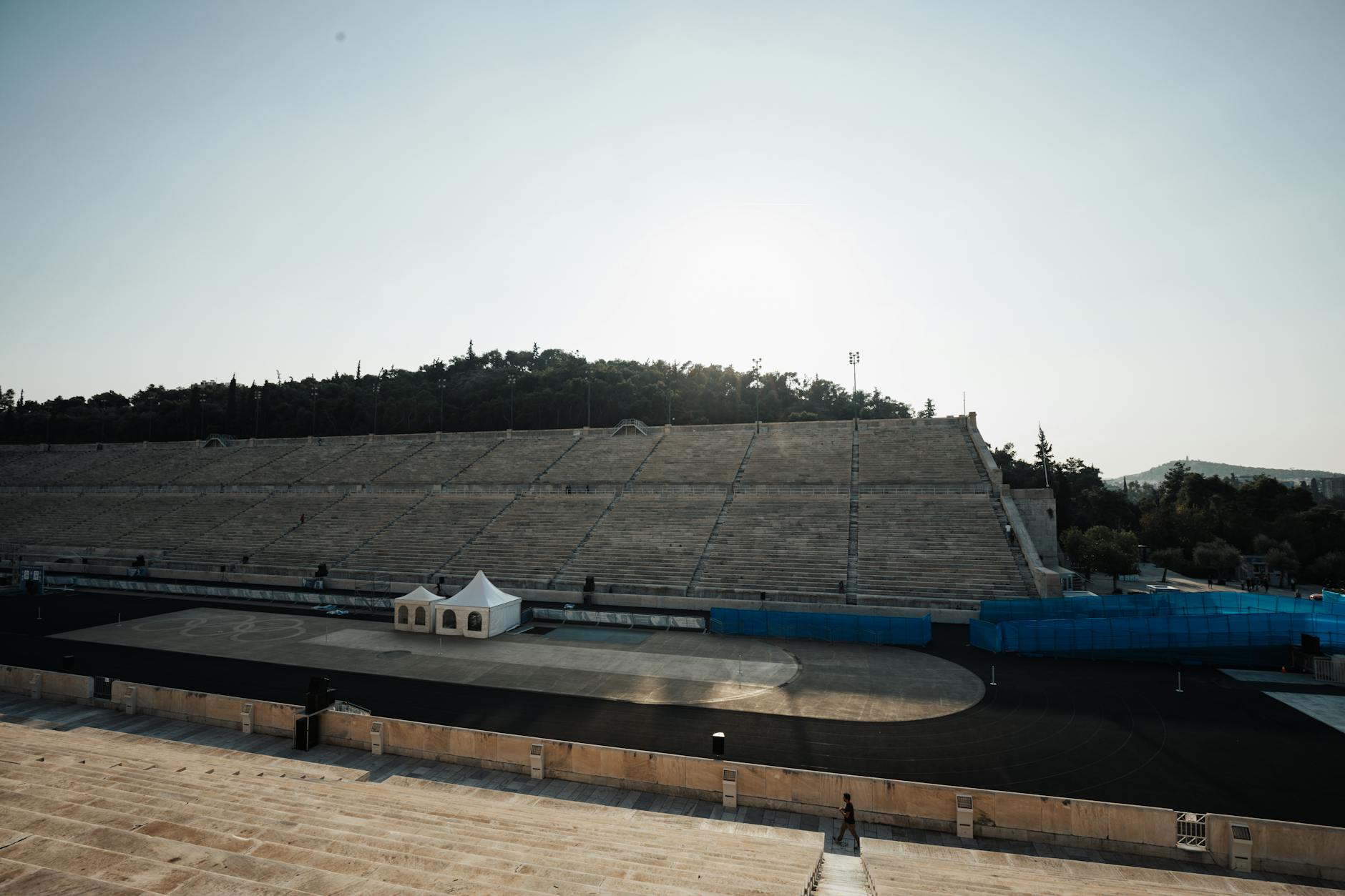
There's a version of American sports history that begins with Babe Ruth, or Jesse Owens, or Muhammad Ali — moments so large they've been replayed and mythologized for generations. But if you want to find the true origin point of the United States as a global sporting superpower, you need to go back further. All the way to Athens, Greece, in April of 1896, when a small group of American athletes showed up to the first modern Olympic Games with almost no preparation, no national support structure, and absolutely no idea they were about to change the country's relationship with international competition forever.
This is the sports story most Americans have never heard. And it might be the most important one.
The World Tries Something New
The modern Olympics were the brainchild of a French aristocrat named Pierre de Coubertin, who believed that reviving the ancient Greek games would promote international understanding and physical culture. After years of lobbying, the first modern Games were scheduled for Athens in April 1896 — a symbolic choice, returning the Olympics to their homeland.
Fourteen nations sent athletes. The US contingent numbered around 14 competitors, most of them students from Boston-area universities, primarily Princeton and Harvard, with a few from the Boston Athletic Association thrown in. There was no official US Olympic Committee. No federal funding. No coaching staff. Several athletes didn't even know for certain they were going until weeks before departure.
They crossed the Atlantic on a cattle ship.
The Americans Who Showed Up Anyway
Let's talk about who these guys actually were, because the roster reads like a roll call of accidental legends.
James Connolly was a Harvard student who took an unofficial leave of absence — the university reportedly denied his formal request — to make the trip. He became the first Olympic champion of the modern era when he won the triple jump on April 6, 1896. He didn't even use the technique that's standard today; he performed a hop-hop-jump rather than the modern hop-step-jump. Didn't matter. He still won.
Thomas Burke, a Boston sprinter, won both the 100 meters and the 400 meters. His starting position — crouched low, weight forward — was so unusual by European standards that other competitors reportedly laughed at him on the starting line. Burke had the last laugh, crossing the tape first in both events.
Robert Garrett, a Princeton student, had never thrown a discus in competition before arriving in Athens. He'd practiced with a homemade version back in New Jersey, but it was much heavier than the regulation implement. When he discovered the actual discus was lighter, he entered on a whim and won the event, beating the Greek athletes who had been training specifically for it.
Ellery Clark won both the long jump and the high jump. John Tyler and Sumner Paine took gold and silver in the military revolver shooting event. The Americans, in total, won nine of the twelve track and field events — the core of the Olympic program.
For a team that traveled to Athens on a cattle ship with no coaching staff and, in some cases, no idea what events they'd enter, this was not a modest result. It was a statement.
Why It Mattered More Than Anyone Realized
Here's the thing about 1896: nobody in America was really paying attention. The Games received limited press coverage back home. There was no television, obviously, and the telegraph dispatches that made it back to US newspapers were brief and buried. Most Americans had no idea their countrymen had just dominated the first modern Olympics.
But the athletes knew. And so did the small community of college athletic programs and sports clubs that had sent them.
What happened in Athens confirmed something that American sports culture had been quietly developing for years: a competitive instinct, rooted in university athletics and shaped by a relatively young nation's hunger to prove itself on the world stage. American colleges had been investing in track and field, fostering a culture of organized, coached, competitive athletics that much of Europe hadn't yet developed at the same scale. In Athens, that investment paid off in gold.
The 1896 Games gave American sport a mirror to look into. And what it saw was a winner.
The Foundation of a Dynasty
The United States would go on to dominate Olympic track and field for the better part of the 20th century. At the 1900 Paris Games, American athletes again swept the sprints and field events. By the time the Olympics reached St. Louis in 1904 — on American soil — the US had fully institutionalized Olympic competition as part of its national athletic identity.
That identity deepened through the decades. Jesse Owens in Berlin in 1936. Bob Beamon's impossible long jump in Mexico City in 1968. Carl Lewis across four Olympics. The US Olympic Committee, formally organized in 1896 in direct response to the Athens Games, grew into one of the most powerful national sports bodies in the world.
None of that happens without the foundation laid by a handful of college kids who got on a boat.
The Record That Started Everything
At Race The Record, we're obsessed with the gap between where athletic performance began and where it stands today. But performance doesn't happen in a vacuum. It happens inside systems — systems of training, funding, culture, and competition that either support athletes or don't.
The 1896 Athens Games were the moment the United States decided, more or less by accident, that it wanted to be a part of the global athletic conversation. The results were immediate and lasting. James Connolly's triple jump, Thomas Burke's crouch start, Robert Garrett's borrowed discus — these weren't just individual victories. They were the opening moves of a sporting superpower finding its footing.
Next time you watch an American athlete stand on an Olympic podium, remember that the tradition stretches back to a cattle ship crossing the Atlantic in 1896, carrying a group of young men who had no idea they were about to make history.
They raced. They won. And nothing in American sport was ever quite the same.