The Race That Breaks You: A Century of Suffering Around the 400-Meter Track
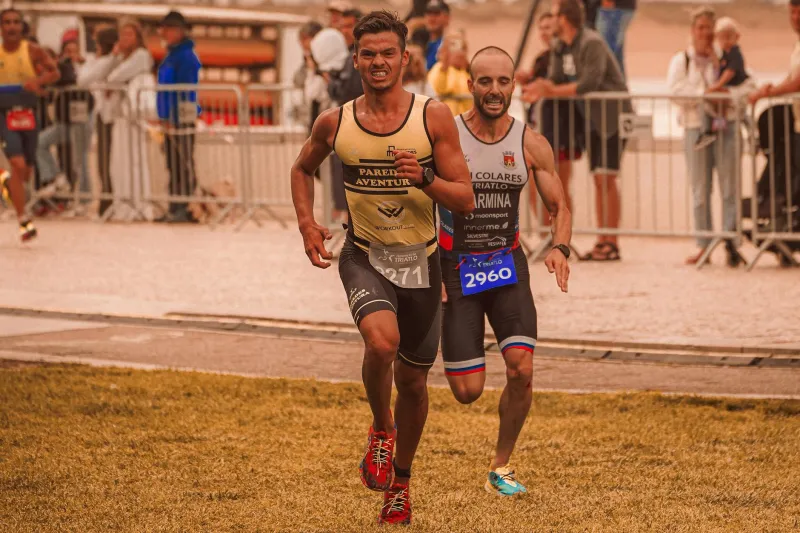
The Race That Breaks You: A Century of Suffering Around the 400-Meter Track
There's a moment in every 400-meter race, somewhere around the 250-meter mark, when the body sends an urgent and very clear message to the brain: this was a terrible idea, and we need to stop immediately.
The legs start to feel like wet cement. The lungs, which seemed adequate at the start, suddenly feel about the size of walnuts. Lactic acid floods the muscles. The finish line, still 150 meters away, looks like it's located in a different time zone. And yet the athletes keep going — not because the pain stops, but because they've trained themselves to run straight through it.
The 400 meters is unlike anything else in sports. It's too long to be a pure sprint and too short to allow any pacing strategy that resembles comfort. It demands the explosive power of a sprinter and the pain tolerance of a middle-distance runner, and it offers neither the adrenaline rush of the 100 nor the meditative rhythm of the mile. It just hurts, from start to finish, and the only question is how much you're willing to hurt.
The Early Days: Running on Instinct and Ignorance
When the 400 meters — run as a one-lap sprint over 440 yards, or a quarter mile — appeared at the 1896 Athens Olympics, athletes had almost no scientific understanding of how to pace it. The dominant strategy was essentially: go as fast as you can and hope for the best.
Thomas Burke, an American from Boston University, won the 100 meters in Athens. The 400 was taken by another American, Thomas Curtis — though the event was run on a straight course rather than a track, which added its own complications. Early winners were often simply the runners who collapsed last.
For the first several decades of the modern Olympics, the 400 was approached like a very long sprint. Athletes would blast off the line, hold on through the back straight, and frequently stagger across the finish line in various states of physical distress. Collapsing after the race wasn't unusual. It was almost expected.
Winning times in the early 1900s hovered around 49 to 50 seconds. That sounds slow by modern standards, but consider that these men were running on cinder tracks, wearing leather shoes, and operating on training philosophies that consisted largely of "run a lot and eat well."
The Science Catches Up
The real transformation in 400-meter running came gradually through the mid-20th century, as coaches and physiologists started to understand what was actually happening inside an athlete's body during that one brutal lap.
The 400 is primarily an anaerobic event — meaning the body can't supply oxygen fast enough to meet the energy demand, so it starts burning through reserves in a way that produces lactic acid as a byproduct. That lactic acid accumulation is what causes the burning sensation in the muscles and the dramatic slowdown in the final 100 meters that every 400-meter runner knows intimately.
Once coaches understood this, training shifted. Instead of just running lots of quarter miles, elite 400-meter athletes began incorporating specific lactate threshold work, speed endurance sessions, and carefully structured recovery protocols. The race didn't get less painful. But athletes got better at predicting exactly how much pain was coming and preparing their bodies to absorb it.
American Dominance and Landmark Moments
The United States built a remarkable tradition in the 400 meters, particularly through the middle decades of the 20th century. Archie Williams won gold at the 1936 Berlin Olympics — the same Games where Jesse Owens delivered his legendary performance — running 46.5 seconds and doing so in the face of Adolf Hitler's showcase of Aryan supremacy. The symbolism was not lost on anyone.
Lee Evans, running at the 1968 Mexico City Olympics, set a world record of 43.86 seconds that would stand for 20 years. Evans ran in black socks on the podium in solidarity with Tommie Smith and John Carlos, who had raised their fists during the 200-meter medal ceremony days earlier. His record was staggering — a full second and a half faster than what athletes had been running a generation before.
Michael Johnson rewrote the record books again at the 1996 Atlanta Olympics, winning gold in both the 200 and 400 meters — a double that many experts had called physically impossible. His 400-meter time of 43.49 seconds, set at the 1999 World Championships, stood as the world record until 2016, when Wayde van Niekerk of South Africa ran 43.03 in Rio.
Johnson's dominance came from an unusual combination: his choppy, upright running style looked nothing like conventional sprinting form, and yet it was devastatingly efficient. He ran the back half of his races faster than almost anyone in history, which is the opposite of what most 400-meter runners do. He didn't just survive the dying phase of the race — he accelerated through it.
What Makes It So Different
Ask any track coach to name the most physically demanding event in their program and the 400 meters will come up every time. The physiology is brutal in a very specific way. A 100-meter sprinter is in oxygen debt for about 10 seconds. A miler can find a rhythm and settle in. The 400-meter runner operates in a kind of no-man's land — too fast to recover, too long to ignore the accumulating damage.
Modern athletes train for the 400 with a level of specificity that would have seemed bizarre to early Olympians. GPS tracking on the track. Heart rate variability monitoring during recovery. Nutrition timing calibrated to the hour. Video analysis of stride mechanics at the 300-meter mark, when form starts to break down. Every controllable variable is controlled.
And yet, for all that science, the race still comes down to the same fundamental question it always has: how much can you stand?
The Race That Refuses to Be Mastered
One hundred years of evolution, and the 400 meters still humbles the athletes who try to tame it. The winning times have dropped by nearly seven seconds since 1896. Training has gone from folk wisdom to biomechanical precision. The tracks are faster, the shoes are engineered, and the athletes are bigger, stronger, and more scientifically prepared than any generation before them.
But that moment at 250 meters — when the body screams and the legs go heavy and the finish line seems impossibly far away — that hasn't changed. It never will. The 400 meters is the race that has always tested not just what the body can do, but what the mind is willing to endure. And after a century of trying, nobody has found a way around that.