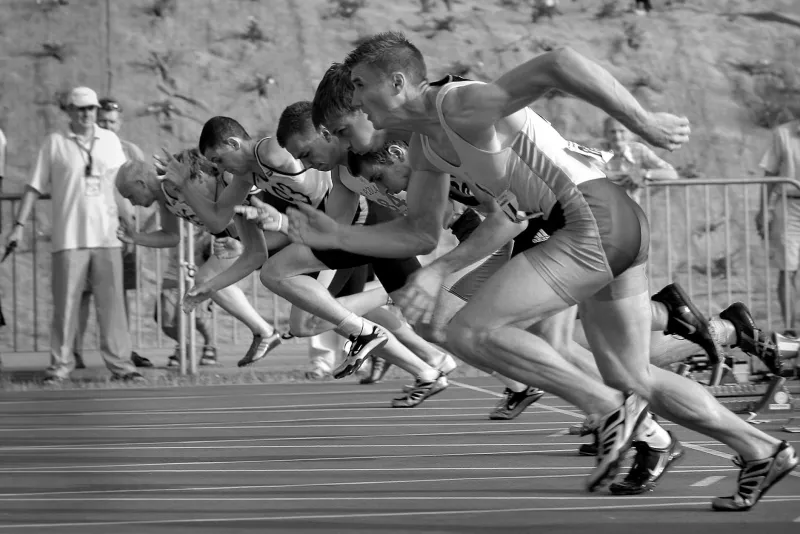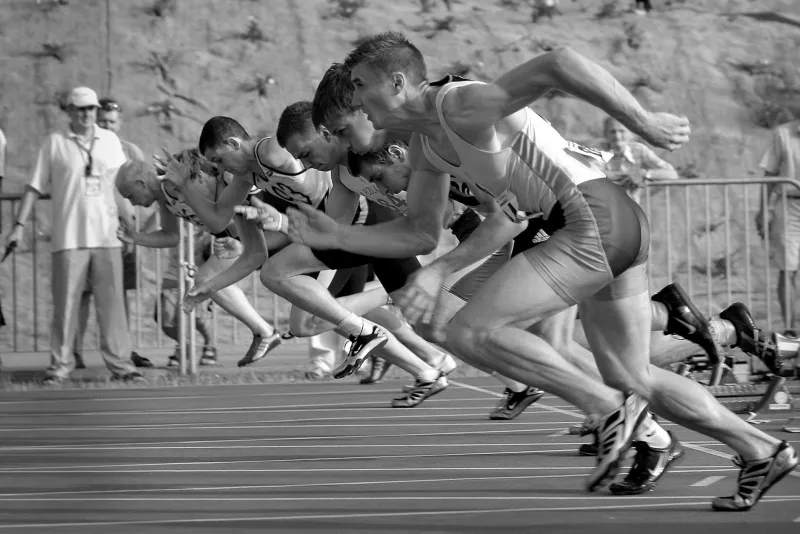
The Accidental Athletic Superpower
When the first modern Olympics opened in Athens in 1896, the United States wasn't supposed to be a track and field power. The sport belonged to the Greeks, who invented it, and the British, who had spent decades codifying its rules and techniques. America was a young, rough nation better known for baseball and frontier life than Olympic glory.
Then something unexpected happened: American college students started showing up and winning everything.
The U.S. team won 9 of 12 track and field events in those first modern Olympics, shocking European observers who expected the Americans to be amateur curiosities at best. That surprise victory launched more than a century of American track dominance—a reign built not on government programs or professional training, but on the uniquely American invention of college athletics.
The College Sports Laboratory
While European athletes trained in private clubs or military programs, America was conducting a massive experiment in athletic development through its university system. By the 1880s, colleges across the United States were staging elaborate track meets that drew thousands of spectators and generated serious money.
This wasn't just recreational athletics—it was big business disguised as education. Harvard-Yale track meets drew crowds that rivaled professional baseball games. The University of Pennsylvania's annual relay carnival became a national sporting event. American colleges were accidentally creating the world's most effective athletic development system.
The secret was scale and competition. While a British athletic club might have a dozen serious sprinters, American college athletics was producing hundreds of competitive runners across dozens of schools, all training year-round and competing frequently. The sheer volume of participation created a depth of talent that no other country could match.
The Immigrant Advantage
America's track success also reflected the nation's unique demographics. While European countries drew their athletes from relatively homogeneous populations, the United States was a genetic melting pot that combined athletic traditions from around the world.
Irish-American distance runners brought endurance traditions from the old country. German immigrants contributed strength and technical precision to field events. African Americans, despite facing systematic discrimination, began producing world-class sprinters and jumpers who would eventually dominate their events.
This diversity created a competitive ecosystem where different athletic traditions merged and evolved. American track wasn't just copying European techniques—it was creating new ones through the collision of different approaches to training and competition.
The Cold War Rocket Fuel
If college athletics was the foundation of American track dominance, the Cold War was the rocket fuel that launched it into the stratosphere. When the Soviet Union entered the Olympics in 1952 with a state-sponsored athletic program, track and field became a proxy battlefield for competing political systems.
Sudenly, American Olympic success wasn't just about sports—it was about proving the superiority of democratic capitalism over communist authoritarianism. The U.S. government, universities, and private sponsors poured resources into track development with an intensity that transformed the sport.
The results were immediate and dramatic. American athletes didn't just win—they obliterated world records with a frequency that shocked international observers. Between 1950 and 1980, Americans set or broke the majority of world records in track and field, often by margins that seemed to defy human limitations.
The Jesse Owens Effect
No discussion of American track dominance is complete without acknowledging Jesse Owens' performance at the 1936 Berlin Olympics. His four gold medals in Hitler's Germany didn't just embarrass Nazi racial theories—they announced America's arrival as the world's premier track and field nation.
Owens' success had ripple effects that lasted generations. He proved that American athletes could dominate on the world's biggest stage, inspiring countless young Americans to take up track and field. His victories also demonstrated the power of American college athletics—Owens was a product of Ohio State University, not a government training program.
The psychological impact was enormous. American athletes began approaching international competition with a confidence that their European competitors couldn't match. They expected to win, and that expectation became self-fulfilling prophecy.
The Professional Revolution
By the 1980s, American track dominance was so complete that the sport began changing its rules to accommodate American success. The introduction of professional athletics, prize money, and appearance fees was largely driven by American athletes who were already earning significant income through endorsements and appearance fees.
This professionalization played to American strengths. The U.S. had the world's most developed sports marketing infrastructure, the deepest pool of corporate sponsors, and a culture that celebrated athletic achievement. American track athletes became global celebrities in a way that was impossible in other countries.
The System That Built Champions
What made American track dominance so enduring was its systematic nature. Unlike countries that relied on identifying and developing a few elite athletes, the United States created a pipeline that produced hundreds of world-class performers across all events.
High school track programs fed into college teams, which developed athletes for post-collegiate competition. Corporate sponsorships supported athletes after graduation. Training centers provided year-round facilities. The entire system was designed to maximize the number of Americans competing at the highest levels.
This wasn't central planning—it was organized chaos that happened to produce incredible results. No government agency designed the American track system; it evolved organically from the interaction of educational institutions, corporate interests, and athletic ambition.
The Modern Challenge
Today, American track and field faces new challenges as other countries have copied and improved upon the American model. Kenya and Ethiopia dominate distance running through high-altitude training and cultural traditions. Jamaica has produced a generation of sprinters that rivals anything in American history. European countries have invested heavily in technical events like pole vault and javelin.
But the foundation of American track success remains strong. College athletics continues to develop more elite track athletes than any other system in the world. American training methods and sports science lead global innovation. The cultural expectation of success creates a psychological advantage that's hard to quantify but impossible to ignore.
The Accidental Legacy
The story of American track and field dominance is ultimately the story of unintended consequences. College athletics was created to provide recreational opportunities for students, not to build Olympic champions. The American melting pot was about immigration and opportunity, not athletic diversity. The Cold War was about geopolitics, not sports.
But these separate forces combined to create the world's most successful track and field program—one that continues to shape how Americans think about Olympic competition and athletic achievement. From those surprising victories in 1896 Athens to the latest American sprint relays, track and field became the sport where America proved it could compete with anyone in the world.
That legacy continues every four years when American athletes step onto the Olympic track, carrying the expectations of a nation that accidentally built the world's greatest athletic development system—and never quite realized what it had accomplished.