When Every Second Started to Count
Picture this: It's 1885, and two runners cross the finish line at a track meet in Boston. The crowd erupts in argument. Who won? The judge thinks it was the guy in red, but half the spectators swear the blue uniform broke the tape first. Arguments turn heated. Bets go unpaid. Nobody really knows what just happened.
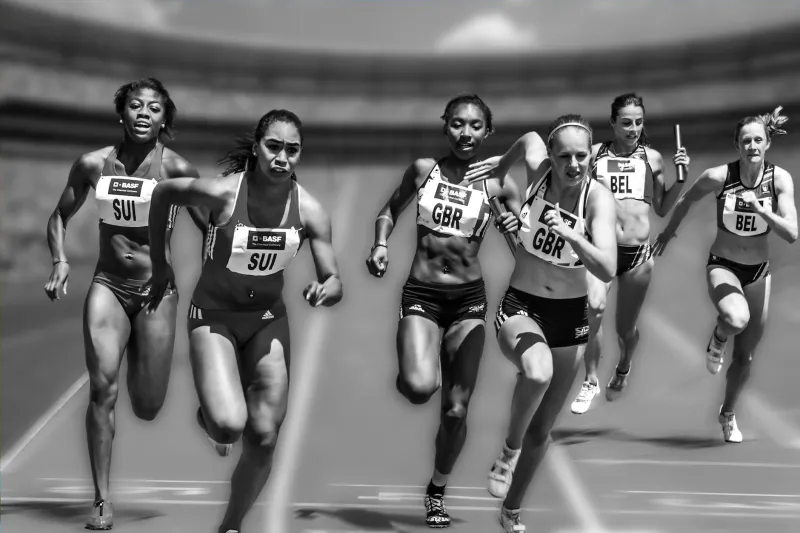
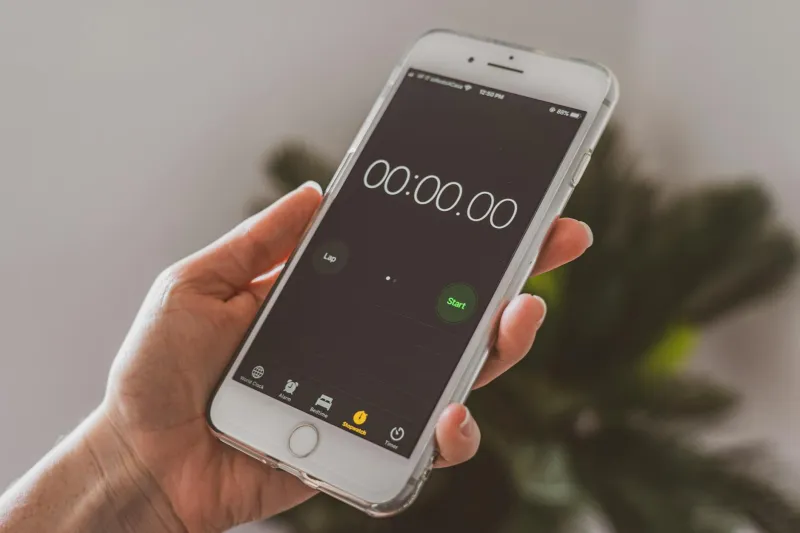
Fast-forward to today, where Olympic races are decided by thousandths of a second, where world records fall by margins so small they're invisible to the naked eye, and where entire careers hinge on improvements measured in decimal points. The difference between these two worlds? A simple mechanical device that most people take for granted: the stopwatch.
The Machine That Changed Everything
The mechanical stopwatch wasn't invented for sports. Swiss and American clockmakers developed precision timing devices in the mid-1800s for industrial purposes—timing factory processes, coordinating railroad schedules, measuring scientific experiments. But when these devices made their way into American athletic competitions in the 1880s and 1890s, they didn't just change how we measured performance. They fundamentally rewired how Americans thought about human potential.
Before the stopwatch, athletic competition was about beating the other guy. After? It became about beating time itself.
Consider the psychological shift this created. When runners in the 1870s lined up for a mile race, they focused on tactics, positioning, and outrunning their opponents. But once precise timing became standard, athletes suddenly had a new opponent that never got tired, never had an off day, and never stopped getting faster: the clock.
The Birth of the Record Obsession
American track and field embraced timing technology faster and more completely than anywhere else in the world. By the 1890s, every major athletic club in cities like New York, Chicago, and San Francisco owned multiple stopwatches. Meet officials began recording times to the tenth of a second, then the hundredth.
This precision created something unprecedented in human history: the concept of the measurable athletic record.
Suddenly, a runner's performance on a Tuesday afternoon in Philadelphia could be directly compared to someone racing on a Saturday in California. Times became currency. Athletes started training not just to win races, but to hit specific time targets. Coaches began analyzing splits, calculating paces, and developing training methods based on mathematical precision rather than feel.
The 1896 Olympics marked a turning point. When American athletes returned from Athens with detailed time records, newspapers across the country began printing performance charts, comparing American times to international standards. The Boston Globe ran headlines like "Harvard Man Three Seconds Faster Than Olympic Champion." Sports journalism had found its new language: numbers.
The Fraction of a Second Culture
By the early 1900s, American sports culture had developed an almost religious obsession with incremental improvement. High school athletes knew their personal bests to the hundredth of a second. College coaches recruited based on time standards. Professional promoters sold tickets by promising new records.
This wasn't happening in isolation. America's industrial boom created a society fascinated with efficiency, measurement, and optimization. The same mindset that drove assembly line innovation and scientific management also drove athletic performance analysis. The stopwatch became a symbol of American values: precision, progress, and the belief that everything could be measured and improved.
Consider the cultural impact: Before timing technology, athletic heroes were warriors and gladiators—people who conquered opponents through strength and cunning. After? They became scientists and engineers, systematically breaking down barriers that seemed absolute.
When Technology Outpaced Human Perception
The really wild part? American sports embraced precision timing decades before the technology existed to actually see what was being measured.
Photo finish cameras didn't become standard until the 1940s. Electronic timing didn't arrive until the 1960s. For more than half a century, American athletics was obsessed with measurements that depended entirely on human reflexes and judgment. Officials with stopwatches were determining records and championships based on their ability to start and stop a mechanical device at precisely the right moment.
Yet this imperfect system created the foundation for everything that followed. When electronic timing finally arrived, it didn't change American sports culture—it just made it more accurate.
The Legacy of the Tick
Today, timing technology has evolved beyond anything those 1880s clockmakers could have imagined. We have laser sensors, GPS tracking, and computer analysis that can measure not just when an athlete crosses a line, but how they got there. Every step, every split, every fraction of improvement gets recorded, analyzed, and compared.
But the fundamental shift happened more than a century ago, when Americans first decided that athletic greatness could be measured in ticks of a mechanical clock. That decision created the modern sports obsession with records, personal bests, and the endless pursuit of measurable improvement.
The next time you check your running app or watch a photo finish at the Olympics, remember: You're witnessing the legacy of a simple mechanical device that transformed American athletics from a contest between people into a war against time itself. And in that war, every fraction of a second is a battlefield.