When Wine Was a Performance Enhancer
Long before USADA was testing American athletes' urine samples, ancient Greek Olympians were experimenting with performance enhancers that would make modern supplement stores look tame. Picture this: it's 400 BC, and you're watching the greatest athletes in the Mediterranean world prepare for competition by consuming bull testicles, deer liver, and lion heart—all washed down with wine mixed with mysterious herbs.
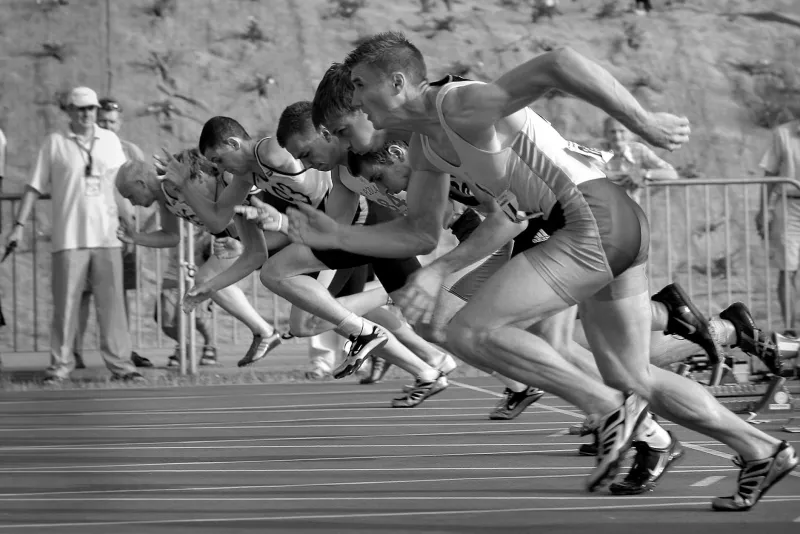
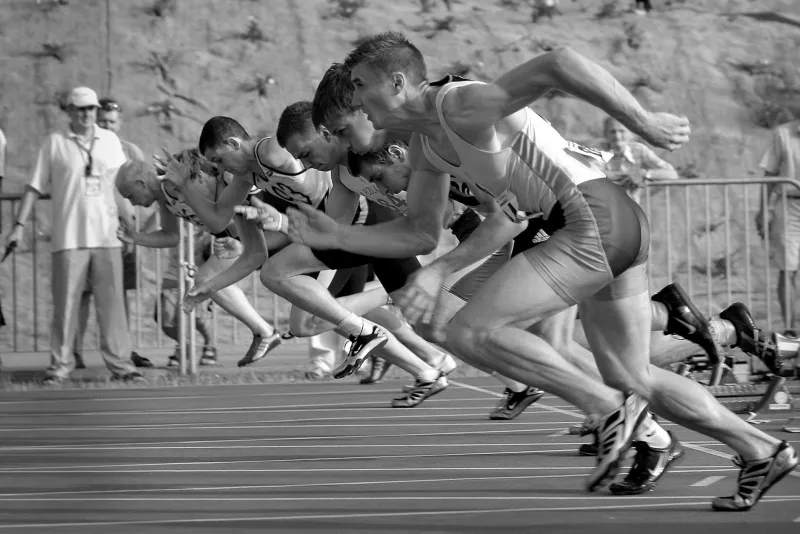
Welcome to the world's first doping scandal, where the line between nutrition and cheating was as blurry as a sprinter's finish-line photo.
The ancient Olympics weren't just about pure athletic talent. From the moment the games began in 776 BC, competitors were searching for that extra edge. What they found was a bizarre menu of animal organs, herbal concoctions, and alcoholic mixtures that make today's protein powders look downright boring.
The Original Supplement Stack
Ancient Greek athletes didn't have access to creatine or testosterone injections, but they had something else: a complete faith in sympathetic magic. The logic was simple—eat the heart of a lion, gain its courage. Consume the testicles of a bull, absorb its strength. It was the world's first attempt at sports science, even if the science was completely wrong.
Take Charmis of Sparta, who won the 200-meter sprint (the stadion) in 668 BC. His secret weapon? A diet consisting entirely of dried figs. Meanwhile, distance runners were downing mixtures of wine and water, believing alcohol would give them endurance—a theory that would horrify modern sports nutritionists.
But the real creativity came with the exotic ingredients. Athletes consumed everything from ground-up beetles to various mushrooms that we'd probably classify as hallucinogens today. One popular mixture combined sesame seeds, poppy seeds, and honey with wine—creating what was essentially ancient Greece's version of an energy drink.
When Winning Meant Everything
To understand why ancient athletes went to such extremes, you need to grasp what Olympic victory meant in their world. Winners didn't just get a laurel wreath and a pat on the back. They returned home to lifetime pensions, free meals, and hero status that lasted generations. In some city-states, Olympic champions were literally worshipped as gods.
With stakes that high, athletes were willing to try anything. The pressure to win drove them to experiment with substances that ranged from mildly effective to completely dangerous. Some wrestlers consumed vast quantities of meat to build muscle mass—a strategy that actually worked, unlike most of their other dietary experiments.
The First Anti-Doping Movement
Interestingly, ancient Greece also produced the world's first anti-doping sentiment. Philosophers like Plato criticized athletes who relied on special diets and supplements, arguing that true athletic excellence came from natural training and moral character, not artificial enhancements.
Sound familiar? The same debate that raged in ancient gymnasiums is still playing out in American sports today, from baseball's steroid era to track and field's ongoing battle with performance-enhancing drugs.
From Ancient Potions to Modern Problems
The connection between ancient Greek supplement abuse and modern doping scandals isn't just philosophical—it's direct. The desire to push human performance beyond natural limits has driven athletes to increasingly sophisticated methods, but the core motivation remains identical.
When American sprinter Tim Montgomery tested positive for steroids in 2005, or when cyclist Tyler Hamilton was caught blood doping, they were participating in the same ancient tradition as those Greek athletes downing bull testicles 2,500 years ago. The substances changed, but the desperation to win at any cost remained constant.
The Irony of Athletic Purity
Here's the kicker: the ancient Olympics that we romanticize as pure athletic competition were actually riddled with performance enhancement from day one. The idea of "clean" sport is largely a modern invention, created in response to increasingly effective (and dangerous) doping methods.
Today's anti-doping efforts, led by organizations like USADA in the United States, represent something genuinely new in athletic history—the systematic attempt to separate human performance from chemical enhancement. Ancient Greeks never tried to ban their weird supplement cocktails because they didn't see them as cheating.
The More Things Change...
The next time you hear about another doping scandal in American sports, remember that you're witnessing the latest chapter in humanity's oldest athletic story. From ancient Greek bull testicles to modern designer steroids, athletes have always looked for ways to transcend their natural limitations.
The only thing that's really changed is our ability to detect when they succeed—and our modern belief that they shouldn't be trying in the first place. The ancient Greeks would find our entire anti-doping movement baffling. After all, if the gods gave you the intelligence to find an advantage, why wouldn't you use it?
That tension between human ambition and fair play continues to define competitive sport, making every clean victory a little more precious—and every doping scandal a reminder that some things about human nature never change, no matter how many centuries pass.