Banned, Buried, and Born Again: The Unlikely Survival Story of the Olympic Games
Banned, Buried, and Born Again: The Unlikely Survival Story of the Olympic Games
Imagine the Super Bowl getting cancelled. Not postponed, not relocated — erased. Imagine it disappearing so completely that future generations would only know it existed from fragments of old writing and broken stone carvings. Now imagine it staying gone for fifteen centuries.
That's essentially what happened to the Olympic Games.
For over a thousand years, the greatest athletic competition the ancient world had ever produced simply ceased to exist. No ceremony, no flame, no champions. Just silence where there had once been the roar of 40,000 spectators gathered at Olympia to watch the finest athletes in the known world race, wrestle, and compete for the glory of Zeus. Understanding how that happened — and how close the Games came to never returning — makes every Olympic opening ceremony feel less like a routine tradition and more like a minor miracle.
A Thousand Years of Glory
The ancient Olympics ran for an almost incomprehensible stretch of time. From their first recorded Games in 776 BC through to their abolition, they were held every four years for approximately 1,170 years without interruption. Wars were paused for them. The four-year cycle — the Olympiad — became the basis for how the Greeks measured time itself.
At their peak, Olympia during the Games was one of the most extraordinary gatherings on earth. Athletes arrived from across the Mediterranean world. Merchants, philosophers, and politicians came alongside them. Pindar wrote victory odes. Herodotus reportedly gave public readings of his histories there. The sanctuary of Zeus, anchored by a massive gold-and-ivory statue considered one of the Seven Wonders of the Ancient World, stood at the center of it all.
This wasn't just a sports event. It was a civilization's statement about what it valued: physical excellence, competition, and the idea that human achievement could be an act of reverence.
The Forces That Killed It
The end didn't come suddenly. It came gradually, through the slow erosion of everything the Games had been built on.
When Rome absorbed Greece, the Olympics continued — but they changed. Roman emperors participated, sometimes absurdly so. Nero famously entered the chariot race at the 68 AD Games, fell off his chariot, never finished, and was still declared the winner. The sacred gravity of the competition was corroding. Professionalism crept in. The religious foundation that had given the Games their meaning began to feel increasingly irrelevant as the Roman world shifted.
Then came Christianity. As the Roman Empire converted and the new faith consolidated power, the ancient Greek religious festivals — of which the Olympics were the most prominent — became symbols of paganism. The sanctuary at Olympia was a temple complex dedicated to Zeus. That made it, in the eyes of the new religious order, a problem.
In 393 AD, Emperor Theodosius I issued an edict banning all pagan festivals throughout the Roman Empire. The Olympics, after 1,170 years, were over.
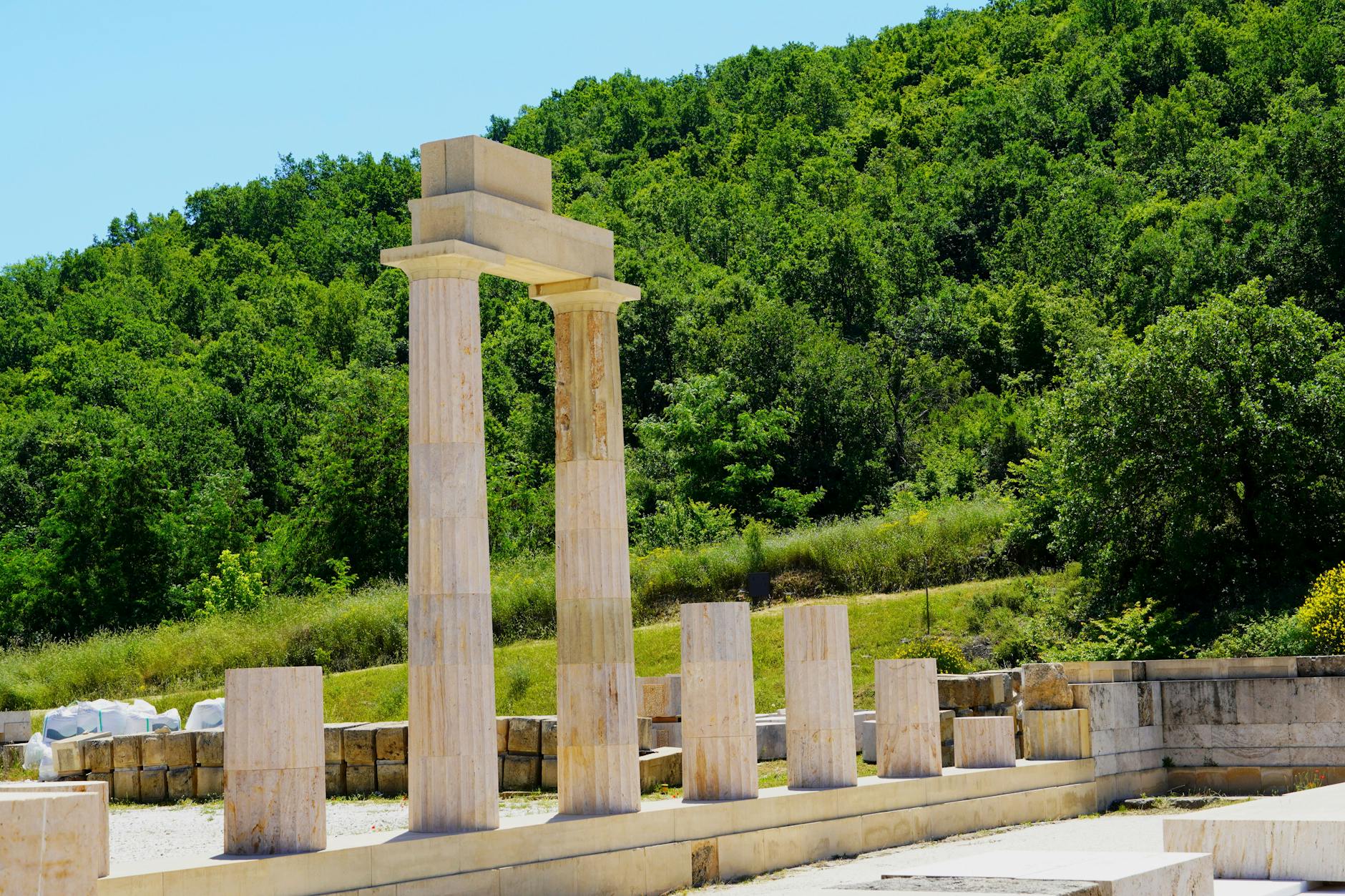
What followed was thorough and brutal. The temples at Olympia were stripped and vandalized. Later, earthquakes and floods buried the site under meters of silt. The great statue of Zeus was removed to Constantinople and eventually destroyed in a fire. By the medieval period, the location of ancient Olympia had been so completely forgotten that European scholars weren't certain exactly where it had been.
The Games didn't just stop. They were erased.
The Man Who Refused to Let Them Stay Dead
For fourteen centuries, the Olympics existed only in texts — in Pindar's odes, in Pausanias's travel writings, in the scattered references of historians. There were occasional, small-scale attempts to revive the spirit of the Games in various forms, including a local Greek effort in the 1850s, but nothing that approached the original's scale or global reach.
Then came Pierre de Coubertin.
A French aristocrat, educator, and sports enthusiast, Coubertin became convinced in the 1880s that organized athletic competition could serve as a force for international understanding and youth development — ideas that sound familiar today but were genuinely radical in 19th-century Europe. He'd visited England and been impressed by the role of sport in British public school education. He'd read about the ancient Olympics. And somewhere in the combination of those influences, a mission took shape.
Coubertin wanted to bring the Olympics back. Not as a local Greek festival, but as a genuinely international event.
The obstacles were considerable. Funding was scarce. Many in the European sports establishment were skeptical or openly hostile. National sporting federations guarded their turf jealously. The question of amateurism — who could compete and under what rules — was a political minefield. And the Greek government, while enthusiastic in principle, was in the middle of a financial crisis and couldn't easily absorb the cost of hosting a major international event.
Coubertin pushed anyway. He organized an international congress at the Sorbonne in Paris in 1894, where delegates from twelve nations voted to revive the Olympic Games. Athens was chosen as the host city. The year was set: 1896.
The Athens organizing committee nearly collapsed under the financial pressure. A wealthy Greek businessman named Georgios Averoff ultimately stepped in with a substantial private donation that saved the project. The Panathenaic Stadium, an ancient marble venue, was restored for the occasion.
Athens 1896: Fragile and Magnificent
On April 6, 1896, King George I of Greece declared the first modern Olympic Games open before a crowd estimated at 60,000 to 80,000 people — the largest gathering for a sporting event in modern history to that point. Two hundred forty-one athletes from fourteen nations competed across 43 events.
It was imperfect, improvised, and genuinely moving. American athletes dominated the track events. A Greek runner named Spyridon Louis became a national hero by winning the marathon. The ancient stadium, rebuilt for the occasion, hummed with the same energy that had once filled the sanctuary at Olympia.
Coubertin had pulled it off. Barely.
Why It Matters That We Almost Lost It
The Olympic Games have survived two World Wars, boycotts, terrorism, corruption scandals, and endless political controversy in the century-plus since Athens. They've grown from 241 athletes to over 10,000. They've circled the globe dozens of times.
But they almost didn't exist at all. A Roman emperor's edict, fifteen centuries of silence, and a revival effort that nearly ran out of money before it started — that's how thin the margin was.
Every time an American athlete stands on an Olympic podium, every time the flame is lit, every time the world pauses to watch the fastest humans alive race for gold, it's worth remembering: this wasn't inevitable. It was fought for.
Somebody had to race to bring it back. And thank everything that they did.