When Fire Met Speed
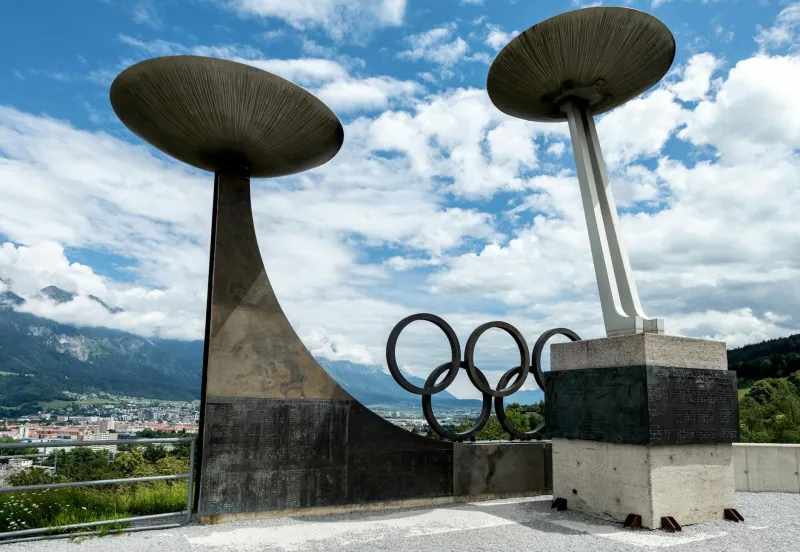
Every four years, the world watches American relay teams explode from starting blocks, passing a metal baton around a track in times that would have seemed impossible just decades ago. But this spectacle of speed and teamwork has roots that stretch back over 2,500 years, to torch-carrying runners racing through the streets of ancient Athens.
The connection isn't obvious at first glance. Modern relay racing appears to be pure athletic competition—four runners, one baton, and a desperate chase against the clock. But dig deeper into the origins, and you'll find that America's relay dominance grew from ancient Greek traditions that had nothing to do with sport and everything to do with sacred fire.
Sacred Flames and Midnight Races
In ancient Greece, torch relay races weren't entertainment—they were religious ceremonies. Teams of runners would race through city streets carrying flaming torches, with the goal of keeping the sacred fire burning while moving it from one location to another. The races often took place at night, creating a spectacle of flickering flames moving through darkened streets.
These weren't casual jogs either. Greek torch relays covered serious distances, sometimes stretching for miles across challenging terrain. Runners had to maintain speed while protecting their flame from wind and rain, requiring a combination of athletic ability and technical skill that would feel familiar to any modern relay runner.
The Greeks understood something that American track coaches would rediscover centuries later: relay racing is fundamentally different from individual competition. Success depends not just on raw speed, but on timing, trust, and flawless execution under pressure.
From Ritual to Competition
The ancient Olympics included several relay-style events, though they looked nothing like modern races. The most famous was the hoplitodromos, where runners carried shields and wore armor while racing. While not technically a relay, it established the principle that would define the event: combining speed with the challenge of carrying or passing an object.
When the modern Olympics launched in 1896, relay racing wasn't included. The early games focused on individual events that directly paralleled ancient competitions. It wasn't until 1908 that the 4x100-meter relay made its Olympic debut, and the United States immediately showed an aptitude that would define the event for the next century.
That first Olympic relay saw the American team clock 42.4 seconds—a time that would be considered slow by high school standards today. Modern world record holders complete the same distance in under 37 seconds, but the 1908 Americans were running on cinder tracks with basic handoffs and minimal specialized training.
The American Relay Revolution
What made America so dominant in relay racing wasn't just individual speed—it was the cultural fit. Relay racing embodied values that resonated deeply in American sports: teamwork, precision, and the idea that collective effort could exceed individual achievement.
American coaches began developing relay-specific techniques that other nations would eventually copy. The "blind handoff" became standard practice, where the receiving runner starts moving before looking back, trusting their teammate to place the baton perfectly in their hand. This technique, now universal, was pioneered by American college programs in the 1920s and 1930s.
The 4x400-meter relay became an American specialty, combining the endurance demands of the quarter-mile with the tactical complexity of relay racing. American teams dominated this event so thoroughly that other nations began studying American training methods and recruiting American coaches.
By the 1960s, American relay teams were setting records that seemed untouchable. The 1968 Olympic 4x100-meter team ran 38.24 seconds, a time that stood as the world record for over a decade. Their 4x400-meter team clocked 2:56.16, a mark that wouldn't be broken until 1988.
Technology Meets Tradition
Modern relay racing bears little resemblance to those ancient torch ceremonies, but the fundamental challenge remains the same: moving an object from point A to point B as quickly as possible while maintaining control.
Today's relay runners benefit from synthetic tracks that provide consistent grip and speed, carbon-fiber batons that are lighter and more aerodynamic than the wooden sticks used for decades, and video analysis that breaks down handoffs frame by frame.
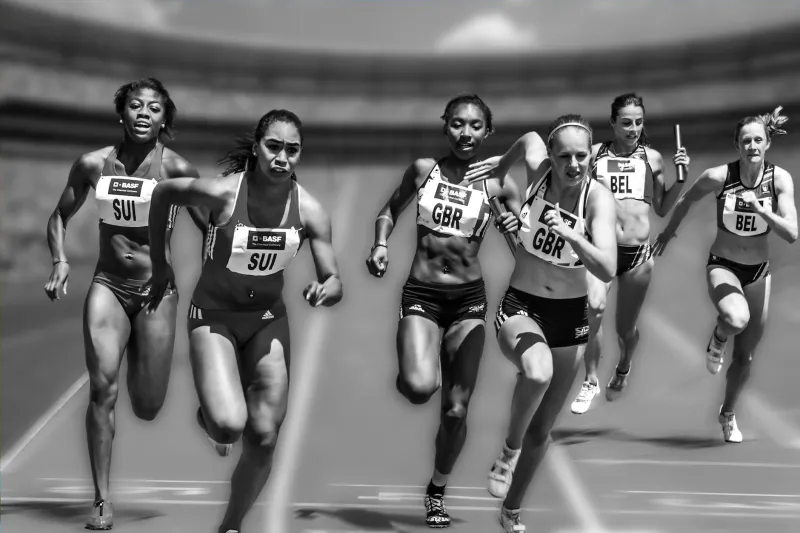
The training has evolved too. Modern relay teams practice handoffs thousands of times, working in 20-meter zones where the exchange must occur. They study each other's stride patterns, develop personalized callouts for timing, and practice racing at different speeds to simulate the chaos of actual competition.
But technology hasn't eliminated the human element that made those ancient torch relays compelling. Modern relay races still come down to trust, timing, and the ability to perform under pressure. A perfect handoff can make up for a slower individual runner, while a botched exchange can eliminate the world's fastest team.
Numbers Tell the Story
The evolution from ancient torch relays to modern competition is captured in the times. That first Olympic 4x100-meter relay in 1908 took 42.4 seconds. By 1936, American teams were running under 40 seconds. The current world record sits at 36.84 seconds, set by a Jamaican team that included Usain Bolt.
The 4x400-meter relay shows even more dramatic improvement. Early Olympic times were often over 3:20, while today's elite teams regularly break 3:00. The current world record of 2:54.29 represents a pace that would have been competitive in individual 400-meter races from the early Olympic era.
These improvements reflect advances in training, nutrition, and equipment, but they also show how relay racing has evolved into a specialized discipline. Modern relay runners train specifically for their leg of the race, developing skills that complement their teammates rather than focusing solely on individual performance.
Why Relays Captured America
Relay racing succeeded in America because it aligned with cultural values that extend beyond athletics. The emphasis on teamwork over individual glory resonated in a country built on collective achievement. The precision required for successful handoffs appealed to American engineering sensibilities.
More than that, relay racing offered a form of competition where strategy mattered as much as speed. Coaches had to decide which runners to use for which legs, how to practice handoffs, and how to handle the pressure of major competitions. It became chess at sprinting speed.
The relay also democratized elite competition in ways that individual events couldn't. A team could succeed with four good runners rather than requiring one exceptional athlete. This opened opportunities for more athletes to compete at the highest level and created depth in American sprint programs that other nations struggled to match.
From Sacred Fire to Split Times
When modern relay runners take their marks today, they're participating in a tradition that connects them to ancient Greek priests carrying sacred flames through city streets. The technology has changed, the times have dropped dramatically, and the religious significance has disappeared, but the core challenge remains: trust your teammates, execute under pressure, and keep the flame—or baton—moving forward.
That connection from ancient ritual to modern competition shows how sport evolves while maintaining its essential character. American relay teams didn't just adopt an ancient Greek tradition—they transformed it into something uniquely their own, creating a form of competition that celebrates both individual excellence and collective achievement.
In a sporting landscape increasingly focused on individual statistics and personal brands, relay racing remains a reminder that some victories can only be achieved together. From torch-bearing priests to world record holders, the message remains the same: sometimes the fastest way forward is to trust someone else to carry you there.