How the 100-Meter Sprint Went From Bare Feet on Sand to the Fastest Show on Earth
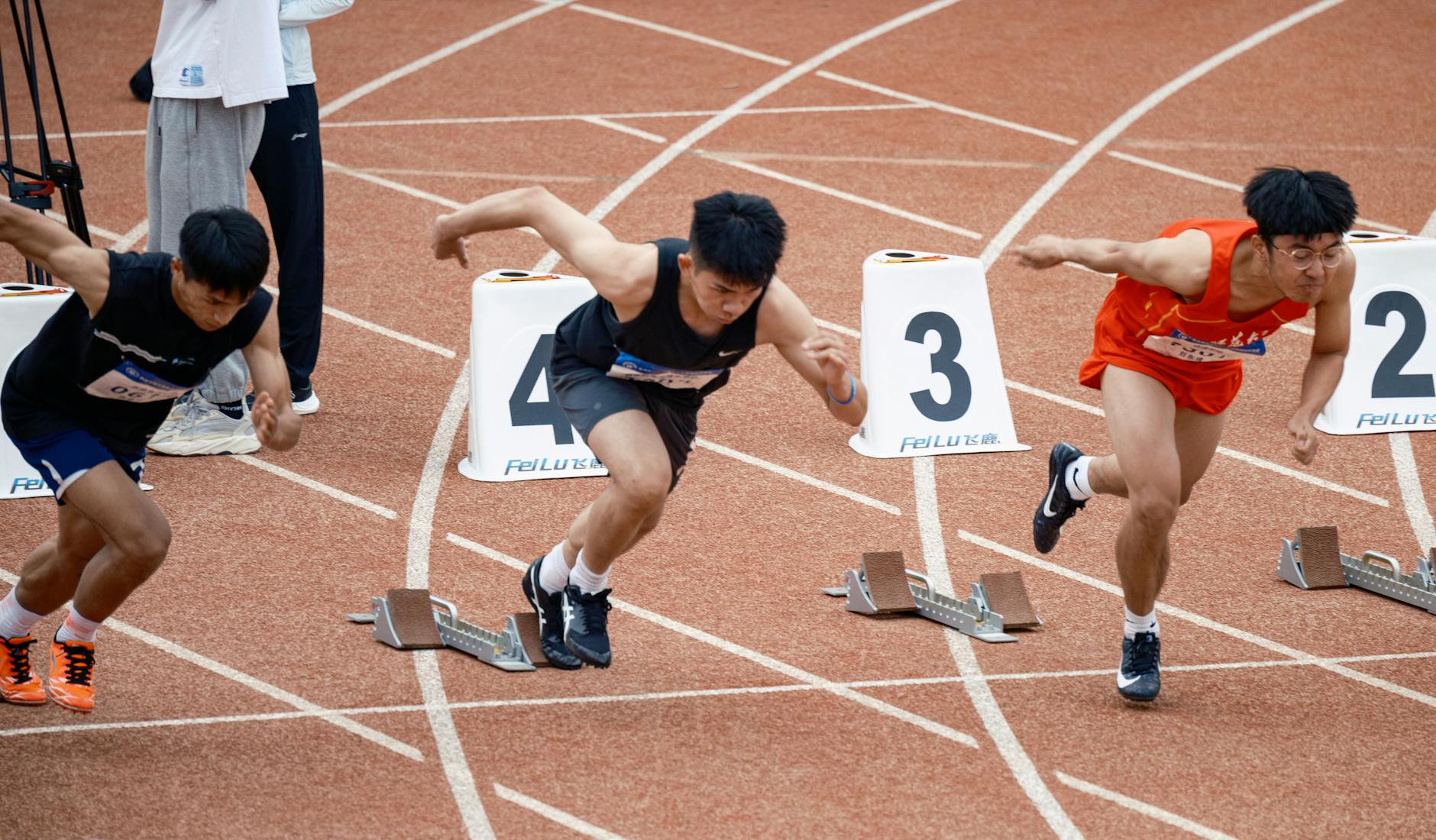
How the 100-Meter Sprint Went From Bare Feet on Sand to the Fastest Show on Earth
Ten seconds. Give or take a few hundredths. That's all it takes to decide the fastest human on the planet. It's barely enough time to finish a sentence, let alone appreciate what's happening — the explosive power, the technical precision, the years of training compressed into a single, electric burst down the track.
But here's the thing: people have been obsessed with that exact contest for over two and a half millennia. The sprint isn't just the world's most-watched race. It's the world's oldest one. And the story of how it evolved from a barefoot dash across sacred Greek soil into the centerpiece of the modern Olympic Games is a story about human ambition, technological ingenuity, and the relentless pursuit of speed.
It Started With a Single Straight Line
The ancient Greeks didn't have a 100-meter sprint. What they had was something arguably purer: the stadion, a single-length footrace run on a rectangular track of packed earth and sand at Olympia. At roughly 192 meters, it was longer than today's signature sprint, but the spirit was identical — get from one end to the other faster than everyone else.
Runners started from a standing position, feet pressed against a grooved limestone starting threshold called the balbis. No blocks, no crouch, no false-start sensors. The starter gave a signal, and they went. Barefoot. The surface beneath them was a mix of clay and fine sand, deliberately maintained to be firm enough to push off but forgiving enough to reduce injury.
We don't have times for these races — the Greeks had no stopwatches, and precise measurement wasn't the point. Victory was the point. But historians and biomechanics researchers have estimated that elite ancient sprinters may have covered their distance at speeds somewhere in the range of what a well-trained modern high schooler might manage. Fast by any human standard. Unimaginably slow compared to what was coming.
The Long Silence, Then Athens 1896
After the ancient Olympics were abolished in 393 AD, organized sprint competition effectively vanished from the global stage for over a thousand years. When Pierre de Coubertin revived the Games in Athens in 1896, the sprint returned with them — this time standardized to 100 meters, the clean metric distance that would define the event forever.
The 1896 final was won by American Thomas Burke, who ran 12.0 seconds using a crouched start he'd developed himself — a technique so unusual that other competitors reportedly laughed at him during warm-ups. Burke wasn't laughing at the finish line. His innovation, borrowed from nothing more than personal experimentation, shaved fractions of a second off his start and gave him a decisive edge.
The track in Athens was cinders — compacted ash and gravel, not too different in concept from what the Greeks had used, but considerably less consistent. Shoes were basic leather. Spikes existed but were primitive. And yet, Burke's 12.0 seconds was a genuine athletic achievement for its era, a legitimate benchmark for human speed at the dawn of the modern Games.
Today, 12.0 seconds wouldn't qualify for a Division III college meet.
The Technology That Changed Everything
The gap between Burke's 12.0 and the current world record of 9.58 seconds — set by Usain Bolt in Berlin in 2009 — didn't close overnight. It closed through a century of relentless, overlapping innovation across equipment, surfaces, science, and training methodology.
Starting blocks, introduced in the 1930s and standardized for Olympic competition in 1948, were the first major mechanical shift. Instead of pushing off from a standing position or digging footholds in cinders, athletes could now load force into a rigid platform and explode from a biomechanically optimal angle. The improvement in reaction time and initial acceleration was immediate and measurable.
Synthetic tracks arrived in the 1960s, with the first all-weather polyurethane surface debuting at the 1968 Mexico City Olympics. The difference was transformative. Cinder tracks absorbed energy. Synthetic surfaces return it. Every footstrike on a modern track sends more force back into the athlete's legs, effectively giving runners free speed with every stride. Combined with aerodynamic spike plates embedded in modern sprint shoes, the surface-shoe interface alone accounts for a meaningful portion of the improvement seen since the mid-20th century.
Sports science and training did the rest. Modern sprinters train with GPS-tracked velocity data, force plate analysis, and video breakdowns measured in milliseconds. They work with nutritionists, sleep coaches, and biomechanics specialists. Periodization programs are designed to peak performance for a single day, years in advance. The margins being chased are so small — hundredths of a second — that every variable gets optimized.
American sprinting has been at the center of that evolution. From Jesse Owens rattling Nazi Germany in 1936 to Carl Lewis redefining what a sprint body could look like in the 1980s to Sha'Carri Richardson's return to global dominance in recent years, the US has treated the 100 meters as something close to a national obsession.
Speed as a Cultural Phenomenon
What makes the 100-meter sprint uniquely powerful isn't just the times. It's the moment. The false-start tension. The silence before the gun. The way 80,000 people in a stadium and hundreds of millions watching on screens all hold their breath for the same ten seconds.
No other athletic event compresses that much anticipation into that little time. It's the ultimate distillation of sport: pure speed, no tactics, no equipment advantage beyond the marginal. Just human beings trying to outrun each other, exactly as they've been doing since 776 BC.
The track has changed. The shoes have changed. The science has changed almost beyond recognition. But the race itself — one straight line, first one there wins — is exactly what Coroebus ran in ancient Olympia.
We just run it a whole lot faster now.