Before the Records, There Were These Men: The First Champions of the Ancient Olympics
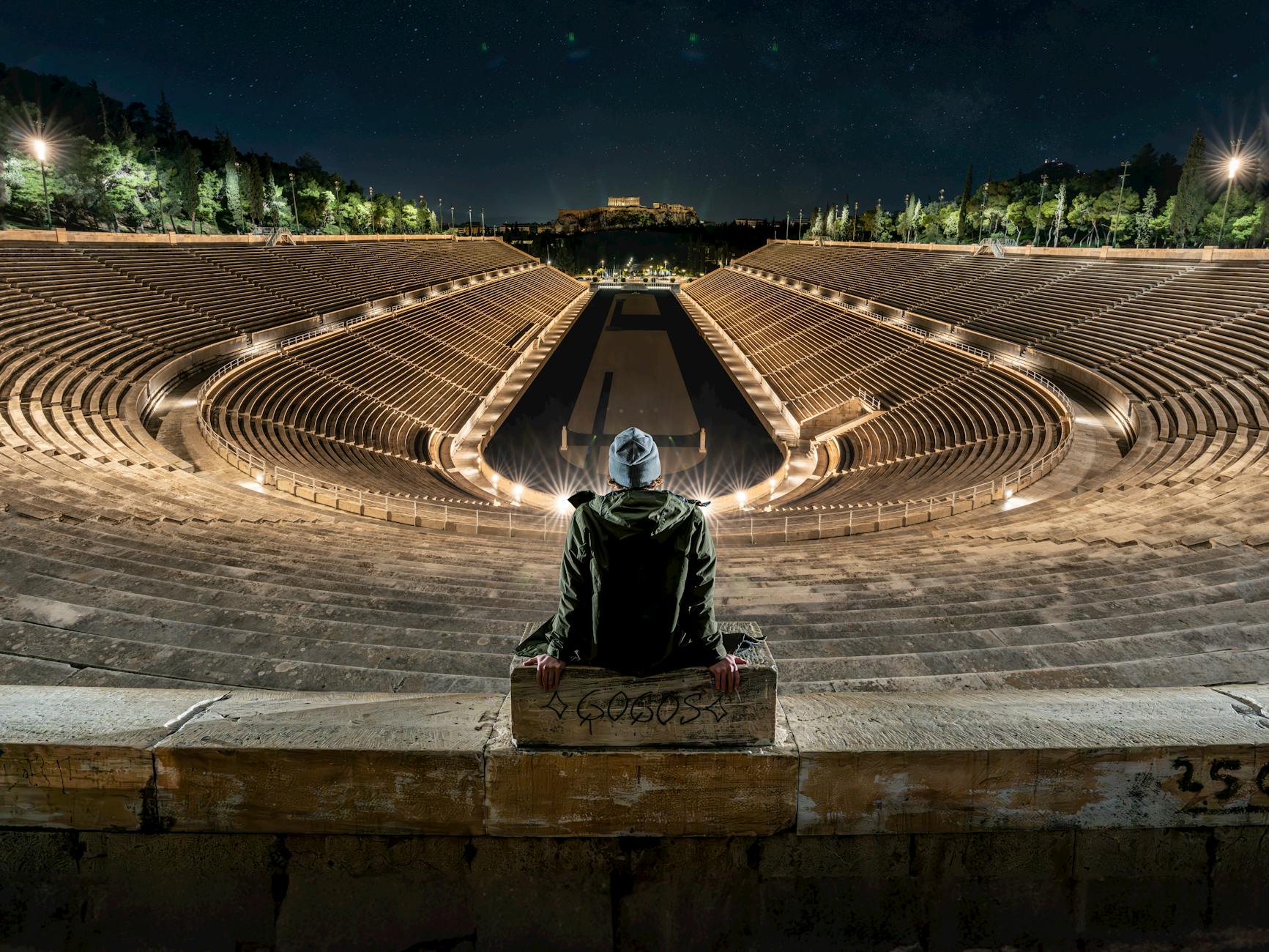
Before the Records, There Were These Men: The First Champions of the Ancient Olympics
Every record has a starting line. For the entire history of organized athletic competition, that line runs straight back to a single summer day in 776 BC, in a dusty valley in western Greece. No stadium lights. No roaring PA system. No split-time graphics on a broadcast screen. Just a man named Coroebus, a stretch of packed earth, and the desperate, primal need to outrun everyone else in sight.
That's where this whole thing began.
The World's First Recorded Champion
Coroebus of Elis wasn't a professional athlete. He was a cook — or possibly a baker, depending on which ancient source you trust. What matters is that he was an ordinary man who did something extraordinary: he won the stadion, the original Olympic footrace, and in doing so became the first name ever recorded in the history of competitive sport.
The stadion was short and brutal. About 192 meters — roughly the length of the Colosseum's long axis — run in a single straight line across the sacred ground of Olympia. No curves, no lanes, no staggered starts. Just a limestone starting block called the balbis, bare feet on sand and clay, and a crowd of thousands roaring from the grassy banks on either side.
Coroebus crossed first. His name was carved into history. And for the Greeks, that was no small thing — Olympic victory wasn't just athletic glory, it was divine favor. Winners were celebrated as heroes, honored with olive wreaths cut from a sacred tree, and sometimes greeted back home with a hole knocked through the city wall, because a champion was considered too great to use an ordinary gate.
What These Games Actually Were
It's easy to romanticize the ancient Olympics, but the reality was raw and intense in ways that modern sports rarely touch. The Games were held every four years at Olympia, a religious sanctuary dedicated to Zeus. They weren't a secular entertainment event — they were an act of worship, a demonstration that human physical excellence could honor the gods.
Athletes traveled from across the Greek world to compete: from Athens, Sparta, Corinth, and the far colonies of Sicily and North Africa. The journey alone could take weeks. Once there, they trained for a mandatory thirty days under the watch of officials called the Hellanodikai, judges who enforced the rules with absolute authority — and occasionally a whip for anyone who cheated or broke protocol.
Competitors in the early Games ran naked. They trained naked. The word gymnasium literally comes from gymnos, meaning bare. There was nothing casual about it — nudity in this context was a statement of physical pride and equality. Every body was on display. Every flaw and every strength was visible to the gods and to the crowd.
Beyond the stadion, the Games eventually grew to include longer footraces, wrestling, boxing, the brutal pankration (a no-holds-barred combat sport), chariot racing, and the pentathlon. But the sprint — the stadion — remained the centerpiece. The champion of that race gave his name to the entire Olympiad. Coroebus didn't just win a race. He named an era.
Legends Carved in Stone
As the Games grew across the centuries, other champions rose to legendary status. Leonidas of Rhodes, competing in the second century BC, won twelve individual running titles across four consecutive Olympics — a record so staggering that it stood unchallenged for over 2,000 years until Usain Bolt finally matched the feat of multi-event sprint dominance at the modern Games.
Then there was Milo of Croton, the most famous wrestler of the ancient world, who reportedly won six Olympic titles and trained by carrying a calf on his shoulders every day until it grew into a bull. Whether that story is entirely true is debatable. What isn't debatable is that his name still gets dropped in strength-training conversations today.
These men weren't just athletes. They were cultural icons in a world that had no social media, no endorsement deals, and no ESPN. Their fame spread through oral tradition, through statues erected in their honor at Olympia, and through the odes of poets like Pindar, who made a career writing victory hymns for Olympic champions. Winning at Olympia meant your name could outlast your lifetime by centuries.
The Same Fire, Different Track
Here's what strikes you when you sit with this history long enough: the psychological core of what Coroebus felt in 776 BC isn't so different from what Sydney McLaughlin-Levrone feels when she's in the blocks at a World Championship final, or what Noah Lyles felt tearing down the straight in Paris.
The equipment is different. The science is different. The times are incomparably faster. But the hunger — that specific, burning need to cross the line first, to be the one whose name gets written down — that hasn't changed at all.
America has built an entire sports culture around that feeling. We name stadiums after champions. We replay finishing moments in slow motion. We argue about the GOAT in every sport with the same passion the Greeks poured into their victory odes.
Coroebus started all of it. He was the first person in recorded history to race the record — and win.
Every athlete who's stood on a starting line since has been chasing the same thing he was.