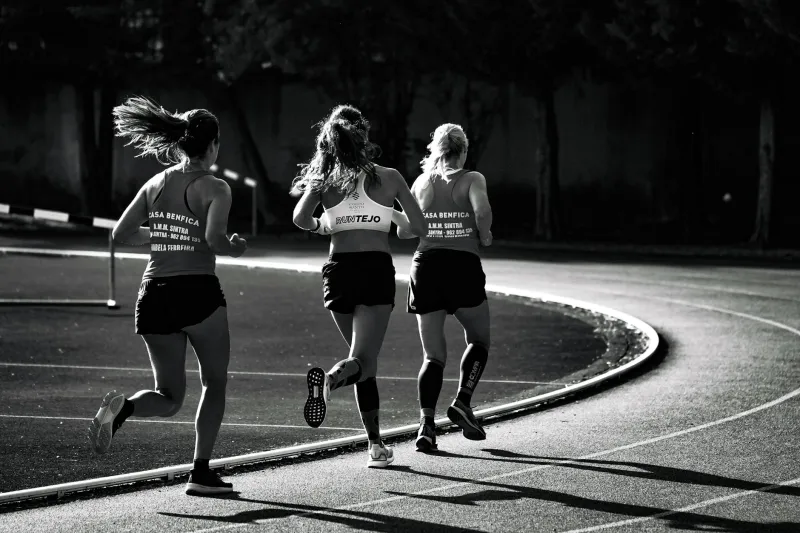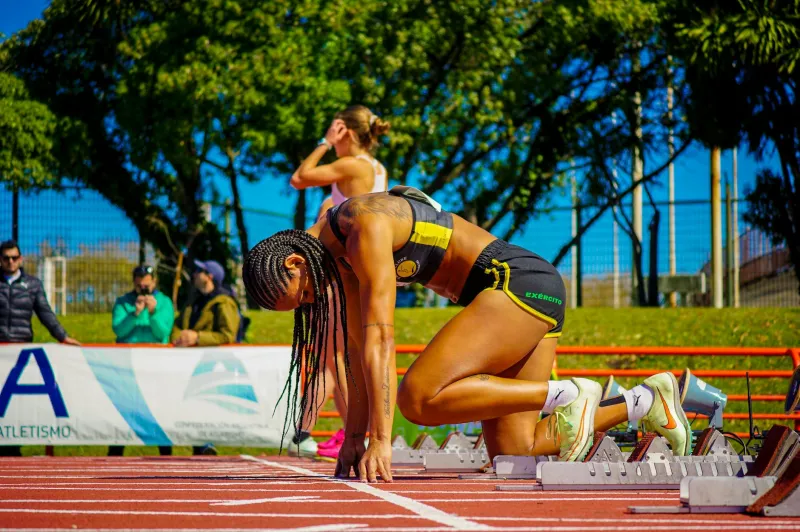
When Luther Cary ran 10.8 seconds for 100 meters in Paris in 1891, he probably had no idea he was setting the first officially recognized world record in what would become the most prestigious race in all of sports. More than 130 years later, Usain Bolt's seemingly untouchable 9.58 from the 2009 World Championships represents an improvement of 1.22 seconds — a gap that might as well be an eternity in sprinting terms.
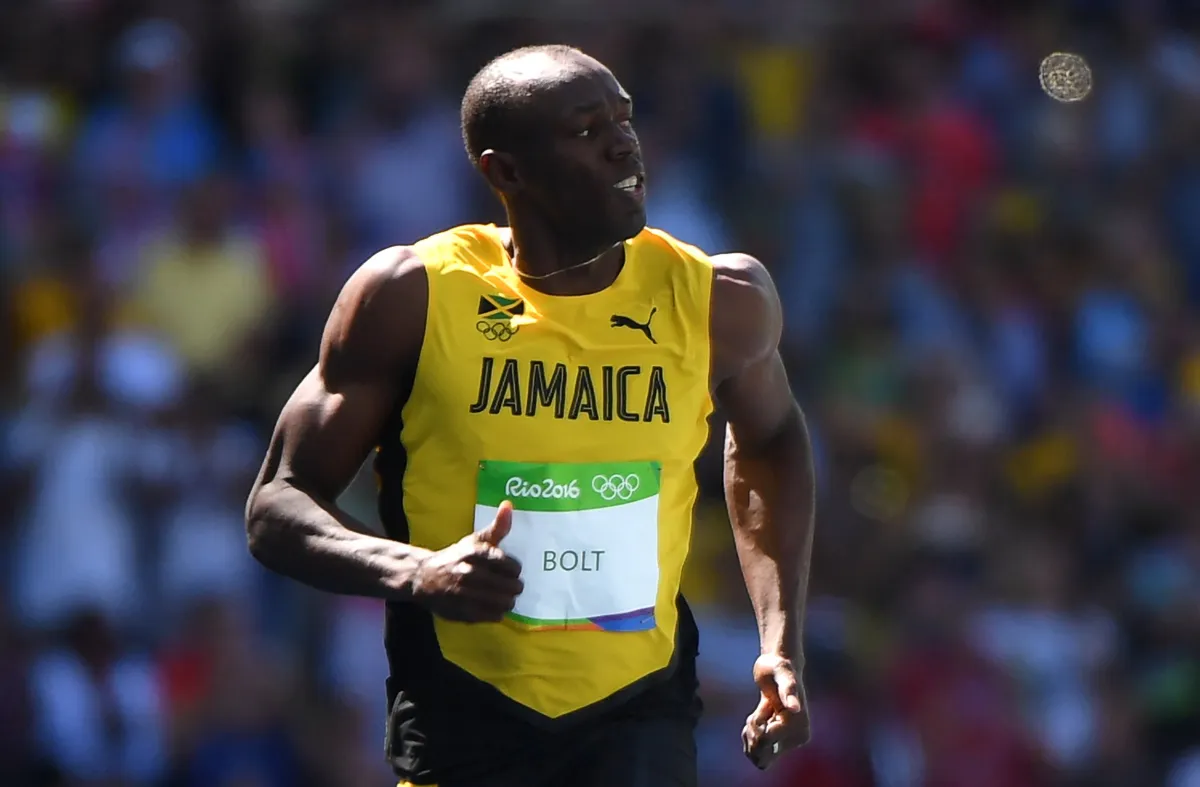 Photo: Usain Bolt, via d.newsweek.com
To put that in perspective, if Cary and Bolt had raced together, the Jamaican legend would have crossed the finish line while the 1891 champion was still 12 meters behind. That's not just progress — that's a complete transformation of what the human body can accomplish.
The Gentleman's Era: When 11 Seconds Was Flying
The early world records tell a story of amateur athletes running in leather shoes on cinder tracks, often in their street clothes. The first sub-11-second barrier fell in 1896 when American Luther Cary clocked 10.75, but progress was painfully slow by modern standards.
These early sprinters were true amateurs in every sense. They trained a few times per week, held day jobs, and competed for the pure love of sport. Their "starting blocks" were holes they dug in the track with a trowel. Their timing was done by stopwatch-wielding officials who estimated to the nearest tenth of a second.
By 1912, the record had crept down to 10.6 seconds, held by American Donald Lippincott. That 0.2-second improvement over two decades would be considered glacial progress today, but it represented the limits of what dedicated amateurs could achieve with the training methods and equipment of their era.
The Scientific Revolution: Breaking Barriers in the 1930s
The 1930s marked the first major leap forward in sprinting performance, driven by athletes who began approaching their sport with unprecedented scientific precision. American Jesse Owens became the face of this revolution, setting a world record of 10.2 seconds in 1936 that would stand for 20 years.
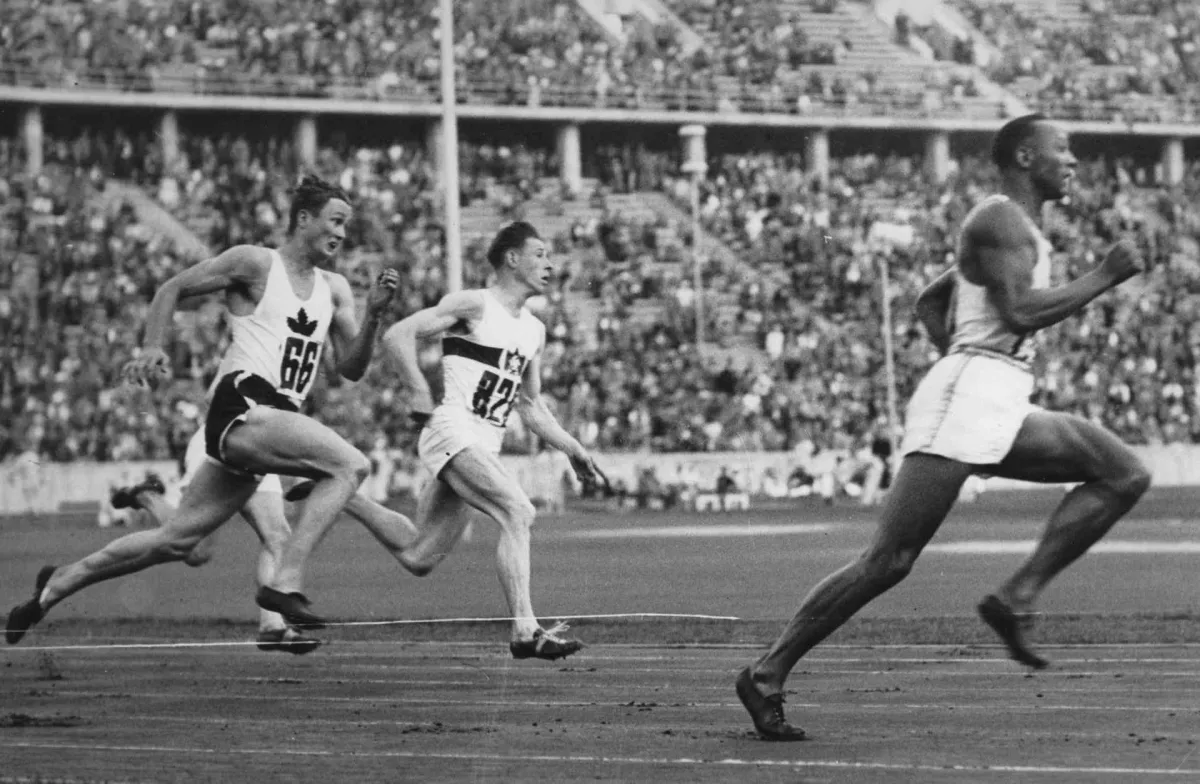 Photo: Jesse Owens, via res.cloudinary.com
Owens trained under Larry Snyder at Ohio State, one of the first coaches to emphasize proper running mechanics and systematic training. While still amateur, Owens represented a new breed of athlete — one who understood that sprinting was as much about technique as raw speed.
The improvement from 10.6 to 10.2 in just over two decades represented the beginning of modern sprint training. Athletes started focusing on start technique, learned to run on the balls of their feet, and began understanding the biomechanics of efficient sprinting.
The Professional Era: When Tenths Became Hundredths
The introduction of electronic timing in 1968 changed everything. Suddenly, records were measured to the hundredth of a second, and the true speed of human beings became visible. American Jim Hines became the first man to officially break the 10-second barrier, running 9.95 at the 1968 Mexico City Olympics.
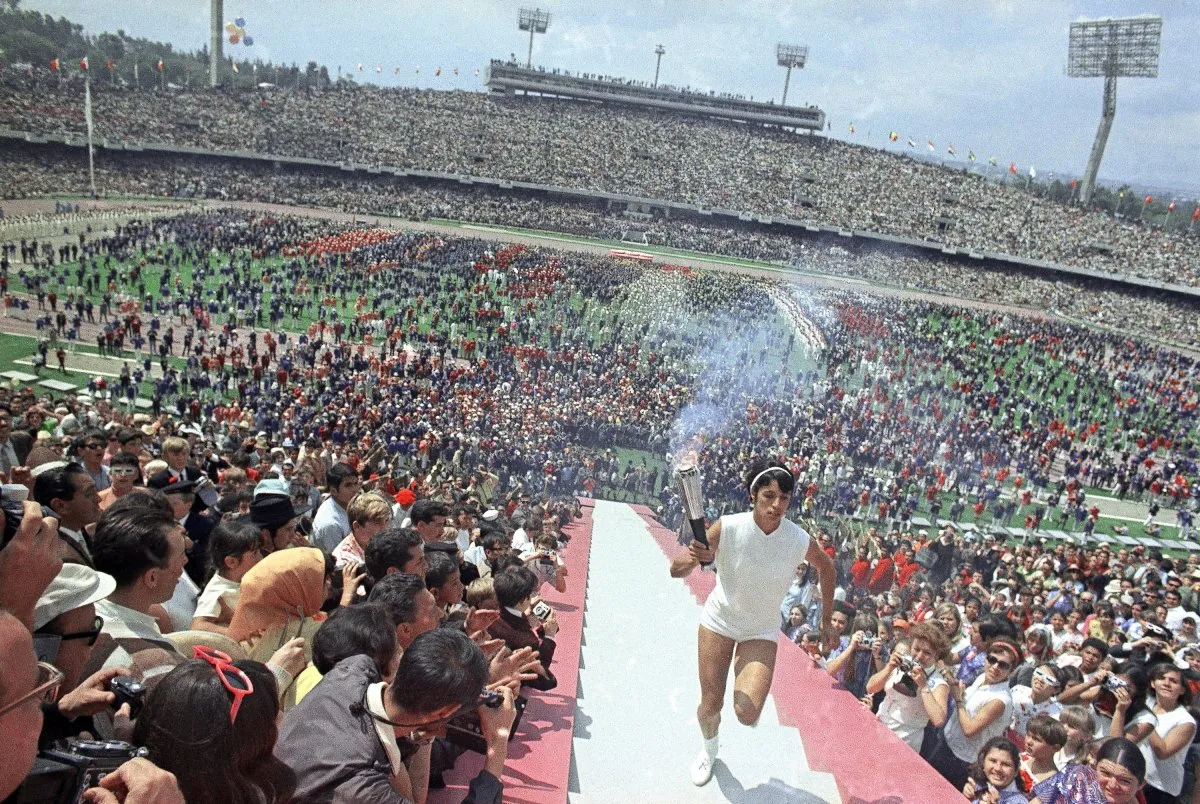 Photo: Mexico City Olympics, via i0.wp.com
This wasn't just about better timing — it coincided with the rise of professional coaching, year-round training, and athletes who could dedicate their entire lives to sprinting. The amateur era was officially over, even if the Olympics wouldn't admit it for another two decades.
Between 1968 and 1988, the record dropped from 9.95 to 9.83, as athletes like Calvin Smith pushed the boundaries of what seemed possible. Each improvement was measured in hundredths now, with careers made or broken by margins invisible to the naked eye.
The Modern Miracle: Bolt's Untouchable Mark
Then came Usain Bolt, who didn't just break records — he obliterated them. His 9.69 at the 2008 Beijing Olympics was stunning enough, but his 9.58 in Berlin a year later seemed to come from another planet entirely.
Bolt's achievement wasn't just about natural talent, though his 6'5" frame gave him advantages no sprinter had ever possessed. It was the culmination of everything learned about sprint training over the previous century: altitude training, plyometrics, biomechanical analysis, nutritional science, and recovery techniques that would seem like science fiction to Luther Cary.
The Jamaican's training included 400-meter repeats that most recreational runners couldn't complete once. His stride length of nearly 10 feet meant he took just 41 steps to complete 100 meters, while most elite sprinters need 44-45 steps.
The Science Behind the Speed
Each era of record-breaking has been driven by specific innovations. The early improvements came from better technique and training consistency. The middle period saw advances in track surfaces — from cinder to synthetic — and the introduction of starting blocks.
Modern improvements have been driven by sports science that borders on the miraculous. Today's sprinters train with motion-capture technology that analyzes every aspect of their stride. They use altitude chambers to increase red blood cell production, underwater treadmills for resistance training, and recovery protocols that include everything from ice baths to compression therapy.
The difference isn't just physical — it's mental. Modern sprinters study video of their technique frame by frame, work with sports psychologists to optimize their mental state, and use data analytics to peak at exactly the right moment.
What Would It Take to Break Bolt's Record?
The question haunting track and field is whether Bolt's 9.58 represents a ceiling or just another barrier waiting to be broken. Mathematical models suggest that the theoretical limit for human sprinting is somewhere around 9.40, but getting there would require perfect conditions and a perfect athlete.
Biomechanics experts point to several areas where improvement might still be possible: more efficient energy transfer during ground contact, better stride frequency without losing stride length, and continued improvements in track surface technology.
But the reality is that each hundredth of a second becomes exponentially more difficult to achieve. The difference between 9.58 and 9.50 might require the same level of advancement that took us from 10.8 to 9.58 in the first place.
The Record That Measures Human Progress
The 100-meter world record isn't just about running fast — it's a measurement of human potential itself. From Luther Cary's leather shoes to Usain Bolt's carbon-fiber spikes, from stopwatch timing to laser-precise electronic measurement, the record chronicles more than a century of athletic evolution.
Every tenth of a second represents thousands of hours of training, decades of scientific advancement, and the dreams of athletes who pushed beyond what their predecessors thought possible. The next person to break Bolt's record won't just be running faster — they'll be carrying forward the legacy of everyone who ever lined up in lane 4, convinced they could redefine the limits of human speed.
In a sport measured by the smallest margins, the 100-meter world record remains the ultimate proof that there's always another barrier waiting to fall.