His name was Thomas Kiely, though hardly anyone remembers it today. In the summer of 1904, this 24-year-old from Lawrence, Kansas, stepped onto the track at the St. Louis Olympics carrying hopes that would seem impossible by modern standards. He had trained alone on dirt roads between corn fields, paid his own way to Missouri, and was about to compete in an Olympic Games that looked nothing like the spectacle we know today.
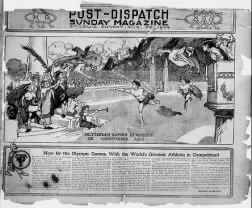 Photo: St. Louis Olympics, via img.newspapers.com
Kiely's story isn't just about one forgotten athlete — it's a window into an era when American Olympians were true amateurs in every sense, when the path to athletic glory ran through small towns and state colleges, and when the Olympics themselves were still figuring out what they wanted to become.
When Olympics Were a Side Show
The 1904 St. Louis Olympics were a disaster by any modern measure. Held as a sideshow to the World's Fair, the Games stretched across five months and attracted so few international competitors that 94% of the athletes were American. There were no Olympic villages, no drug testing, no television coverage — just a collection of amateur athletes who showed up hoping to test themselves against the best America had to offer.
For Thomas Kiely, this represented the opportunity of a lifetime. The son of Irish immigrants who had settled in eastern Kansas, he had discovered his talent for distance running during his freshman year at the University of Kansas. His coach, if you could call him that, was the school's groundskeeper who had once seen a track meet in Chicago.
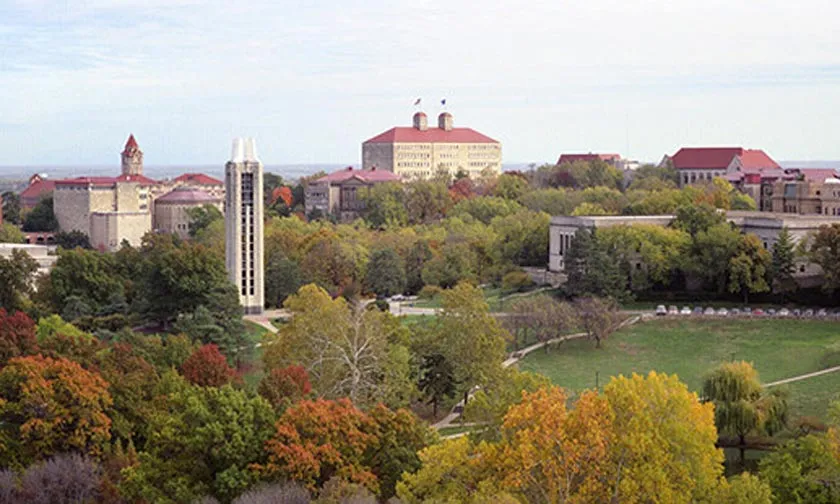 Photo: University of Kansas, via talloiresnetwork.tufts.edu
Training meant running the gravel roads outside Lawrence before dawn, often in work boots because proper running shoes cost more than his family could afford. His track was a 400-meter loop he had paced off in a pasture behind the university, marked with stakes he had hammered into the ground himself.
The American Amateur Ideal
Kiely embodied everything the early Olympic movement claimed to represent: pure amateurism, self-sacrifice, and competition for its own sake. He worked summers on his family's wheat farm to pay for school, waited tables during the academic year, and trained whenever he could find time between work and studies.
This wasn't unusual for American Olympic athletes of the era. The 1904 team included a postal worker from New York, a medical student from California, and a blacksmith from Pennsylvania who had learned to throw the hammer by practicing with actual sledgehammers in his forge.
The concept of professional coaching, year-round training, or corporate sponsorship simply didn't exist. Athletes learned technique by watching others compete, developed their own training methods through trial and error, and funded their Olympic dreams with money earned from manual labor.
The Journey to St. Louis
When Kiely qualified for the 1904 Olympics by winning the 5,000-meter run at the AAU Championships in Chicago, he faced a problem that would be unthinkable today: he couldn't afford to get to St. Louis. The university had no budget for Olympic travel, his family couldn't help, and there were no sponsors waiting to write checks.
So he did what many American athletes did in that era — he organized a fundraiser. The people of Lawrence, Kansas, threw a picnic and auction that raised $47, enough to cover train fare to St. Louis and three nights in a boarding house. The local newspaper, all four pages of it, ran a front-page story calling him "Our Olympic Hero" and predicting great things.
The reality was more complicated. When Kiely arrived in St. Louis, he discovered that the Olympic track was a 536-meter loop made of packed dirt and sawdust. The 5,000-meter race would require more than nine laps, with no consistent pacing or lap counting. Races were scheduled around the Fair's other attractions, sometimes delayed for hours to accommodate crowds watching the Ferris wheel or the Filipino village exhibit.
Race Day in a Different World
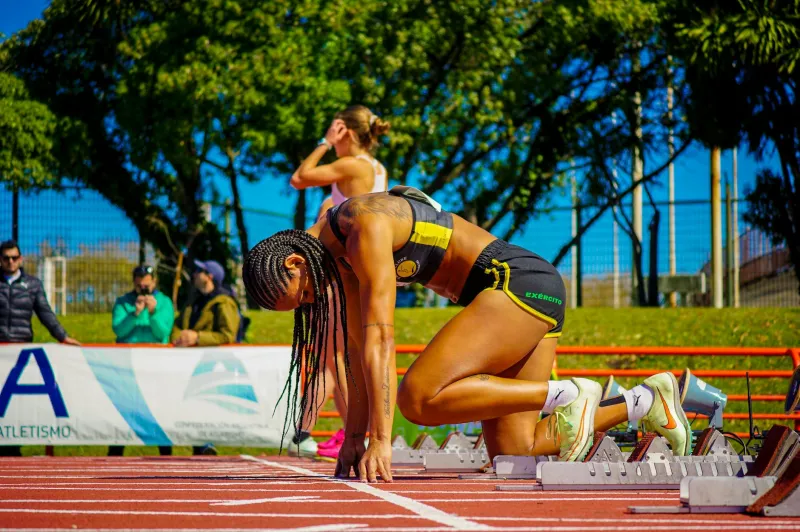
The 1904 Olympic 5,000-meter final took place on a sweltering August afternoon before a crowd of maybe 500 people. There were no starting blocks, no electronic timing, and no drug testing. Officials used a pistol that misfired twice before successfully starting the race.
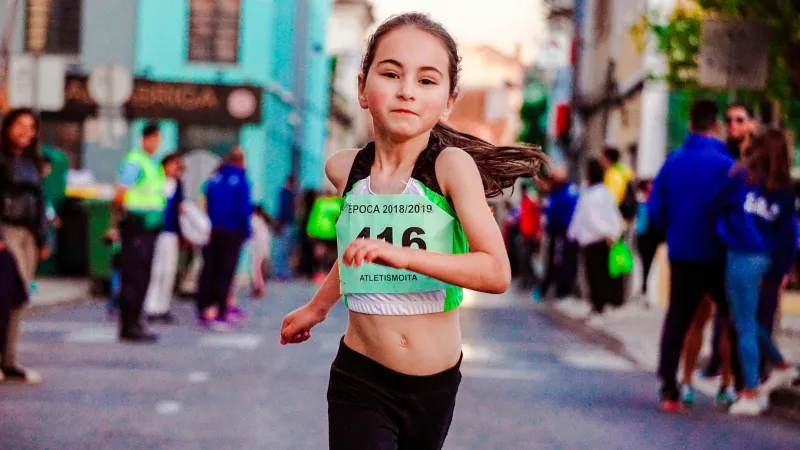
Kiely ran the race of his life, staying with the leaders through 4,000 meters before fading to fourth place. His time of 16:54 would have been competitive at the college level even decades later, but it was recorded only to the nearest second by officials using stopwatches and guesswork.
The winner was James Lightbody, a University of Chicago student who would go on to win three gold medals in St. Louis. But Kiely's fourth-place finish, achieved on natural talent and farm-boy toughness, represented something equally remarkable — the last gasp of an era when Olympic competition was truly about amateur ideals.
 Photo: James Lightbody, via blogger.googleusercontent.com
What Happened Next
After the Olympics, Thomas Kiely returned to Lawrence, finished his degree, and became a high school teacher and coach. He never competed in another major competition, never made money from his athletic ability, and never sought fame from his Olympic experience. By 1910, he was married with two children, teaching mathematics, and coaching the local high school track team on the same dirt loop where he had trained.
This pattern was typical of early American Olympians. They competed, returned to their regular lives, and disappeared from athletic history. There were no endorsement deals, no professional careers, no hall of fame inductions. Their Olympic experience was a brief interruption in ordinary lives, not the launching pad for athletic celebrity we expect today.
The End of an Era
Kiely's generation represented the last of the true amateur Olympians, athletes who competed solely for the love of sport and the chance to test themselves against the best. Within two decades, the Olympic landscape would be transformed by better organization, international competition, and the creeping professionalism that amateur rules couldn't prevent.
The 1904 Games themselves were considered such a failure that they nearly killed the modern Olympic movement. But for athletes like Thomas Kiely, they represented something pure that would never exist again — competition stripped of everything but the desire to run faster, jump higher, and throw farther than anyone else.
Lessons from the Forgotten
Today's Olympic athletes train in million-dollar facilities, work with teams of coaches and scientists, and compete for prize money that would have seemed unimaginable to someone like Thomas Kiely. The path from small-town Kansas to Olympic competition now runs through elite training centers, national development programs, and corporate sponsorship deals.
But Kiely's story reminds us that Olympic dreams once belonged to ordinary people willing to make extraordinary sacrifices. Before the infrastructure of modern sport existed, American athletes carved their own paths to Olympic competition through determination, community support, and the belief that amateur sport could elevate both individual and nation.
The Kansas farm boy who almost changed Olympic history teaches us that greatness isn't always measured in gold medals or world records. Sometimes it's found in the courage to chase impossible dreams with nothing but talent, heart, and the support of people who believe in something bigger than themselves.
In an era when Olympic sport has become a professional enterprise, Thomas Kiely's forgotten journey from the wheat fields of Kansas to the tracks of St. Louis represents something we've lost — the pure amateur spirit that once defined American Olympic competition.