The 200-Meter Race That Started Everything: How One Dirt Track in Ancient Greece Built the Foundation of Modern Sport
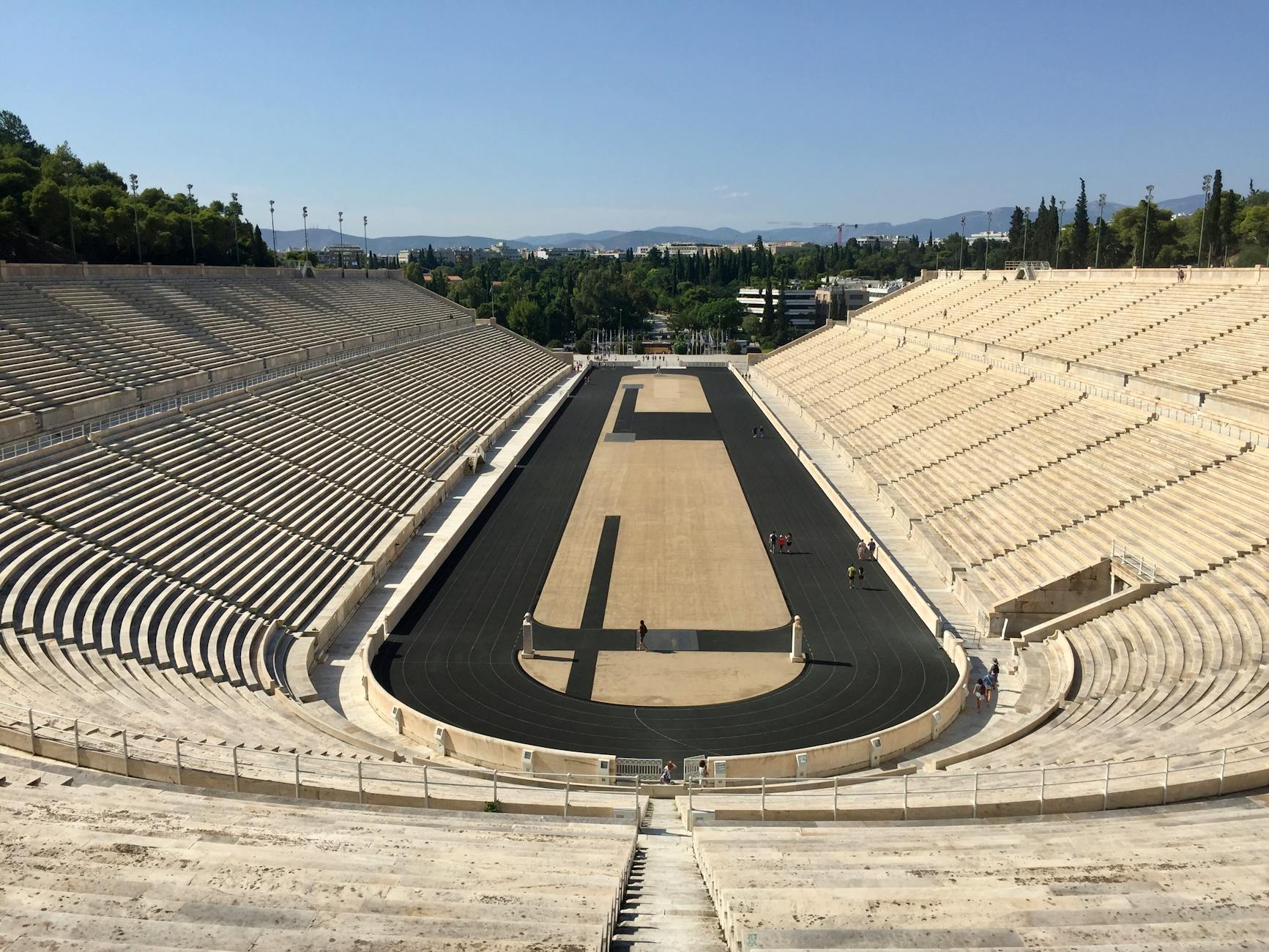
The 200-Meter Race That Started Everything: How One Dirt Track in Ancient Greece Built the Foundation of Modern Sport
Picture this: no Nikes, no starting blocks, no stadium announcer hyping the crowd. No energy drinks, no TV broadcast deals, no lane assignments. Just a group of Greek men, stripped down, standing at one end of a packed-dirt track carved into the valley of Olympia — and at the other end, about 200 meters away, a finish line that would change the world.
That's where competitive sport as we know it was born.
The Race Before the Records
The year was 776 BC. The ancient Greeks had gathered at Olympia — a sacred site in the western Peloponnese — to honor Zeus with a festival that blended religion, politics, and raw athletic competition. And the centerpiece of the whole affair was a single foot race called the stadion.
The stadion was straightforward by any measure. Competitors ran one length of the stadium track — approximately 192 meters, though the exact distance varied slightly by location — from one end to the other. No curves, no laps. Just pure, explosive speed.
The man who won that first recorded race was Coroebus of Elis, a local cook. Not a professional athlete. Not a nobleman. A cook. And with one sprint across a dirt track, he became the first name in the history of Olympic competition.
That detail alone should hit different for American sports fans. We love an underdog origin story — the blue-collar guy who outran everyone else and left his name in the history books. Coroebus was that guy, just about 2,800 years before anyone thought to put it on a trading card.
What the Stadion Actually Looked Like
The track at Olympia wasn't exactly the Bird's Nest or SoFi Stadium. It was a long rectangular strip of earth, bordered by grassy embankments where spectators sat — or stood, or crammed in however they could. Estimates suggest the Olympic site at Olympia could hold upward of 40,000 people during the Games, which puts it in the same conversation as a mid-sized NFL venue today.
Athletes competed barefoot, and they competed without clothing. The ancient Greeks believed the unclothed human form represented physical perfection — so modesty wasn't exactly on the schedule. Competitors were male, free-born Greeks, and they trained seriously. The idea that ancient athletes were casual participants is a myth worth retiring. These men dedicated months to preparation, traveled significant distances to compete, and carried the honor of their city-states on their shoulders.
The stakes weren't financial — there was no prize money. Winners received an olive wreath, cut from a sacred tree near the Temple of Zeus. But the cultural weight of that wreath was enormous. Olympic champions returned home as heroes, celebrated with poems, statues, and lifelong civic privileges. Sound familiar? Ancient Greece basically invented the concept of the athlete as cultural icon.
From the Stadion to the Starting Blocks
For the first 13 Olympic Games — spanning more than half a century — the stadion was the only event. Everything else came later. The race was the Games.
That single sprint gradually evolved into a broader program. The diaulos (a two-length race, roughly 400 meters) was added in 724 BC. The dolichos — a long-distance race covering somewhere between 7 and 24 stadium lengths — followed in 720 BC. Combat sports, the pentathlon, chariot racing — all of it grew from that original foundation. The stadion was the seed.
Fast-forward to 1896, when the modern Olympic Games were revived in Athens. The 100-meter sprint had replaced the stadion as the marquee foot race, but the DNA was unmistakably the same: the shortest, fastest race on the program, winner takes the glory. In Athens, American Thomas Burke won the 100m in 12.0 seconds. The crowd went wild.
Burke's time would barely qualify for a decent high school meet today.
Racing the Record: Then vs. Now
This is where the numbers get genuinely mind-blowing.
We don't have a recorded time for Coroebus — timing technology was a couple of millennia away — but historians and sports scientists have used biomechanical modeling and comparisons with other ancient athletic records to estimate that elite Greek sprinters in the ancient Olympics likely ran the stadion somewhere in the range of 28 to 32 seconds for roughly 200 meters.
For context: Usain Bolt ran 200 meters in 19.19 seconds at the 2009 World Championships in Berlin, setting a world record that still stands today. Bolt also holds the 100m world record at 9.58 seconds, set the same year.
That's not just improvement — that's a different species of performance. But the reasons are as fascinating as the numbers.
Modern sprinters benefit from decades of sports science, including biomechanical analysis, periodized strength training, and recovery protocols that ancient athletes couldn't have imagined. They run on engineered synthetic tracks that return energy with every stride, wear aerodynamically optimized uniforms, and launch from calibrated starting blocks designed to maximize explosive power off the line. Their nutrition is managed down to the gram. Their sleep is tracked. Their entire lives are structured around shaving hundredths of a second off their personal bests.
Coroebus had dirt, determination, and whatever he ate for breakfast that morning.
Why the Starting Line Still Matters
It's easy to look at a 9.58 next to an estimated 30-something and feel like the ancient world has nothing to teach us. But that's exactly the wrong takeaway.
The stadion race established something that no amount of carbon fiber or sports science has changed: the idea that human beings are wired to compete, to push limits, and to honor those who push hardest. The ancient Greeks didn't invent athletic competition because they had to. They invented it because something in the human spirit demands it.
Every NFL combine 40-yard dash, every Olympic 100m final, every middle-school track meet on a Tuesday afternoon in Ohio — they all trace a direct line back to Coroebus of Elis, sprinting barefoot across a patch of Greek earth to claim an olive wreath and a place in history.
The records have changed. The tradition hasn't.
And if Coroebus could see Usain Bolt run? Something tells us he'd understand exactly what he was watching.