Two Laps of Hell: Why the 800 Meters Destroys More Athletes Than Any Other Olympic Race
The Race That Nobody Wants to Run
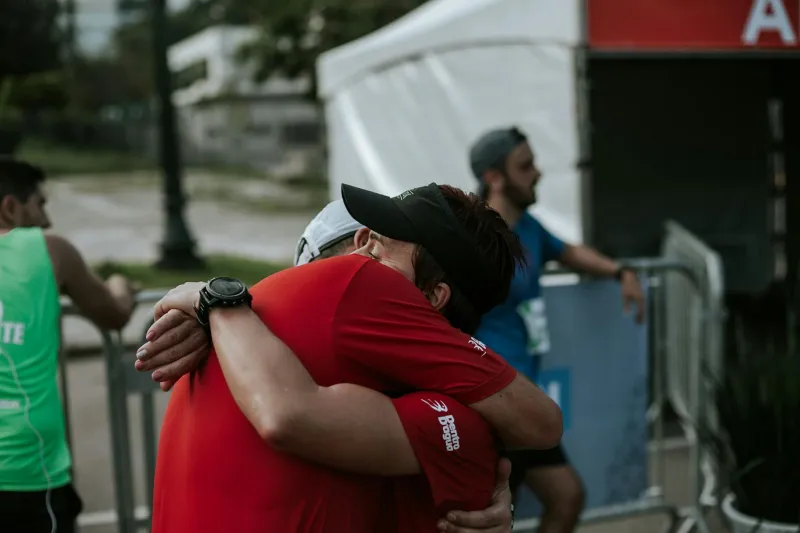
If you've ever watched an 800-meter race at the Olympics, you've probably noticed something unsettling. As the runners cross the finish line, they don't celebrate like sprinters or jog around like distance runners. They collapse. They gasp. Some actually throw up.
There's a reason track athletes call the 800 meters "two laps of hell." It's the most physiologically demanding race on the Olympic program — a distance that sits in the worst possible spot between pure speed and endurance. Too long to sprint, too short to pace, the 800 meters has been breaking athletes for over a century.
When Nobody Knew How to Run It
The 800 meters made its Olympic debut at the 1896 Athens Games, and it was a disaster. The event was originally run as the 800-meter run, but the athletes had no idea how to approach it. There was no established strategy, no coaching methodology, and certainly no sports science.
Edwin Flack, an Australian accountant who won the event, ran it like a longer sprint. He went out fast in the first 400 meters, then held on for dear life. His winning time of 2:11.0 would barely qualify for a decent high school meet today. But Flack was operating in the dark — nobody understood the unique metabolic demands of this middle distance.
The early 800-meter runners were essentially guinea pigs, experimenting with pacing strategies that often left them crawling to the finish line. Some went out conservatively and got outkicked. Others sprinted the entire way and died spectacularly in the final 200 meters.
The Science of Suffering
What makes the 800 meters so brutal isn't just its length — it's the energy systems it demands. Modern sports science has revealed why this race is uniquely punishing.
A 100-meter sprint relies almost entirely on the phosphocreatine system, which provides immediate energy but lasts only about 10 seconds. A marathon depends on aerobic metabolism, burning fat and carbohydrates with oxygen over hours.
The 800 meters demands both systems simultaneously, plus a third: anaerobic glycolysis. This system kicks in after the first 10-15 seconds and can sustain high-intensity effort for about 90 seconds to 2 minutes. But there's a catch — it produces lactic acid as a byproduct.
By the 600-meter mark, elite 800-meter runners have lactic acid levels that would incapacitate most people. Their muscles are screaming, their lungs are burning, and they still have 200 meters to go. It's a race against their own body's chemistry.
The Evolution of Strategy
The breakthrough in 800-meter running came in the 1960s when coaches began to understand the race's unique demands. Instead of treating it as a long sprint or short mile, they developed specific training methods.
Peter Snell of New Zealand revolutionized the event by combining sprint speed with middle-distance endurance. His world record of 1:44.3 in 1962 stood as a benchmark for tactical racing — he could outkick anyone in the final 200 meters because he'd trained his body to handle the lactic acid buildup.
American Dave Wottle took a different approach in the 1972 Olympics. Wearing his signature golf cap, Wottle ran from the back of the pack for 700 meters, then unleashed a devastating kick that brought him from last to first in the final straight. His winning time of 1:45.86 proved that tactical racing could trump pure speed.
The Modern Gladiators
Today's 800-meter runners are physiological marvels. The current world record holder, David Rudisha of Kenya, ran 1:40.91 in 2012 — a time that would have seemed impossible to those early Olympic pioneers.
Modern 800-meter training combines the speed work of sprinters with the lactate threshold training of milers. Athletes like Rudisha can run the first 400 meters in under 50 seconds — a pace that would challenge many pure sprinters — then maintain sub-52-second pace for the second lap while their bodies are flooded with lactic acid.
The training is as brutal as the race itself. Elite 800-meter runners regularly do workouts that simulate race conditions: running multiple 600-meter repeats at race pace with minimal recovery, or doing ladder workouts that push them through every energy system.
Why Records Keep Falling
The evolution of 800-meter performance reflects advances in sports science, training methodology, and global competition. Early runners like Edwin Flack were essentially self-coached amateurs. Modern athletes have teams of physiologists, biomechanics experts, and nutrition specialists.
High-altitude training has become standard, allowing athletes to develop greater oxygen-carrying capacity. Advanced lactate testing helps coaches pinpoint the exact pace athletes can sustain before their bodies shut down. Even shoe technology has evolved — modern spikes provide better energy return and reduce the metabolic cost of running.
But perhaps most importantly, the global talent pool has exploded. The 1896 Olympics featured 14 nations. Today's 800-meter field draws from over 200 countries, creating a depth of competition that pushes athletes to their absolute limits.
The Race That Defines Champions
The 800 meters remains unique in track and field because it can't be faked. Sprinters can rely on pure talent. Distance runners can grind out victories through superior endurance. But the 800 meters demands everything — speed, strength, tactical awareness, and the mental fortitude to push through levels of discomfort that would stop most people.
It's a race that separates the good from the great, and it's why those finish-line collapses aren't signs of weakness — they're proof that these athletes have given absolutely everything they have. In a sport obsessed with times and records, the 800 meters reminds us that some barriers are measured not just in seconds, but in the willingness to suffer.
From the confused pioneers of 1896 to today's sub-1:41 warriors, the 800 meters has evolved into track's ultimate test of athletic completeness. It's two laps of hell, but for those brave enough to race it, it's also the purest expression of what it means to be fast.