The Cruelest Timing: America's Middle-Distance Greats Who Were Born Into the Wrong Decade
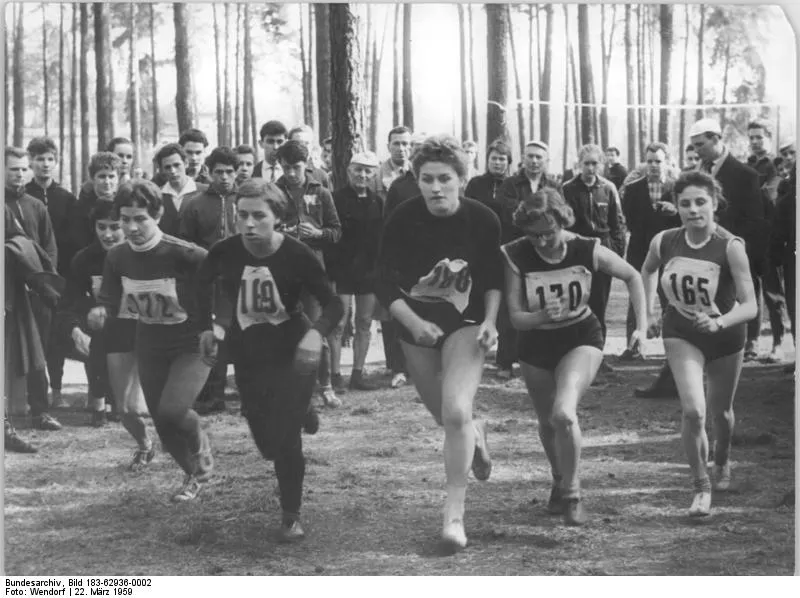
Photo: Wendorf, CC BY-SA 3.0 de, via Wikimedia Commons
Sports has a brutal relationship with time. Not the time on the clock — though that matters enormously — but historical time. The era you compete in. The runners who share your generation. The particular moment in athletic evolution that your career happens to land in.
Get the timing right and you're a legend. Get it wrong and you're a footnote. And in American middle-distance running, the timing has been wrong in the most painful way imaginable for going on four decades.
When American Times Were World-Beating
Let's start with some numbers, because the numbers tell the story better than anything else.
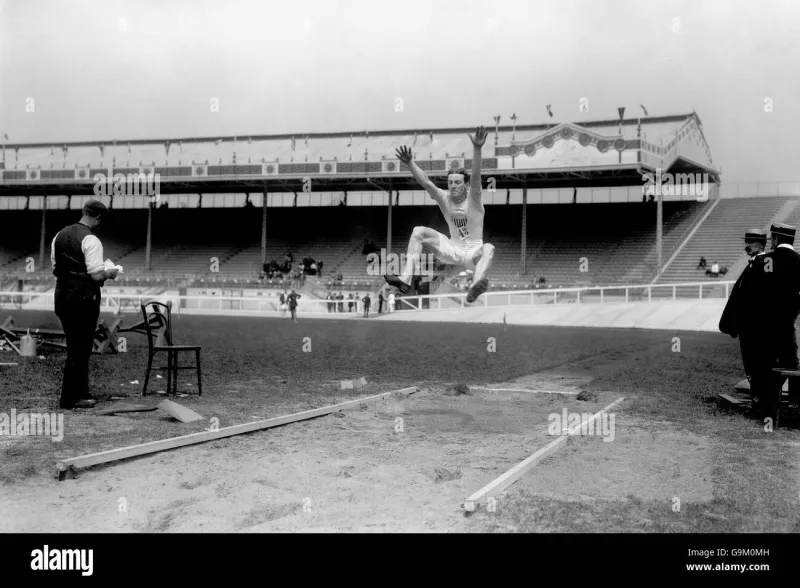
At the 1964 Tokyo Olympics, the 1500 meters was won in 3:38.1. In 1968, the 800 meters gold went to a time of 1:44.3. These weren't slow times — they were world-class performances by the standards of their era. American runners competed at and near those marks regularly through the 1960s and 1970s, and several came home with medals.
 Photo: 1964 Tokyo Olympics, via png.pngtree.com
Now consider that a time of 3:38 in the 1500 meters today would not qualify an athlete for the Olympic final. It would barely get you through a Diamond League heat. The same performance that earned a gold medal in Tokyo would, in the 2020s, make you a middle-of-the-pack professional runner — good enough to make a living, not good enough to matter on the biggest stage.
That's not a knock on the athletes of 1964. It's a measure of how dramatically the event has changed — and why American middle-distance runners have found themselves caught in one of the strangest statistical traps in the history of track and field.
The East African Transformation
The shift has a clear origin point, even if it happened gradually. Beginning in the late 1960s and accelerating through the 1980s and 1990s, Kenyan and Ethiopian runners began reshaping what was possible in the 800 and 1500 meters. The reasons are debated — altitude training, running culture, physiology, economic motivation — but the results are not.
By the mid-1990s, East African athletes weren't just winning middle-distance events. They were pulling the entire performance curve upward. Times that would have been world records a generation earlier became qualifying standards. The threshold for relevance kept rising, and it rose in a direction that American training methods, for all their sophistication, struggled to follow.
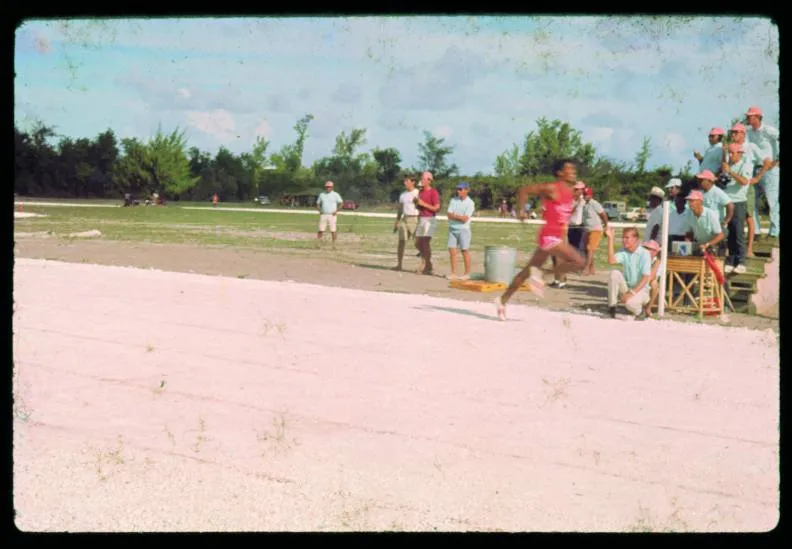
Seb Coe's 1:41.73 world record in the 800 meters stood from 1981 until 1997, when Wilson Kipketer — a Kenyan-born runner competing for Denmark — ran 1:41.11. David Rudisha then broke that in 2010, and again at the 2012 London Olympics with a stunning 1:40.91 that remains the world record today. The progression has been relentless, and it has been driven almost entirely by athletes from a small geographic region that American coaches had barely considered a competitive threat fifty years ago.
 Photo: 2012 London Olympics, via i.imgflip.com
 Photo: Seb Coe, via upload.wikimedia.org
The Americans Who Deserved Better
This is where the story gets genuinely complicated, and genuinely sad.
There have been American middle-distance runners in the last thirty years who were extraordinary athletes by any objective measure. Their training logs were meticulous. Their times, in the context of American competition, were dominant. They won NCAA titles, broke national records, and qualified for Olympic teams. They did everything right.
And then they stepped onto a global final and discovered that "everything right" wasn't enough anymore — not because they had failed, but because the event had moved.
The cruelest version of this pattern shows up in the 1500 meters. An American runner who can break 3:33 is elite by U.S. standards. In a 2020s Olympic final, 3:33 might get you eighth place. The same athlete, transported back to the 1976 Montreal Games, would have been a serious medal contender. The performance is identical. The result is completely different.
This isn't hypothetical. Look at the U.S. Olympic Trials results over the past two decades. You'll find runners with times that would have been gold-medal marks in the 1970s finishing outside the top three in American domestic competition. The depth of the field has improved. But so has the global ceiling — and the ceiling has risen faster.
What Records Can't Measure
The standard response to this kind of observation is that you can only race the people in front of you. That's true. It's also a little too easy.
Because what the historical data actually reveals is something more unsettling: that athletic greatness is, to a significant degree, a product of timing. The same runner, born twenty years earlier, might have an Olympic gold medal. Born twenty years later, they might benefit from training advances that close the gap. Born in the window between — which is roughly where American middle-distance has been since the 1990s — and you're competing in the most difficult era in the history of your event, with the least margin for error.
Records measure what happened. They don't measure what would have happened under different circumstances. They don't capture the runner who ran 3:35 in a world where 3:28 wins, and who might have run 3:28 in a world where 3:35 was the standard.
Greatness, in other words, is only partly about the clock. It's also about the calendar.
What Comes Next
American middle-distance running isn't dead. Coaches and programs have been adapting, slowly but genuinely, to the demands of the modern era. There are promising young American 800m and 1500m runners who have grown up studying East African training methods, who have spent time at altitude, who understand the tactical and physiological demands of modern championship racing in ways their predecessors didn't.
Whether that's enough to close the gap remains an open question. The gap is real, and it's been widening for a long time.
But here's what the history tells us: the athletes who came before weren't failures. They were exceptional competitors who happened to arrive at the exact moment when the event was being redefined by forces largely outside their control. That's not a tragedy, exactly. It's just what happens when sport evolves faster than any single generation can follow.
The clock is always running. The question is which clock you're racing against.