Ray Ewry's Ghost Events: The Olympic Disciplines America Dominated So Hard They Got Erased
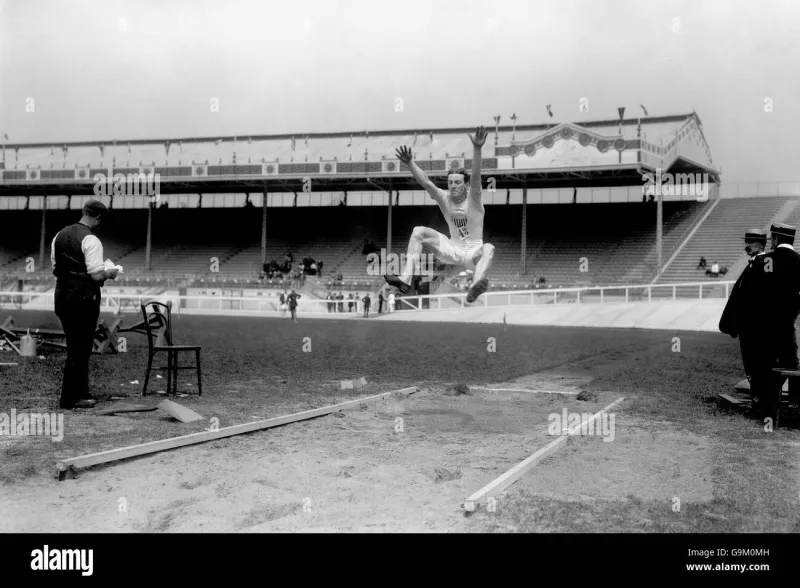
Photo: vintage 1900s Olympic Games black and white athlete jumping competition, via c8.alamy.com
Ray Ewry's Ghost Events: The Olympic Disciplines America Dominated So Hard They Got Erased
There's a version of Olympic history where Ray Ewry is a household name. Where his ten gold medals are as well known as Michael Phelps's twenty-three. Where kids in Indiana grow up knowing that a man from their state, a man who spent part of his childhood unable to walk, became the greatest Olympic champion of his generation.
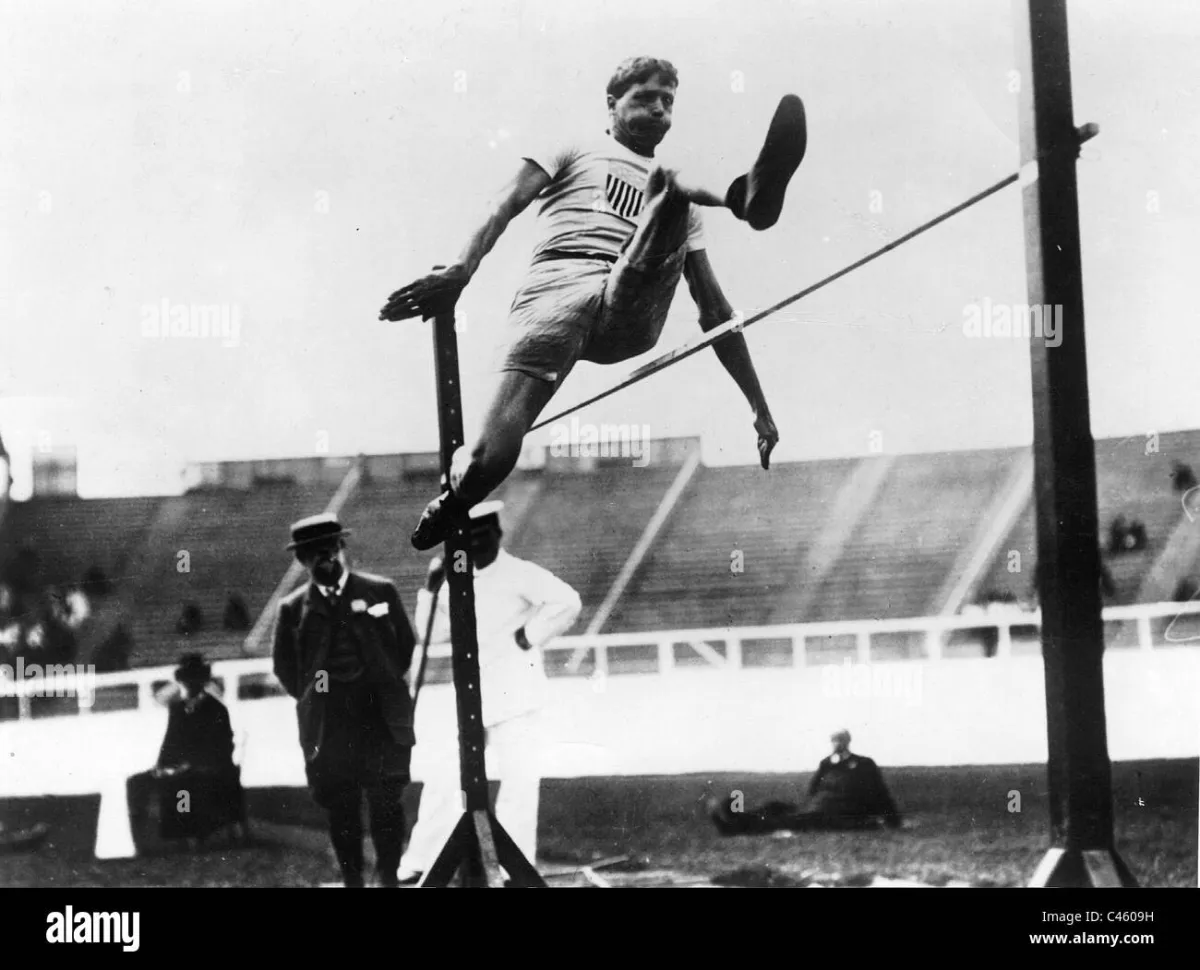 Photo: Ray Ewry, via c8.alamy.com
That version of history didn't happen. And the reason it didn't tells you something uncomfortable about how sports cultures decide what counts.
The Events Nobody Talks About
From 1900 to 1912, the Olympic program included three events that have since vanished so completely that most sports fans have no idea they ever existed: the standing long jump, the standing high jump, and the standing triple jump.
The premise was exactly what it sounds like. No running start. No approach. You stood behind a line, planted your feet, and launched yourself as far or as high as you could using only the explosive power of your legs and the momentum of your arms. It sounds simple. It was, in practice, an extraordinary test of raw athletic power — the kind of pure, unassisted strength and coordination that no amount of technique can fake.
These weren't novelty events or demonstrations. They were full Olympic disciplines, contested alongside the running long jump and high jump, awarding the same gold medals and producing the same champions. Between 1900 and 1912, they appeared at four consecutive Olympic Games and produced some of the most dominant performances in early Olympic history.
Almost all of those dominant performances came from American athletes. And one American in particular.
The Man From Lafayette, Indiana
Ray Ewry was born in 1873 in Lafayette, Indiana. As a child, he contracted polio — then called infantile paralysis — and spent years unable to walk normally. His doctors suggested he exercise his legs as aggressively as possible to rebuild strength. He did. He jumped. He jumped constantly, obsessively, developing a lower-body power that would eventually seem almost superhuman.
 Photo: Lafayette, Indiana, via homeia.com
By the time Ewry arrived at the 1900 Paris Olympics — the second modern Games, a chaotic, sprawling affair held alongside the Paris World's Fair — he was already a standout athlete from Purdue University. What happened in Paris was the beginning of a legacy so lopsided it's almost difficult to process.
 Photo: Purdue University, via wallpapers.com
Ewry won gold in the standing long jump, the standing high jump, and the standing triple jump. All three, at his first Olympics. He came back in 1904 in St. Louis and did it again. He came back in 1908 in London and won the standing long jump and standing high jump again, having aged out of the triple jump event by then. His final gold medal count from Olympic competition was eight — with two additional golds from the 1906 Intercalated Games in Athens, which were officially recognized at the time but are now disputed by the International Olympic Committee, pushing his total to ten by some counts.
For context: at the time, no Olympic athlete had ever won more gold medals. He was the Michael Phelps of the Edwardian era, performing in events specifically designed to reward the exact physical gifts he'd spent his entire life developing.
Why the World Wanted These Events Gone
Here's where the story gets interesting — and a little uncomfortable for American sports pride.
The standing jump events were removed from the Olympic program after 1912, and the primary driver of their removal was the rest of the world's frustration with American dominance. U.S. athletes had turned these disciplines into a near-total monopoly. The combination of American coaching culture, the emphasis on explosive athleticism in U.S. collegiate sports, and the specific physical type these events rewarded had created a situation where other nations were essentially competing for silver.
The argument made against the events — that they were too specialized, too limited in their athletic demand, too easily dominated by a single national style — had some merit on its face. But stripped of diplomatic language, the situation was clear: the rest of the world had decided that if they couldn't win, the game wasn't worth playing.
This is not an entirely unfamiliar dynamic in Olympic history. Events have been added and removed for all kinds of reasons, some principled and some political. But the standing jumps represent a particularly striking case because the events themselves were genuinely demanding athletic disciplines — not gimmicks or demonstrations — and their removal meant erasing a category in which American athletes had achieved something remarkable.
The Forgetting
What happened to Ray Ewry's legacy after 1912 is almost as interesting as what happened during his career.
Partly, his events ceased to exist, which meant future generations had no frame of reference for what he'd accomplished. You can't follow a world record in an event that no longer exists. You can't watch highlight footage from 1900. The standing jumps became athletic orphans — achievements without a home in the ongoing narrative of Olympic sport.
Partly, too, American sports culture moved on. The twentieth century produced a parade of track and field legends — Jesse Owens, Bob Beamon, Carl Lewis, Michael Johnson — whose events were still contested, still generating records, still visible in every Olympic broadcast. Ewry's ten golds sat in the history books while the sports world's attention flowed toward athletes competing in events that still existed.
The result is a strange kind of erasure. Ewry is not unknown to serious Olympic historians. His record is documented. But ask a casual American sports fan to name the most decorated Olympian in history, and you'll almost never hear his name.
What the Standing Jumps Tell Us Now
The rise and fall of the standing jump events is a useful lens for examining how athletic legacy actually works — and how much of it depends on institutional survival rather than pure performance.
Ewry's accomplishments were real. His dominance was extraordinary. His backstory — the kid who couldn't walk, who rebuilt himself through obsessive physical training, who became the best in the world at something that required exactly the strength he'd spent years developing — is as compelling as any origin story in American sports.
But the events he mastered were voted off the Olympic island, and without the events, the achievements exist in a kind of archival limbo. They happened. They just don't quite count the same way anymore.
For a country as obsessed with athletic legacy as the United States, that's worth sitting with. We built something extraordinary in those standing jump pits between 1900 and 1912. Then we let it disappear — and took most of the memory with it.