Red Scare, Blue Ribbons: How Soviet Dominance Quietly Built America's High School Track Machine
Red Scare, Blue Ribbons: How Soviet Dominance Quietly Built America's High School Track Machine
It's 1952. The Helsinki Olympics. The United States walks into the opening ceremony as the undisputed king of global athletics — a nation that had never truly been challenged on the track. Then the Soviet Union shows up for its first-ever Olympic appearance and immediately makes everyone deeply uncomfortable.
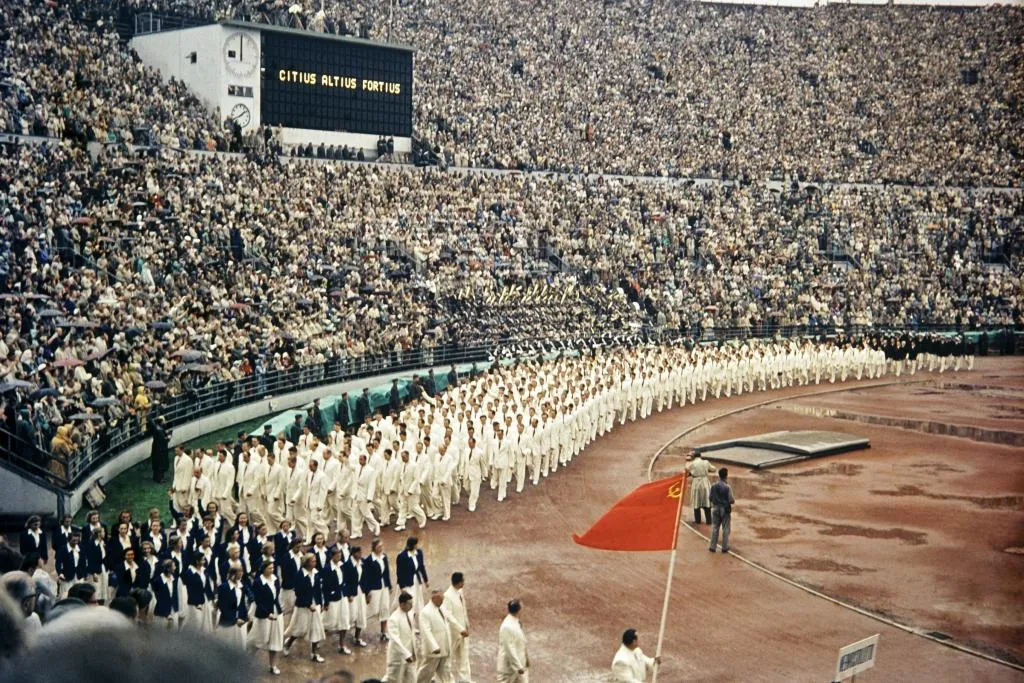 Photo: Helsinki Olympics, via historia.hel.fi
The Soviets didn't just compete. They threatened. They won. They sent a message that had nothing to do with sport and everything to do with ideology. Back in Washington, the reaction was less "congratulations, comrades" and more "we have a serious problem."
What happened next didn't make headlines. There was no dramatic press conference, no declaration of a national fitness emergency. Instead, something quieter and arguably more powerful took root — a slow, deliberate effort to turn the American high school gymnasium and track oval into a production line for world-class athletic talent.
The Moment Everything Changed
Before 1952, high school track in America was largely what you'd expect from a mid-century local pastime. It existed. Kids ran. Some were good. A few went on to college programs, and a rare handful made Olympic teams. But there was no grand national strategy behind it. It was sport for sport's sake — community events, ribbons, maybe a write-up in the local paper.
Helsinski changed the math. The Soviet Union finished the 1952 Games with a medal haul that shocked American officials, and the implications extended far beyond athletics. In the context of the Cold War, Olympic success wasn't just national pride — it was propaganda. Every gold medal was a statement about which system, capitalism or communism, produced superior human beings.
The Soviets understood this completely. Their state-sponsored athletic program was already years in development before Helsinki. American officials, suddenly aware they were playing catch-up, began asking uncomfortable questions about why the world's wealthiest democracy was losing on the track to a country that had barely recovered from World War II.
Washington Gets Into the Gym
The policy response wasn't a single sweeping law. It was more like a series of decisions made in conference rooms that gradually filtered down into school budgets, physical education curricula, and coaching programs across the country.
The President's Council on Physical Fitness, established under Eisenhower in 1956, was perhaps the most visible symbol of this shift. But the real machinery was built at the state and local level, where federal pressure — and eventually federal funding tied to the National Defense Education Act of 1958 — began reshaping what happened in American schools every afternoon between three and five o'clock.
Track programs that had operated on shoestring budgets suddenly found resources. Coaches got training. Facilities were upgraded. Interscholastic competition expanded. The idea was simple, if never stated quite so bluntly: build a deep enough talent base in the schools, and the best athletes will rise to the surface in time for the Olympics.
It was essentially the Soviet model, dressed up in American clothes.
The Pipeline Takes Shape
By the late 1950s and into the 1960s, the results were starting to show. American track programs at the high school level became genuinely competitive — not just within states, but as feeder systems into college programs that were themselves becoming more sophisticated and better funded.
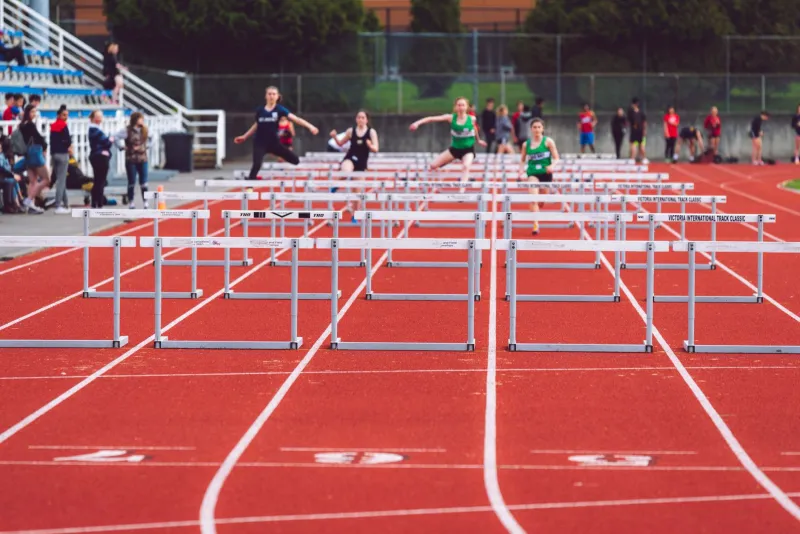
The AAU (Amateur Athletic Union) expanded its youth programs. State championships grew in prestige. A kid running 400 meters at a Thursday afternoon meet in Ohio or Texas or California was now, theoretically, part of a national ecosystem that stretched all the way to the Olympic Trials.
This wasn't an accident. It was infrastructure, built in response to fear.
The 1960 Rome Olympics gave early evidence that the investment was paying off. Rafer Johnson won the decathlon. Wilma Rudolph, a product of Tennessee's track program, became the fastest woman on earth. American sprinters and field athletes held their own against Soviet competition in ways that would have seemed uncertain just eight years earlier.
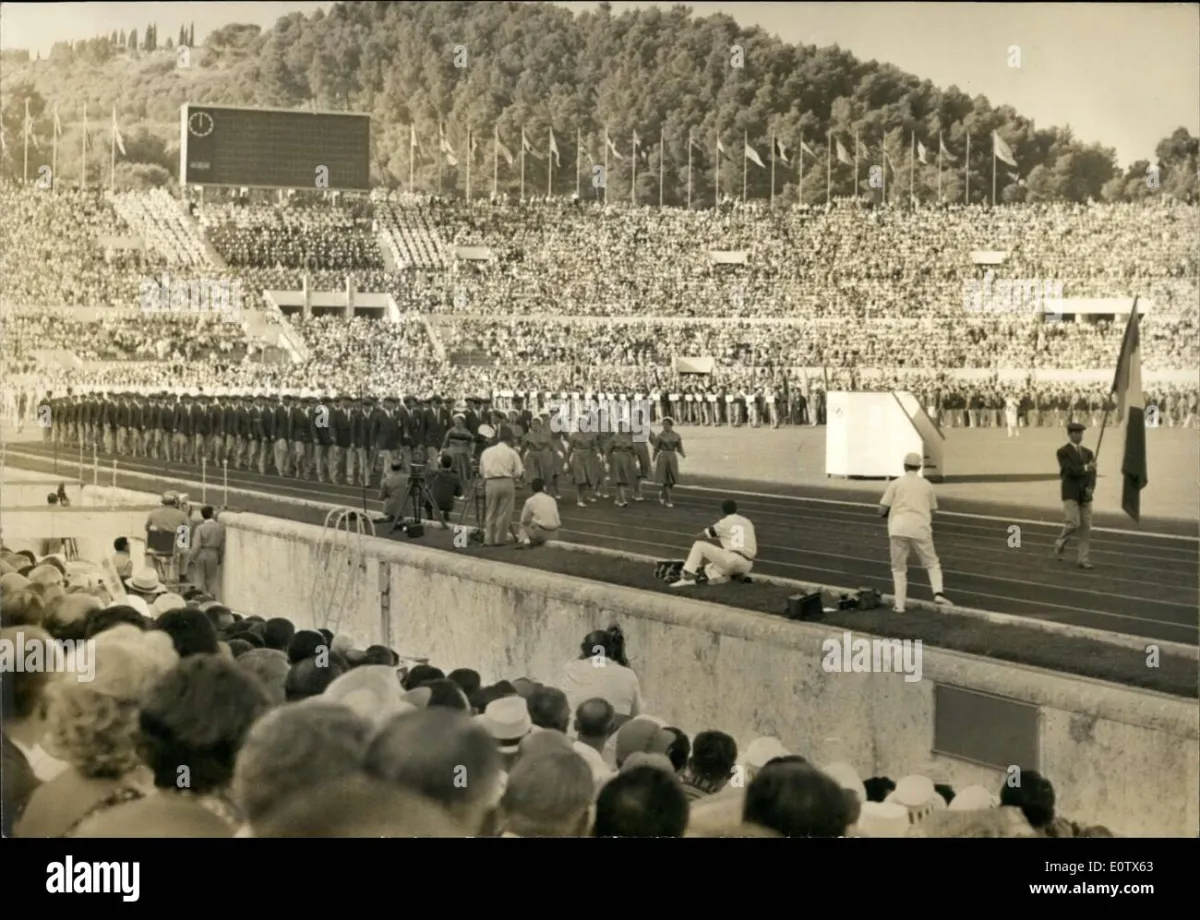 Photo: Rome Olympics, via c8.alamy.com
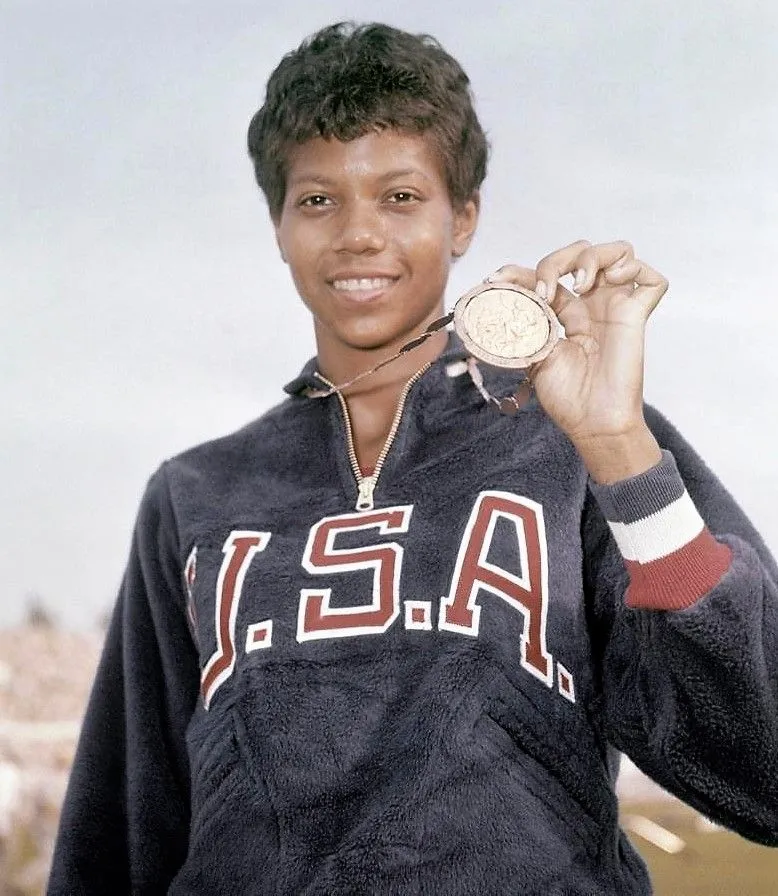 Photo: Wilma Rudolph, via i.pinimg.com
The Structure That Survived the Cold War
Here's the part that doesn't get talked about enough: the Cold War ended. The Soviet Union dissolved. The geopolitical emergency that quietly built America's high school track infrastructure simply evaporated one morning in December 1991.
But the machine kept running.
The high school-to-college-to-Olympic pipeline that was essentially engineered out of Cold War anxiety had become self-sustaining. State championships still carry enormous prestige. College track programs still recruit aggressively from high school rosters. The U.S. Olympic Trials still draw heavily from athletes who first found their talent in a school program.
When you watch an American sprinter explode off the blocks at the Olympics today, you're watching the end product of a system that traces its design, at least in part, back to a geopolitical panic in 1952.
The Inequality Hidden in the Machine
It's worth noting that the pipeline was never perfectly built or evenly distributed. School funding disparities meant that affluent suburban programs often got the resources that underfunded urban and rural schools didn't. Some of the most talented athletes in the country grew up with cracked tracks, part-time coaches, and secondhand equipment.
The fact that American track and field has still produced extraordinary talent from underserved communities says more about the athletes themselves than the system. The machine was built with ideological intent, not equity in mind.
That tension — between the official narrative of the American athletic meritocracy and the reality of who actually gets access to quality coaching and facilities — is one the sport is still working through.
Racing Into the Present
The Cold War is history. But walk into a high school track meet anywhere in America this spring and you'll see its legacy in full motion. Kids who don't know what Helsinki means are running times that would have seemed impossible to their grandparents, on tracks built by a system that was designed, at its core, to beat the Soviets.
Sport rarely exists in a vacuum. The records we chase, the programs we build, the infrastructure we create — all of it carries the fingerprints of the world it was made in.
America's track machine was built out of fear. That it became something genuinely great is one of the stranger stories in the history of American athletics.