No Gym, No Problem: How Ancient Greek Athletes Built Elite Bodies From Scratch
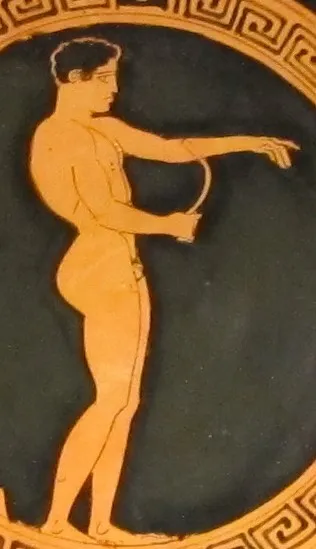
Photo: RickyBennison, CC BY-SA 3.0, via Wikimedia Commons
Picture the training facility of an ancient Olympic champion. No squat rack. No pull-up bar. No foam roller, no heart rate monitor, no performance nutritionist standing by with a recovery shake. What you've got instead is a patch of sand, a pit of mud, a set of stone weights, and a very opinionated coach who probably thinks you're not working hard enough.
And somehow — out of those conditions — ancient Greek athletes built bodies capable of winning the most prestigious athletic competition in the known world.
The methods were different. The science was nonexistent by modern standards. But the results were real, and some of the principles behind them have turned out to be more durable than anyone might have expected. Here's how the original Olympians built their championship physiques — and why their approach still echoes through elite athletic training in 2024.
The Palaestra: Ancient Greece's Answer to the Gym
If ancient Greek athletes had a home base, it was the palaestra — a dedicated training ground typically consisting of an open courtyard surrounded by covered colonnades and rooms for oiling up, changing, and instruction. Every major Greek city of any size had one, and serious athletes spent significant portions of their lives there.
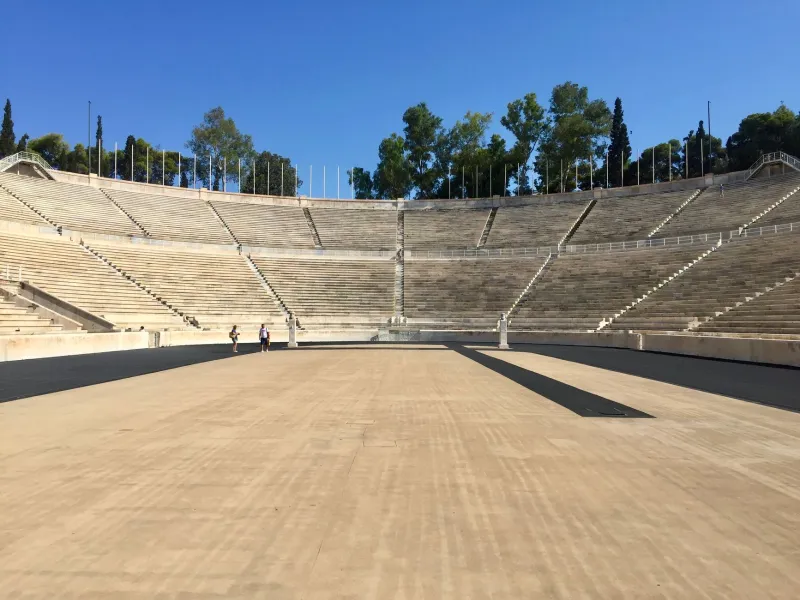
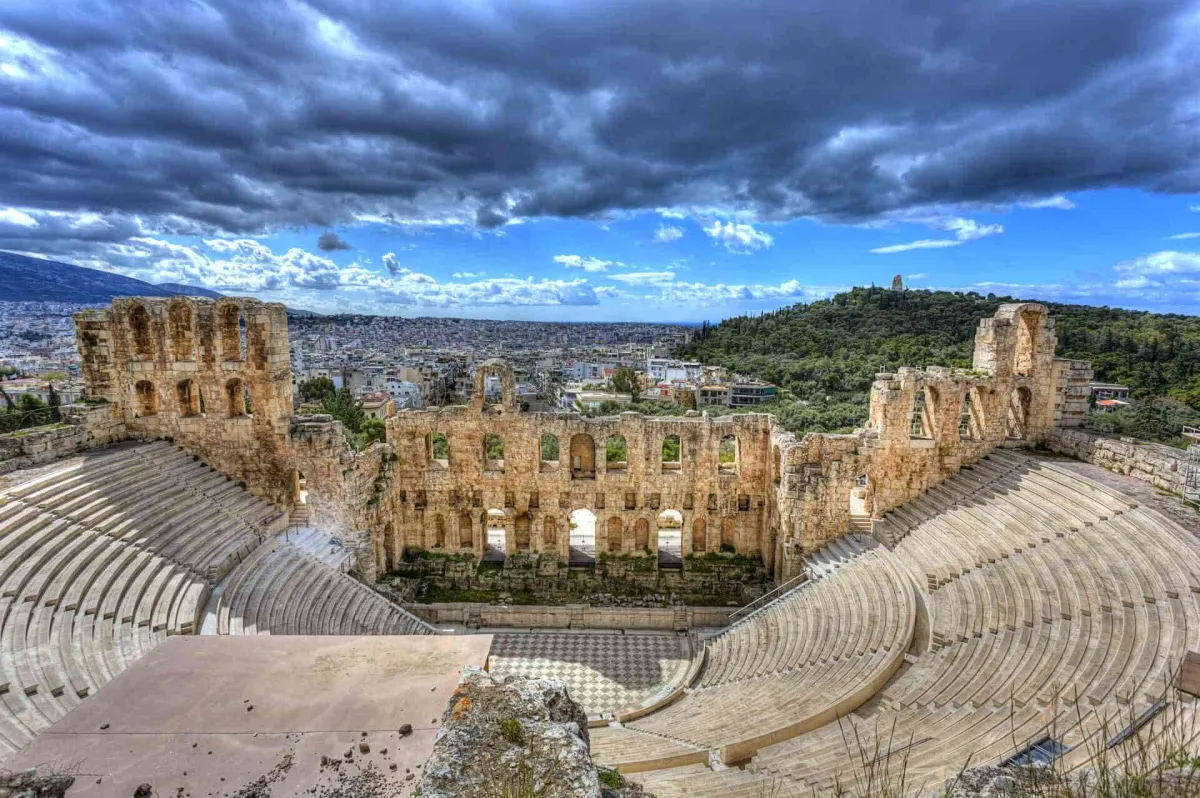 Photo: Ancient Greece, via thearchitecturedesigns.com
The palaestra wasn't just a workout space. It was a social institution, a philosophical gathering point, and a place where the relationship between physical and intellectual development was taken seriously. Plato himself was reportedly a wrestler, and the palaestra was where Greek thinkers and athletes mingled freely. The idea that physical training and mental development were separate pursuits would have seemed strange to an ancient Greek.
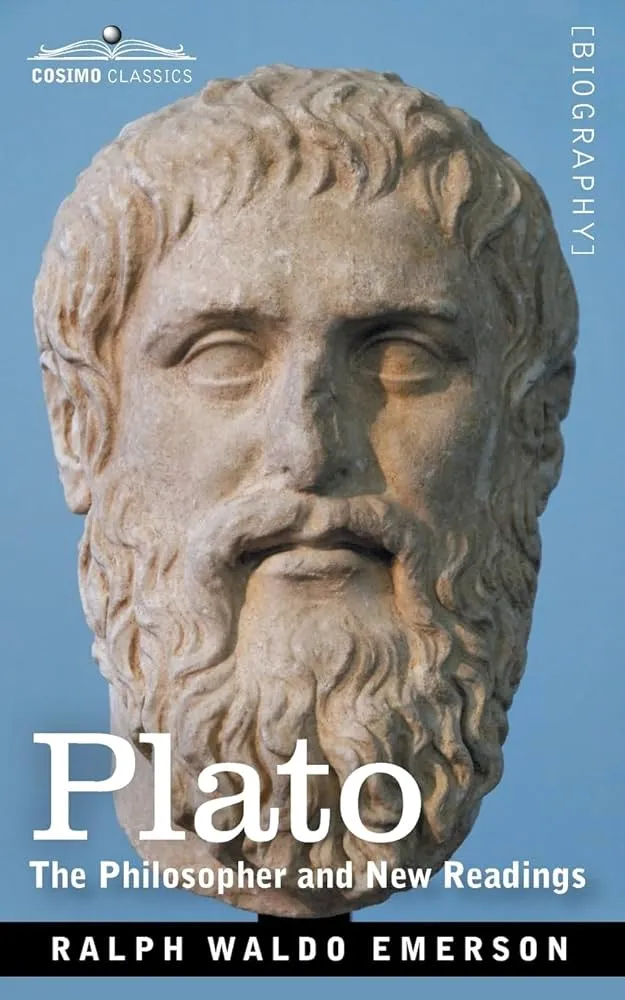 Photo: Plato, via m.media-amazon.com
For American athletes today, the closest equivalent might be the culture around a college training facility — a place that's part gym, part community, part identity. The ancient Greeks understood instinctively that environment shapes performance, and they built spaces designed to produce champions.
Sand, Mud, and Resistance: Training Without Equipment
The core of ancient Greek athletic conditioning was elegantly simple: make the body work harder than it needs to in competition, so that competition feels easier by comparison.
Running in sand was a staple of training for ancient sprinters and distance athletes. Sand running forces greater muscle activation in the lower legs and feet, increases cardiovascular demand, and builds the kind of functional strength that transfers directly to track performance. Modern coaches at beach training camps — and any athlete who has done sand dune repeats — will recognize this immediately. The ancient Greeks didn't have sports science to explain why it worked. They just knew it did.
Wrestling in muddy or sandy pits served a dual purpose. It was both a competitive sport and a conditioning method. The unstable surface demanded total-body engagement in ways that flat-ground training simply doesn't replicate. Modern strength and conditioning coaches talk extensively about proprioception — the body's ability to sense and respond to its own position in space. Ancient Greek wrestlers were developing that capacity every single day, in the mud, without knowing what to call it.
The Greeks also practiced a form of shadow training — essentially shadowboxing without an opponent, or running through the motions of throwing events without a javelin or discus. The principle of pattern rehearsal, of grooving movement mechanics through repetition, is as central to modern athletic preparation as it was to ancient Olympian training.
The Halteres: Ancient Weights That Worked
One of the most fascinating pieces of ancient Greek training equipment was the halteres — a set of handheld weights, typically made from stone or lead, shaped roughly like a dumbbell or a modern jumping weight. They were used primarily in the long jump, where athletes would swing them forward during takeoff and release them mid-air to generate additional momentum.
But the halteres also served as a general conditioning tool. Ancient athletes used them for rhythmic swinging movements that bear a striking resemblance to modern kettlebell work — a training modality that's had a massive resurgence in elite athletic programs over the past two decades.
Kettlebell training emphasizes hip hinge mechanics, posterior chain development, and the kind of full-body power generation that translates directly to sprinting, jumping, and throwing. The ancient Greeks were doing a cruder version of exactly this, with stone weights, thousands of years before anyone coined the term "posterior chain."
The halteres weren't just a novelty. They were a genuine performance tool, and the movement patterns they trained have turned out to be among the most valuable in all of strength and conditioning.
The Paidotribes: Coach, Trainer, and Philosopher
No ancient Greek athlete trained alone. Overseeing the physical development of young competitors was the paidotribes — a trained professional whose role combined what we'd now split across a strength coach, a technical coach, and in some cases a sports psychologist.
The paidotribes used a forked stick — not as punishment, but as a correction tool, physically guiding athletes into proper positions during training. They prescribed specific training loads, monitored recovery, and made decisions about when athletes were ready to compete versus when they needed more preparation.
The existence of this role tells us something important: ancient Greek athletics wasn't just raw talent running wild. It was a structured, supervised, professionally managed process. The Greeks had already figured out that elite performance requires expert guidance — a principle so obvious today that it's easy to forget it had to be discovered at all.
Modern strength and conditioning coaches, athletic trainers, and performance specialists are the direct conceptual descendants of the paidotribes. The tools have changed. The relationship between athlete and expert guide has not.
What Ancient Methods Survived Into the Modern Era
If you lined up the training methods of an ancient Greek Olympian alongside a modern elite sprinter's program, the differences would be enormous. The modern athlete has access to GPS tracking, force plate analysis, periodized programming built on decades of research, and recovery tools the ancient Greeks couldn't have imagined.
But look closer, and some things haven't changed at all.
Sand running is still used by elite sprinters and distance runners for resistance training and injury prevention. Wrestling and grappling remain foundational conditioning tools across multiple sports. Rhythmic weight-swinging movements — the modern kettlebell — have made a massive comeback in elite strength programs. The concept of supervised, expert-guided training is more central to elite athletics than ever.
And perhaps most importantly, the ancient Greek philosophy that the body must be challenged beyond competition demands in order to perform at its peak remains the bedrock of modern periodization theory.
The ancient Greeks didn't have weight rooms. They didn't need them. They had something that turned out to be just as powerful: a deep, practical understanding of what it takes to build a body capable of winning. And a few thousand years later, a surprising amount of what they figured out is still showing up in the training plans of the fastest, strongest athletes on the planet.