One Race, One Minute, One Country Transformed: How Roger Bannister Broke America's Brain

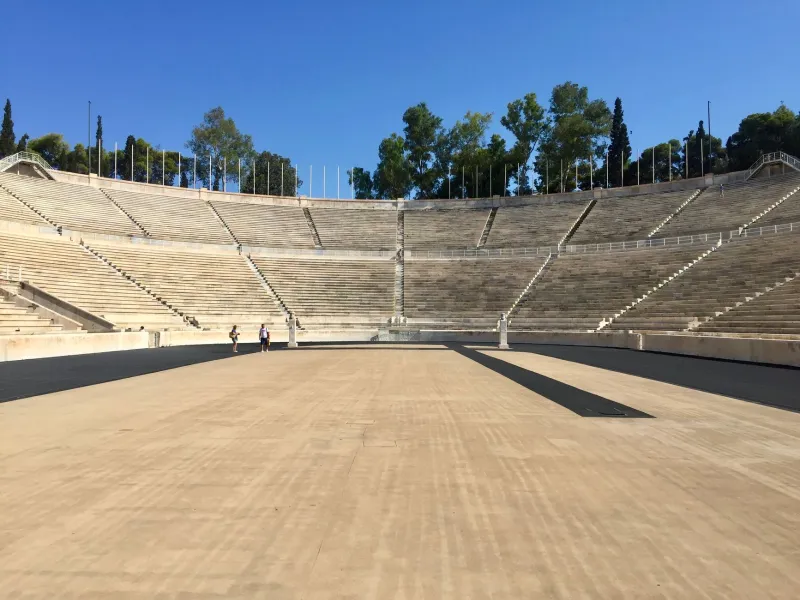
Photo: Unknown (commercial matchbox manufacturer), Public domain, via Wikimedia Commons
One Race, One Minute, One Country Transformed: How Roger Bannister Broke America's Brain
For decades, the four-minute mile sat at the edge of American ambition like a locked door nobody could quite reach. Coaches whispered about it. Journalists wrote about it. Runners trained toward it and fell short, again and again, until the barrier started to feel less like a challenge and more like a law of nature.
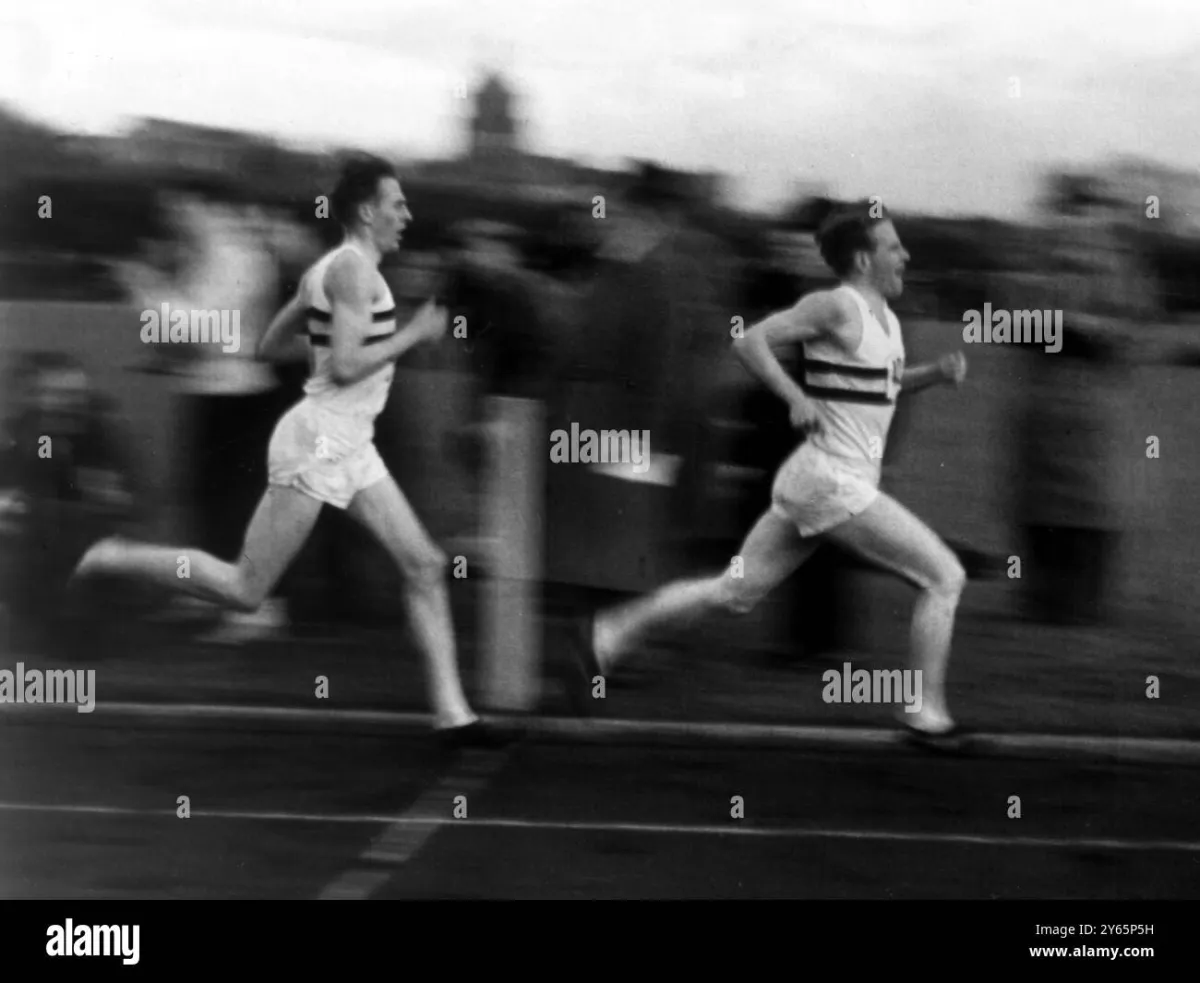 Photo: Roger Bannister, via c8.alamy.com
Then, on a cold Thursday afternoon in Oxford, England, a British medical student named Roger Bannister ran 1,609 meters in 3 minutes and 59.4 seconds — and the door swung open.
What happened next on American soil is one of the most fascinating psychological case studies in sports history. It wasn't just that athletes got faster. It's that they got faster immediately, in numbers that defy any purely physical explanation.
The Wall Before the Breakthrough
To understand what Bannister's run meant to America, you have to understand how deeply the four-minute barrier had burrowed into the national sporting consciousness.
Through the 1940s and into the early 1950s, the U.S. mile record hovered stubbornly in the low 4:0x range. American collegiate programs were producing talented middle-distance runners — men who trained hard, raced smart, and still couldn't crack the barrier. The closest anyone got only seemed to confirm the impossibility of it. By 1954, the accepted wisdom among many coaches and sports scientists was that the human body simply wasn't built to sustain that pace for that distance. Some physicians suggested the cardiovascular stress would be dangerous.
American runners weren't failing for lack of effort. They were failing, at least in part, because they believed they would.
The Oxford Ripple Effect
Bannister's run reached American newsrooms within hours. By the next morning, it was front-page sports news across the country. And while the initial reaction was admiration — even awe — something else was quietly happening inside the minds of U.S. middle-distance runners.
The impossibility had been disproven. Not theorized about. Not suggested. Proven. A human being had done it, and the world hadn't ended.
Within 46 days, Australian runner John Landy went under four minutes again. The record had been broken twice before most Americans had fully processed the first time. But the more significant development was what started happening on U.S. tracks.
In the year following Bannister's run, American milers began recording sub-four-minute performances at a rate that would have seemed absurd just twelve months earlier. Wes Santee, the Kansas runner who had come agonizingly close before Bannister's breakthrough, was followed by a wave of collegiate athletes who suddenly found what had eluded the previous generation. By the late 1950s, the sub-four-minute mile had gone from impossible to merely elite — a benchmark that serious American milers were expected to eventually hit, not a supernatural feat reserved for once-in-a-generation talents.
The times didn't change because training programs were overhauled overnight. The physiology of American runners didn't suddenly evolve. What changed was the story they told themselves about what was achievable.
How American Coaches Responded
The coaching response in the U.S. was telling. Rather than immediately redesigning training methodologies, many coaches reported that the most significant shift was in how they talked to their athletes. The language of limits changed. Phrases like "nobody has ever" became less useful — because somebody had. The conversation moved from theoretical ceiling to practical pathway.
This wasn't unique to track. American sports culture has always been deeply invested in the psychology of record-breaking, perhaps more so than any other nation. The U.S. sports tradition is built on the idea that records exist to be broken, that every mark is temporary, that the right combination of talent, training, and will can move any goalpost. Bannister's mile didn't just give American runners a new target — it gave American sports culture a new proof of concept.
Coaches began training athletes not just toward fitness benchmarks but toward specific time barriers, understanding that the mental architecture of a goal matters as much as the physical preparation for it. The four-minute mile had demonstrated, conclusively, that collective belief in impossibility is itself a performance limiter.
The Numbers Tell the Story
Here's the data point that should stop you cold: in the roughly 70 years before Bannister's run, no American had broken four minutes for the mile. In the decade that followed, dozens did. The improvement in American middle-distance performance during the late 1950s and 1960s was dramatic — and it coincided not with a revolution in nutrition science or equipment technology, but with a single afternoon in Oxford that rewrote what runners believed was possible.
By the time Jim Ryun set the world mile record of 3:51.1 in 1966, the conversation in American track circles had shifted entirely. The question was no longer whether an American could break four minutes. It was how far below four minutes the best Americans could go.
What It Still Means
The current world record for the mile stands at 3:43.13, set by Hicham El Guerrouj in 1999. The four-minute barrier, once the outer edge of human possibility, is now cleared regularly by elite high school runners. What was once a career-defining achievement has become a threshold that serious collegiate runners are expected to approach.
But none of that diminishes what happened in 1954. If anything, the cascade of sub-four-minute miles that followed Bannister's breakthrough makes the psychological argument stronger, not weaker. Records, it turns out, are never just about the body. They're about the story a culture tells itself about what the body can do.
Bannister ran 3:59.4 in Oxford. America heard it in every time zone — and something in the competitive brain of this country shifted permanently. That's not mythology. That's just what happens when the impossible becomes the done.