Gone Without a Finish Line: The Olympic Distances America Once Owned That Simply Ceased to Exist
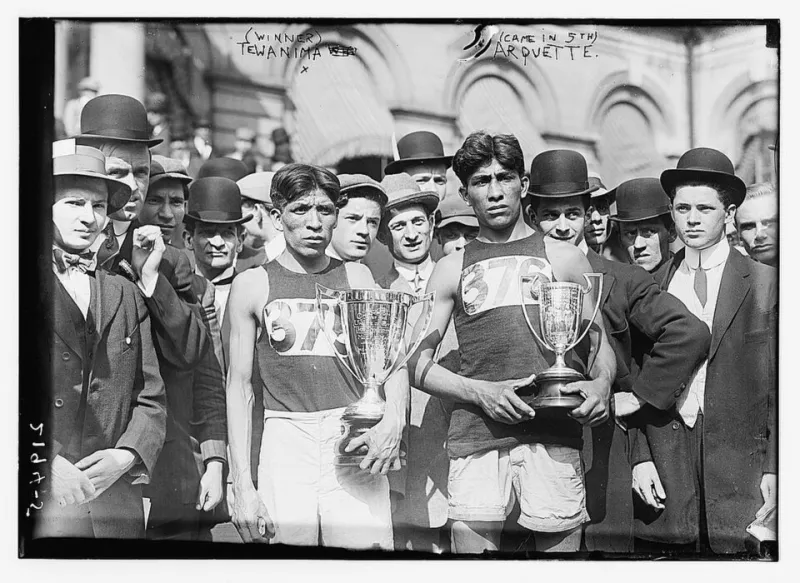
Photo: The Library of Congress, No restrictions, via Wikimedia Commons
Every sport has its sacred distances. The hundred meters. The mile — or its metric cousin, the 1500. The marathon. These feel permanent, immovable, as though they were handed down from some athletic authority that exists outside of history. They weren't. They were chosen by committees, revised by administrators, and occasionally discarded when they stopped serving whatever purpose the people in charge decided they should serve.
The Olympic track program has always been more fluid than it appears. And buried in its early history are a handful of distances that American athletes ran faster, smarter, and better than anyone else in the world — until the distances themselves were erased from the program entirely.
The Events That Time Forgot
The 1900 Paris Olympics and the 1904 St. Louis Games were, by most accounts, organizational disasters. The 1900 Games were buried inside a World's Fair and barely recognized as a separate event. The 1904 edition, hosted in St. Louis, was so chaotic that many international athletes didn't bother to show up. But both Games featured events that would never appear on an Olympic program again.
 Photo: 1904 St. Louis Games, via i.pinimg.com
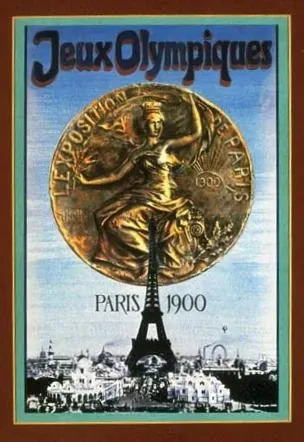 Photo: 1900 Paris Olympics, via static.wikia.nocookie.net
In 1900, the track program included a 2,500-meter steeplechase. Not the modern 3,000-meter steeplechase that exists today — a different distance, run under different conditions, with water jumps positioned inconsistently depending on which source you consult. The event was contested once and dropped. George Orton of Canada won it, but American athletes filled several of the top positions in the broader steeplechase events that year.
 Photo: George Orton, via skateboardinghalloffame.org
The 1904 St. Louis Games went further into experimental territory. The track program included a team race — a competition in which nations entered groups of runners, with finishing positions combined to produce a team score. The United States, competing on home soil with a full complement of athletes while most international competitors stayed home, dominated these events in ways that look impressive in the record books but come with significant asterisks.
There was also, at various early Games, a 5-mile run — not 5,000 meters, but an actual five-mile race, a distance that sits awkwardly between the 5K and 10K and has no modern equivalent. American runners competed in and won versions of this event. It appeared on the Olympic program and then disappeared, replaced eventually by the cleaner metric distances that the international athletics community would standardize in the twentieth century.
Why Some Distances Survive and Others Don't
The question of which events endure and which get cut is less about athletic merit than it is about institutional politics, television appeal, and the evolving priorities of the organizations that govern international sport.
The International Association of Athletics Federations — now called World Athletics — has significant power over what appears on the Olympic program. So does the International Olympic Committee, which periodically reviews the entire Games to manage the number of events, athletes, and broadcast hours. Events that don't generate sufficient global competition, that lack clarity for spectators, or that duplicate what another distance already provides are vulnerable.
The 2,500-meter steeplechase was too close to other distances to justify its own category. The team race, while genuinely interesting as a tactical competition, was complicated to explain and difficult to broadcast. The five-mile run was an imperial measurement in a world moving toward the metric system. Each of these events had logical reasons for removal — but their disappearance also erased the performances of the athletes who had competed in them.
What Gets Lost When Events Disappear
This is the part of athletic history that rarely gets discussed: when an event is removed from the Olympic program, the athletes who excelled in it lose their place in the canonical record of sport.
An Olympic champion is an Olympic champion forever. But an Olympic champion in an event that no longer exists occupies a strange liminal space — recognized in historical records, invisible to modern audiences. The American runners who competed in the 1904 five-mile race or the 1900 steeplechase variants were real athletes who trained seriously and competed at the highest level available to them. Their performances are documented. They are simply never mentioned.
This matters because it reveals something uncomfortable about how we construct athletic history. We treat the current Olympic program as though it represents some natural order — as though the 100 meters and the marathon were inevitable while the two-mile team race was obviously expendable. But that judgment was made by administrators, not by athletes. The runners who specialized in those distances had no say in whether their event would survive.
The Shape of What Remains
The modern Olympic track program has been remarkably stable since roughly the 1950s. The distances are set. The events are known. The record books are clean and continuous. That stability is genuinely useful — it allows for meaningful historical comparison and gives athletes long-term targets to chase.
But it also creates a false sense of permanence. The program looks the way it does not because these distances are objectively correct, but because a series of decisions made over more than a century gradually narrowed the field to what currently exists.
And those decisions weren't neutral. The shift to metric distances disadvantaged athletes from countries that had trained in imperial measurements. The removal of team events reduced the tactical complexity of middle-distance racing. The standardization of the steeplechase at 3,000 meters left behind a generation of runners who had been training for different variants.
American athletics absorbed these changes and adapted, as it generally does. But the records from those early Games — the five-mile winners, the team race champions, the 2,500-meter steeplechase finalists — are still there in the archives, waiting for someone to notice them.
Racing Distances That No Longer Exist
There's something philosophically interesting about being the best in the world at something that ceases to exist. The record stands, technically. The performance happened. But there's no modern equivalent to compare it against, no living athlete who trains for the same distance, no way to contextualize the achievement within the current sport.
In a sense, those early American athletes who dominated forgotten Olympic distances were racing toward a finish line that got moved. They won. And then the event was retired around them, leaving their victories stranded in a part of athletic history that almost nobody visits.
The next time you watch an Olympic final and marvel at the precision of the distances — the exact 800 meters, the clean 5,000, the standardized steeplechase — remember that precision is a choice. It was made by people, in rooms, for reasons that had as much to do with administration as with athletics.
Somewhere in the old record books, there are American champions who ran distances that no longer have names. They were real. They were fast. And the race they ran doesn't exist anymore.