The Forgotten Women Who Ran Before Running Was Allowed: America's Underground Track Revolution
The Forgotten Women Who Ran Before Running Was Allowed: America's Underground Track Revolution
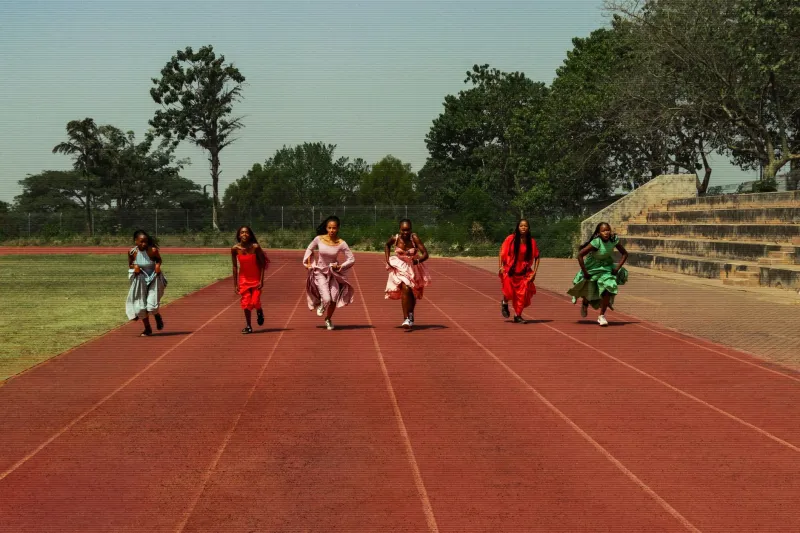
In the summer of 1895, while the men's Amateur Athletic Union was busy standardizing rules and recording official times, something remarkable was happening in a church field outside Springfield, Massachusetts. A group of women had gathered to race each other in full-length skirts and button-up boots, with no officials, no records, and certainly no recognition from the sporting authorities who insisted that women's bodies weren't built for competitive athletics.
 Photo: Springfield, Massachusetts, via www.pathfinder-fr.org
They ran anyway.
The Victorian Rebellion in Petticoats
These weren't isolated incidents. Across America, from rural county fairs to urban settlement houses, women were quietly organizing their own competitions. They raced at church picnics, factory outings, and college field days — anywhere they could find space and freedom from the male gatekeepers of "legitimate" sport.
The women who participated in these underground competitions were rebels in the truest sense. Victorian society taught them that vigorous exercise would damage their reproductive organs, that competition was unfeminine, and that public displays of athletic prowess were unseemly. Medical experts warned that running could cause their uteruses to fall out.
But American women had something their European counterparts often lacked — a frontier spirit that questioned authority and a democratic ideal that suggested everyone deserved a chance to compete.
The Church Field Circuit
By the early 1900s, an informal network of women's competitions had emerged across the country. Church socials became particularly important venues, as religious communities often provided the only socially acceptable spaces for women to gather and organize activities.
These races were far from the polished affairs men enjoyed. Women ran in whatever clothes they owned, often hiking up their skirts and racing in their everyday shoes. There were no starting blocks, no precise timing, and no official records. Winners were determined by whoever crossed the finish line first, usually marked by a rope stretched between two trees.
What these competitions lacked in official recognition, they made up for in pure competitive spirit. Women who had been told their entire lives that they were too fragile for athletics discovered they could run, jump, and throw with remarkable ability.
The Factory Girl Phenomenon
The industrial revolution created unexpected opportunities for women's athletics. Factory girls in cities like Lowell, Massachusetts, and Rochester, New York, organized running clubs that met after work shifts. These working-class women had fewer social constraints than their upper-class counterparts — they were already breaking Victorian norms by working outside the home.
Company picnics became showcases for these informal athletic clubs. Textile workers would race against each other in events that drew hundreds of spectators. The competitions were fierce, with bragging rights lasting for months and informal rivalries developing between factories.
These industrial competitions produced some of America's first female athletic stars, though their names were never recorded in official record books. Stories passed down through families tell of women who could outrun most men, who trained by running to and from work, and who viewed athletics as a form of liberation from the constraints of industrial labor.
College Women Push Boundaries
While working-class women competed at factory picnics, college women were fighting their own battles for athletic recognition. At institutions like Vassar, Smith, and Wellesley, female students organized their own track and field competitions despite official disapproval from administrators.
These college competitions were more organized than their working-class counterparts, with students creating detailed rules and keeping informal records. They developed their own championships, complete with ribbons and ceremonies that mimicked the men's competitions they were excluded from.
The college women's movement was particularly significant because it produced the first generation of female physical education teachers, who would later become crucial advocates for women's athletics in American schools.
The Price of Participation
Participating in these underground competitions came with real social costs. Women who competed openly faced criticism from family members, religious leaders, and community members who viewed their athletics as inappropriate or dangerous.
Many women competed under assumed names or kept their athletic activities secret from employers or family members. Others faced direct consequences — some were fired from jobs, expelled from schools, or ostracized from social circles.
Despite these risks, the movement continued to grow. The desire to compete, to test physical limits, and to experience the joy of athletic achievement proved stronger than social pressure to conform.
Building the Foundation
These forgotten pioneers created more than just informal competitions — they built the cultural foundation that would eventually support official women's athletics in America. They proved that women could compete without suffering the dire health consequences that medical experts predicted. They demonstrated that female athletics could draw enthusiastic crowds and generate community support.
Most importantly, they raised a generation of daughters who grew up seeing women as capable athletes, not fragile ornaments.
From Underground to Olympic Glory
The connection between these early pioneers and today's American female athletes is direct and profound. When the Olympics finally began including women's track and field events in the 1920s, American women were ready to compete because they had been competing all along — just without official recognition.
The American women who dominated early Olympic competition didn't emerge from nowhere. They were the daughters and granddaughters of women who had been racing in church fields and factory lots for decades.
The Modern Legacy
Today, American women dominate international track and field in a way that would astound those early pioneers. The US women's track team consistently outperforms most entire nations, winning medals across every distance and discipline.
This dominance isn't accidental — it's the culmination of more than a century of American women refusing to accept limitations on their athletic potential. From those first races in church fields to today's Olympic podiums, American female athletes have been driven by the same spirit of rebellion and determination.
The women who ran before running was allowed didn't just compete for themselves — they competed for every American girl who would come after them. Their quiet revolution in petticoats and button-up boots created the foundation for a sporting dynasty that continues to inspire the world.
Every time an American woman wins an Olympic medal in track and field, she's carrying forward the legacy of those forgotten pioneers who ran without recognition, raced without records, and competed without permission. They proved that the desire to run fast, jump high, and compete fiercely isn't limited by gender — it's fundamentally human, and fundamentally American.