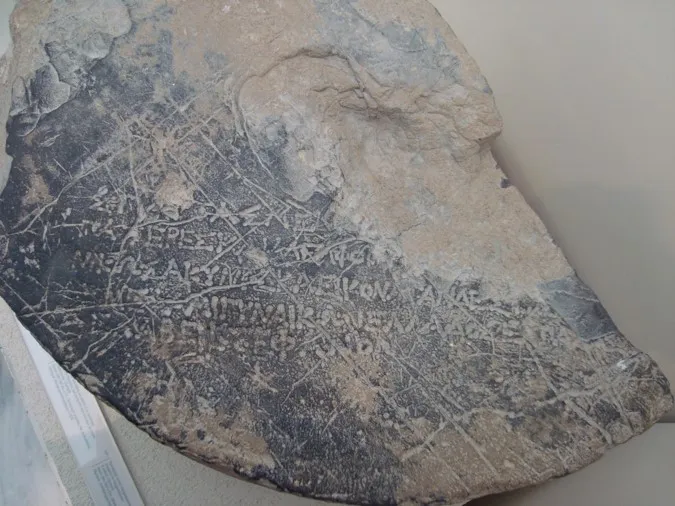
Locked Out of Olympia: The Ancient World's Most Ruthless Gender Ban
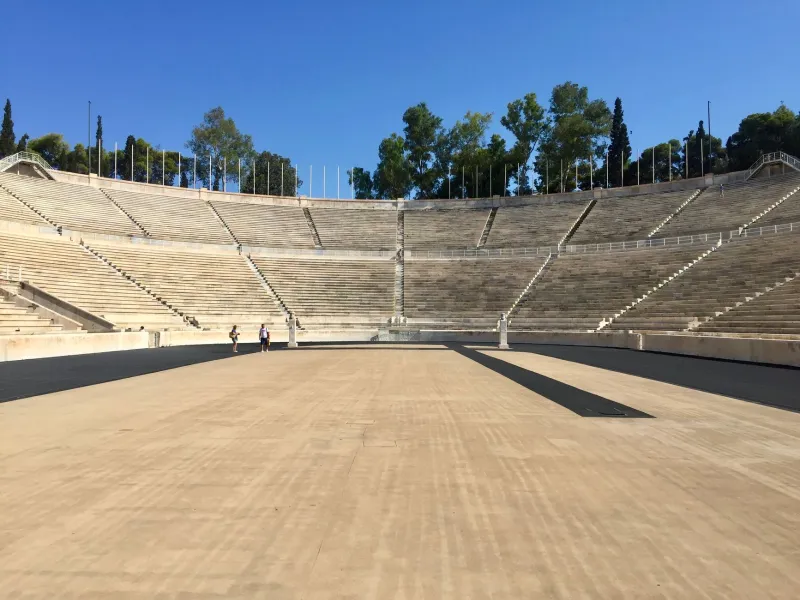
Locked Out of Olympia: The Ancient World's Most Ruthless Gender Ban
Imagine training your whole life for one moment — and then being told you're not even allowed to watch.
That was the reality for women in ancient Greece when the Olympic Games rolled around every four years at Olympia. The festival, launched in 776 BC as a religious celebration honoring Zeus, was the ancient world's most prestigious athletic event. It drew the fastest, strongest men from across the Greek-speaking world. It also drew a very firm line at the entrance: women were not welcome.
Not as athletes. In most cases, not even as spectators. The exclusion wasn't a footnote in history — it was a foundational rule of the games themselves. And understanding why it existed, how women pushed back against it, and what eventually changed tells us something important about both ancient civilization and the long road to modern sport.
Why Women Were Banned in the First Place
The ancient Olympics weren't just a sporting event. They were a sacred religious gathering held in honor of Zeus, the king of the Greek gods. The site at Olympia was holy ground, and the games were deeply intertwined with Greek religious ritual, male citizenship, and civic identity.
In ancient Greek society, athletic competition was considered a fundamentally male pursuit — a preparation for war, a display of physical excellence, and a way of honoring the gods through the male body. Women occupied a different social role entirely, largely confined to domestic life and excluded from most public civic functions.
The official rule was stark: married women were forbidden from attending the Olympics under penalty of death. According to ancient sources, any woman caught crossing the Alpheus River during the games could be thrown from the cliffs of Mount Typaion. Unmarried girls were apparently granted a limited exception and could attend as spectators — though the exact enforcement of this rule likely varied across the centuries the games were held.
One priestess of Demeter was reportedly granted an honorary seat at the games. She was the exception, not the rule.
The Woman Who Dared Anyway
History loves a rule-breaker, and ancient Greece delivered one in spectacular fashion.
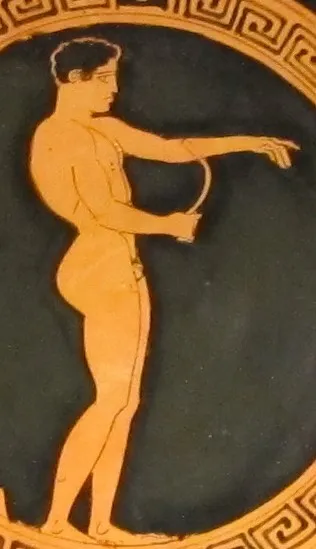
Kallipateira — sometimes spelled Callipateira — was a widow from a legendary athletic family on the island of Rhodes. Her father had been an Olympic champion. Her brothers had been Olympic champions. And when her son Peisirodos was old enough to compete at Olympia, she was determined to see him race.
 Photo: Kallipateira, via clio-cr.clionautes.org
So she disguised herself as a male trainer, wrapped herself in the appropriate clothing, and got herself into the stadium.
When her son won, she couldn't contain herself. She leapt over the barrier separating the trainers from the track — and in doing so, her disguise was exposed. She was a woman. She had broken the most sacred rule of the games.
The judges faced a dilemma. The penalty was death. But Kallipateira was the daughter, sister, and now mother of Olympic champions. Executing her felt impossible. In the end, she was pardoned — but the incident reportedly prompted a new rule requiring all trainers, not just athletes, to enter the stadium completely unclothed, making future disguises considerably more difficult.
It's a story that feels almost cinematic. A mother, a disguise, a desperate leap over a barrier, and a moment that briefly cracked open the wall between women and the ancient world's greatest sporting stage.
The Games Women Actually Had
While the Olympic Games remained locked to female athletes, ancient Greece wasn't entirely without women's athletic competition. The Heraean Games — named for Hera, queen of the gods and wife of Zeus — offered women their own festival at Olympia, though on a much smaller scale.
The Heraean Games featured a single event: a foot race roughly two-thirds the length of the men's stadion course. Winners received an olive crown, similar to the male Olympic champions, and were permitted to dedicate painted portraits of themselves in the Temple of Hera at Olympia.
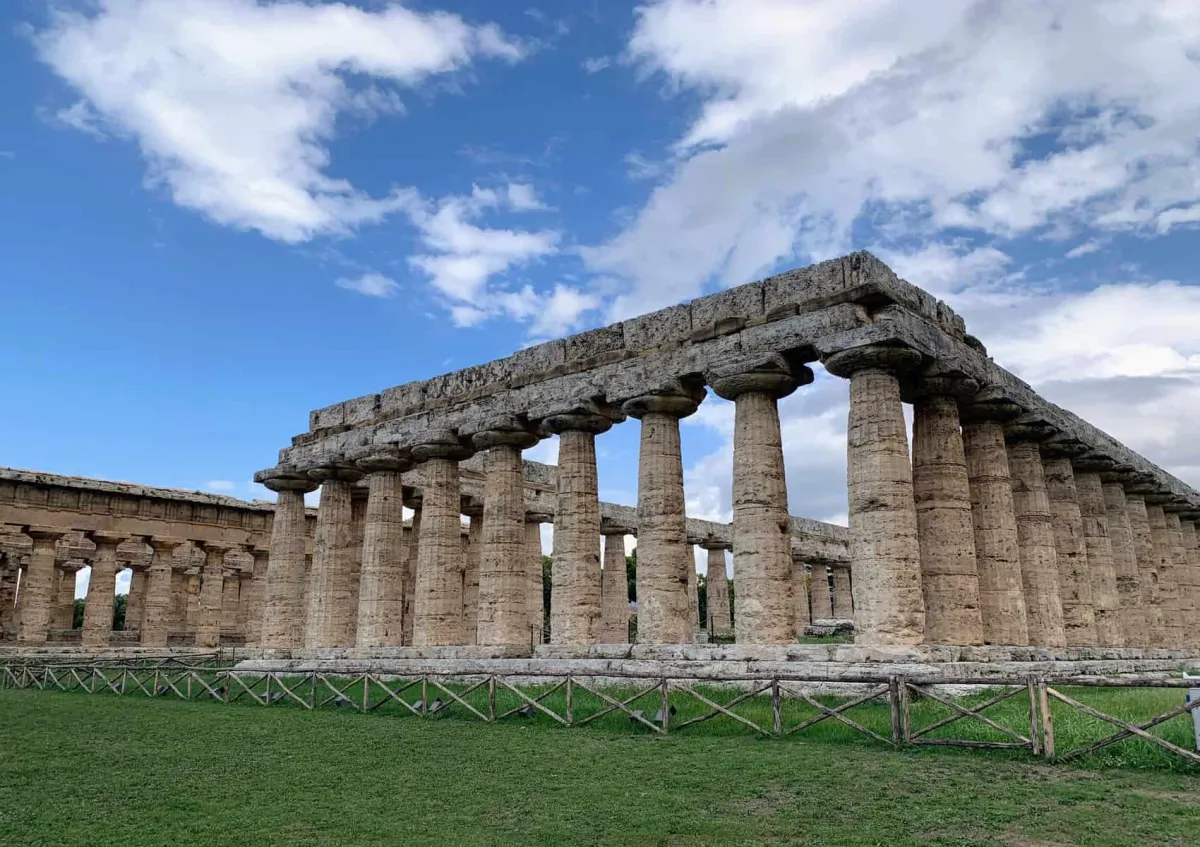 Photo: Temple of Hera, via lionsinthepiazza.com
It wasn't the Olympics. The prestige wasn't comparable, the audience was smaller, and the event list was a fraction of the men's program. But it mattered. Women were competing, winning, and being honored in the same sacred space where male champions had run for generations. That wasn't nothing.
Other regional festivals across the Greek world also featured female athletic competitions, suggesting that women's sport existed in ancient Greece not as a radical exception, but as a quieter, less celebrated parallel tradition that history has largely overlooked.
Drawing the Line to Modern Sport
The ancient Olympics ended around 393 AD when the Roman Emperor Theodosius I, a Christian, abolished pagan festivals. When the modern Games were revived in Athens in 1896, they were built by men, for men — and the ancient exclusion carried forward into the modern era almost by default.
No women competed in Athens in 1896. When women did begin appearing at the modern Olympics, it was gradually and with significant resistance. Women competed in tennis and golf at the 1900 Paris Games. Track and field — the heartbeat of the Olympics since ancient Olympia — didn't open its doors to female athletes until 1928, and even then only in a limited number of events.
The marathon, the signature distance event of the modern Games, wasn't open to women until 1984 in Los Angeles — a fact that still feels staggering when you say it out loud.
Today, female athletes represent roughly half of all Olympic competitors, and women's events draw some of the largest television audiences of any Olympic Games. The transformation from ancient exclusion to near-equal participation took the better part of three thousand years — but it happened.
Why This History Still Runs With Us
Kallipateira leaping over that barrier at Olympia isn't just a curiosity from the ancient world. It's the opening chapter of a very long story about who gets to compete, who gets to be seen, and who decides the rules.
Every time a female sprinter explodes off the starting blocks at an Olympic Games — in front of billions of viewers, with full records and full recognition — she's racing against a history that tried very hard to keep her off the track entirely.
The ancient Greeks built the foundation of competitive sport. They also built some of its most stubborn walls. Understanding both is how you appreciate how far the sport has actually come — and how much the record books would look different if those walls had come down a few centuries earlier.