The Marathon Before Marathons: Ancient Greece's Forgotten Distance Beast That Would Humble Today's Elites

The Race That Time Forgot
Everyone knows the stadion—that famous 200-meter sprint that launched the Olympics in 776 BC. Most people have heard of the marathon and its legendary origin story. But sandwiched between these iconic races was something that would make modern distance runners break out in a cold sweat: the dolichos, ancient Greece's answer to long-distance torture.
Imagine lining up for a race where you don't know if you'll be running 12, 20, or 24 laps around a dirt track in sandals—or more likely, barefoot. Welcome to the dolichos, the event that separated the true endurance warriors from everyone else in ancient Greece.
When "Long Distance" Meant Something Different
The dolichos first appeared in the Olympic Games around 720 BC, making it one of the earliest additions to the original stadion sprint. The name literally means "long race," but defining exactly how long gets complicated fast.
 Photo: Olympic Games, via mkautobreakers.co.uk
Unlike modern standardized distances, the dolichos varied depending on the venue and occasion. At Olympia, it typically covered 20 stadia (roughly 2.4 miles), but other festivals featured versions ranging from 7 to 24 stadia. That longer version would clock in around 3 miles—not exactly a marathon, but a serious test of endurance by ancient standards.
Here's where it gets interesting for modern runners: these weren't the groomed tracks we're used to today. Picture running multiple miles on a dirt surface that was probably uneven, possibly dusty, and definitely unforgiving on bare feet. No water stations, no cheering crowds at mile markers, just you versus the distance in the Mediterranean heat.
The Forgotten Champions
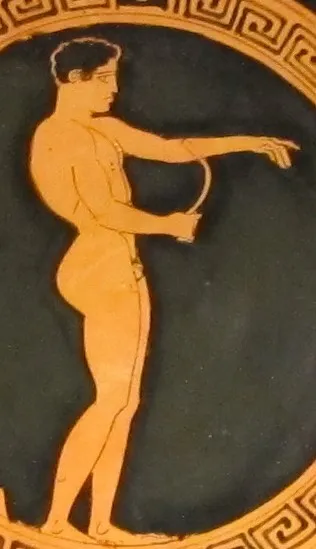
Unlike the sprinters who got most of the glory, dolichos winners were revered as endurance heroes. These weren't just fast runners—they were athletes who could maintain pace over a distance that tested both physical and mental toughness.
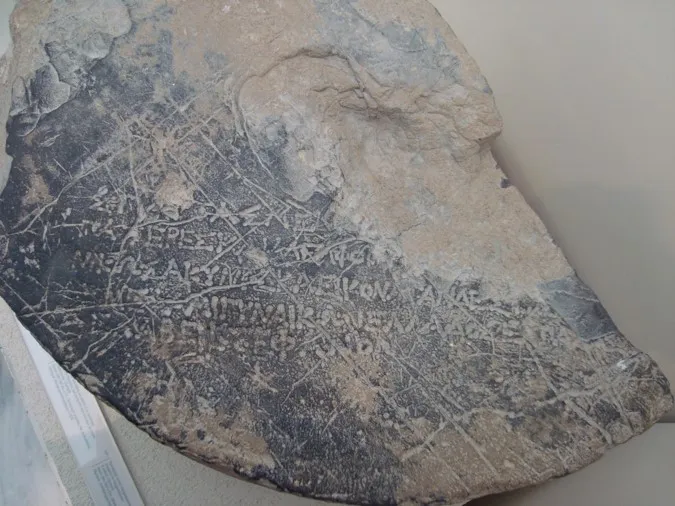
One name that survived the centuries: Ergoteles of Himera, who won the dolichos at two consecutive Olympics (472 and 468 BC). Ancient sources describe him as a master of race tactics, able to control the pace and unleash devastating finishing kicks that would leave competitors gasping in his wake.
 Photo: Ergoteles of Himera, via ftopx.com
What's fascinating is that these ancient distance specialists developed many of the same tactical approaches we see in modern middle and long-distance racing. They understood pacing, they knew how to position themselves in the pack, and they could time their moves for maximum impact.
Ancient Pace vs. Modern Speed
So how would ancient dolichos champions stack up against today's elite distance runners? The honest answer is we're working with educated guesses, but the clues we have are intriguing.
Based on ancient accounts and modern analysis of the course conditions, historians estimate that elite dolichos runners probably averaged somewhere between 6:30 and 7:30 per mile pace for their races. That might sound slow compared to modern Olympic standards, but consider the context: dirt tracks, no specialized footwear, no scientific training methods, and no understanding of sports nutrition.
Put another way, these ancient athletes were probably running times that would be competitive at a decent high school level today—which is remarkable when you consider they were essentially figuring out distance running from scratch.
The Training Revolution They Never Had
What really sets modern distance running apart isn't just faster times—it's the systematic approach to training that ancient athletes never developed. Today's elite distance runners follow periodized training plans that carefully balance speed work, tempo runs, long slow distance, and recovery.
Ancient Greek athletes trained hard, but their methods were based more on tradition and trial-and-error than scientific understanding. They didn't know about VO2 max, lactate threshold, or glycogen depletion. They just knew that running a lot made you better at running far.
This makes their achievements even more impressive. Without modern training theory, sports science, or even basic understanding of exercise physiology, ancient dolichos runners were still covering serious distances at respectable paces.
The Mental Game Across Millennia
One area where ancient and modern distance runners would find common ground is the psychological challenge. The dolichos was as much a test of mental toughness as physical endurance, and that hasn't changed.
Ancient sources describe the same psychological battles that modern distance runners know intimately: the temptation to drop out when the pace gets uncomfortable, the need to stay mentally focused during repetitive lap after lap, the strategic thinking required to position yourself for a strong finish.
Some ancient training texts even describe visualization techniques and mental preparation methods that wouldn't look out of place in a modern sports psychology manual. The Greeks understood that conquering distance was as much about training the mind as training the body.
Why the Dolichos Disappeared
Unlike the stadion sprint, which survived (in modified form) as the 200-meter dash, the dolichos vanished when the ancient Olympics ended in 393 AD. When the modern Olympics were revived in 1896, organizers focused on events that had clear modern equivalents or compelling historical stories.
The marathon got included because of its connection to the legendary run from Marathon to Athens. Middle-distance events like the 800m and 1500m were already popular in European athletics. But the dolichos? It fell through the cracks of history, too long to be a middle-distance race and too short to capture the romantic appeal of the marathon.
Lessons for Modern Distance Running
What can today's runners learn from this forgotten race? First, that the fundamentals of distance running—pacing, tactics, mental toughness—haven't changed in 2,800 years. Second, that our modern advantages in training, equipment, and nutrition represent a relatively recent revolution in human performance.
Most importantly, the dolichos reminds us that the desire to test ourselves over distance is deeply human. Those ancient Greek runners lining up for 20+ laps around a dirt track were driven by the same impulses that send modern runners to marathons, ultramarathons, and trail races: the need to find out what they were capable of when pushed to their limits.
The Race Lives On
While the dolichos itself is gone, its spirit lives on in modern distance running. Every time runners line up for a 5K, 10K, or longer race, they're participating in the same fundamental challenge that captivated ancient Greek audiences: How far and how fast can human endurance take us?
The next time you're grinding through the middle miles of a tough race, remember those ancient dolichos runners circling their dirt track under the Greek sun. They didn't have GPS watches, energy gels, or moisture-wicking fabrics—just the same determination to keep moving forward that drives distance runners today.
In that sense, every distance race is a dolichos, and every distance runner is connected to those forgotten champions who first figured out that sometimes the greatest victory comes not from running fast, but from refusing to stop.