Stolen Blueprint: How America Took a Dead Empire's Athletic Ideal and Ran With It
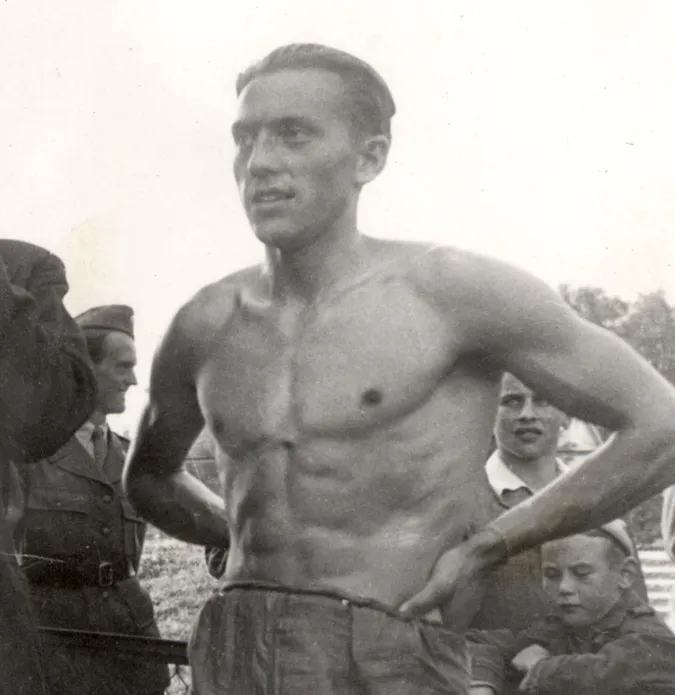
Photo: Swedish Olympic Committee, Public domain, via Wikimedia Commons
Stolen Blueprint: How America Took a Dead Empire's Athletic Ideal and Ran With It
There's a particular kind of American confidence that shows up in sports: the confidence of someone who arrives late to the party, learns the rules in about fifteen minutes, and then wins the whole thing. That's more or less what happened with the decathlon.
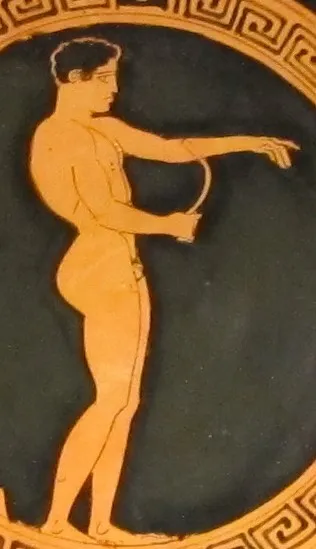
The event didn't start in the United States. It didn't even start in the modern era. Its roots stretch back to ancient Olympia, where Greek athletes competed in the pentathlon — five disciplines designed not to crown a specialist, but to identify the most complete human being on the field.
The Greek Idea of the Whole Man
In ancient Greece, the pentathlon wasn't just a competition. It was a philosophical statement. The five events — running, long jump, discus throw, javelin throw, and wrestling — were chosen because together they tested every quality the Greeks believed a man should possess: speed, strength, agility, precision, and the will to fight.
The athlete who won wasn't the fastest sprinter or the strongest thrower. He was the one who could do everything well. The Greeks called this ideal arete — a kind of all-encompassing excellence that went beyond any single skill. Winning the pentathlon meant you were, in the eyes of ancient Greek society, as close to perfect as a human being could get.
That idea didn't survive the fall of Rome. When the ancient Olympics were abolished in 393 AD, the pentathlon went with them, disappearing for over a millennium along with the rest of organized athletic competition.
Europe Rebuilds the Machine
When Pierre de Coubertin and his colleagues revived the Olympic Games in 1896, they brought back a version of the pentathlon — but the real transformation came in 1912, when Swedish administrators introduced the decathlon at the Stockholm Olympics. Ten events over two days. The concept was the same as the Greek original: find the complete athlete. But the execution was entirely new, built around the modern track and field program rather than the demands of ancient warfare.
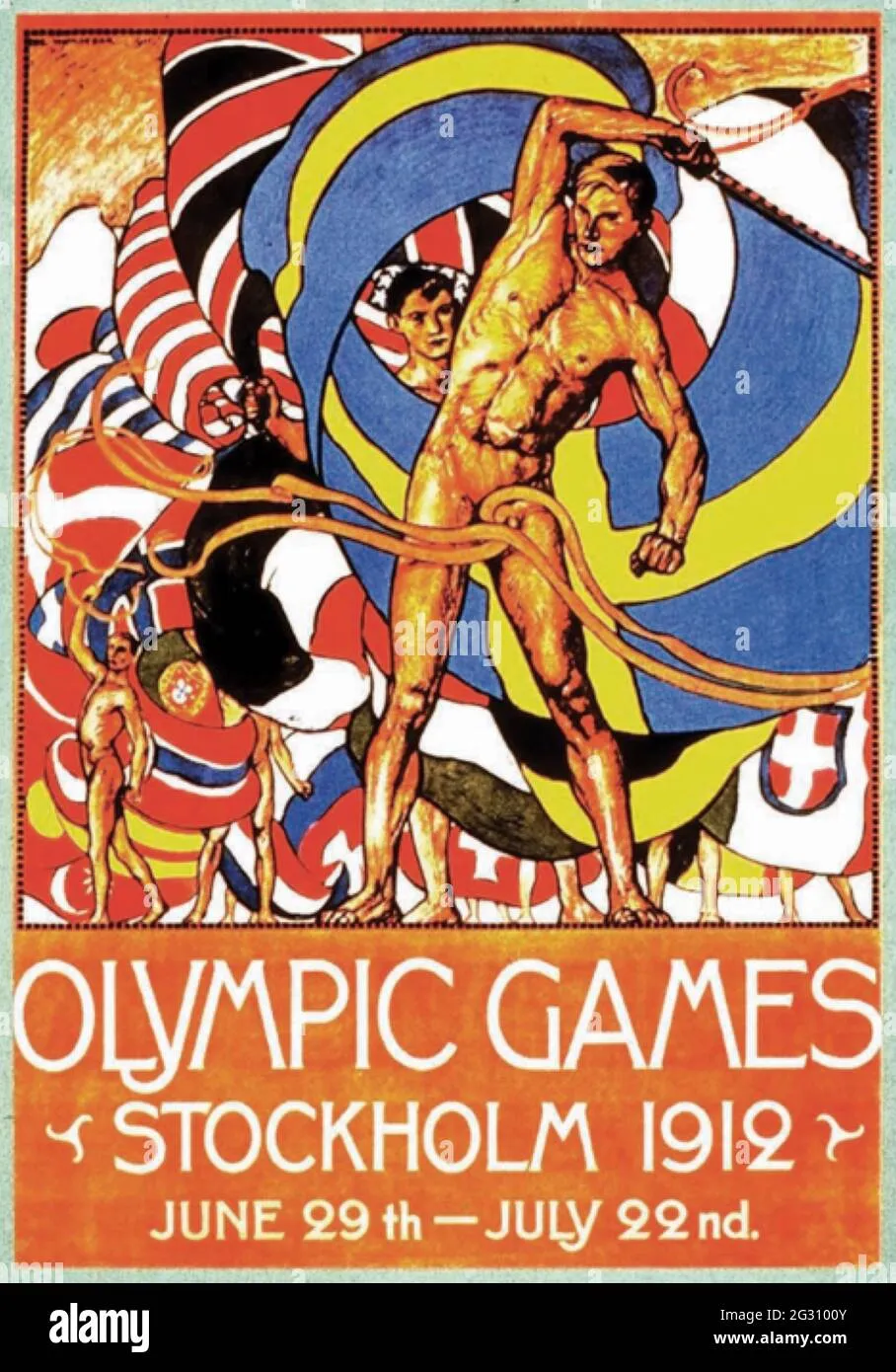 Photo: Stockholm Olympics, via c8.alamy.com
The early decathlon was a European project. Scandinavian athletes dominated the first iterations of the event, and for a while it looked like the decathlon might become a Nordic specialty — methodical, patient, built for athletes who trained across disciplines in a culture that celebrated endurance and consistency.
Then the Americans showed up.
How the U.S. Made It Their Own
Jim Thorpe, a Native American athlete from Oklahoma, won the decathlon at the 1912 Stockholm Games with such dominance that King Gustav V of Sweden reportedly told him, "You, sir, are the greatest athlete in the world." Thorpe's performance was later stripped due to a professionalism controversy — a decision that remains one of the most contested calls in Olympic history — but his presence signaled something important: American athletes had a natural affinity for combined events.
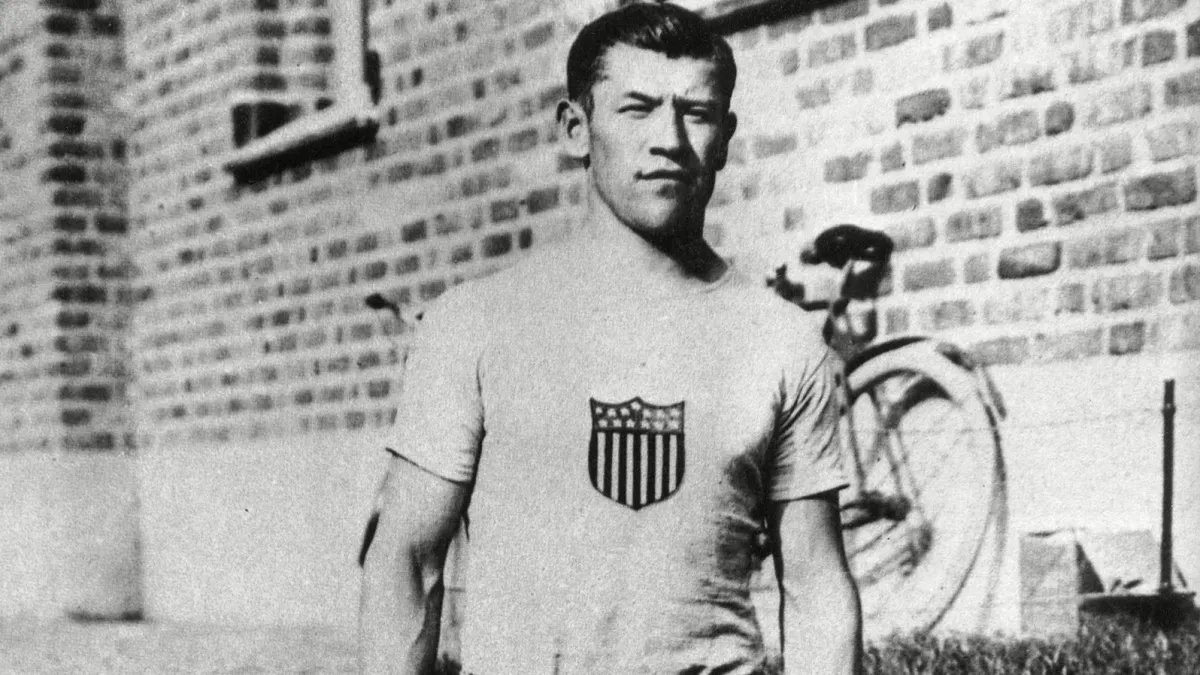 Photo: Jim Thorpe, via media.cnn.com
Over the following decades, that affinity hardened into dominance. Bob Mathias won the Olympic decathlon in 1948 at just 17 years old, then won it again in 1952. Rafer Johnson took gold in 1960. Bill Toomey in 1968. Bruce Jenner in 1976. Dan O'Brien in 1992. Bryan Clay in 2008. The list reads less like a collection of individual champions and more like a dynasty — a rolling succession of American athletes who treated the decathlon as something close to a birthright.
No other nation has produced more world-class decathletes across the span of the modern Olympics. That's not a coincidence.
Why America Thrives in Ten Events
Part of the answer is structural. American collegiate athletics — particularly the NCAA track and field system — is uniquely suited to developing multi-event athletes. College programs have the resources to train athletes across sprinting, jumping, and throwing disciplines simultaneously. Coaches specialize in combined events. Scholarships are offered specifically for decathlon and heptathlon competitors. The infrastructure for producing complete athletes exists in a way it simply doesn't in most other countries.
But there's also a cultural dimension. American sports culture has always celebrated the idea of the versatile athlete — the quarterback who can throw and run, the basketball player who can score and defend, the baseball prospect who can hit for power and average. The decathlon fits neatly into that tradition. It's the track and field version of the five-tool player.
The Greeks had arete. America has the multi-sport athlete. Different language, same instinct.
What the Evolution Reveals
The journey from the ancient pentathlon to the modern decathlon is really a story about what each era decided to value in an athlete. The Greeks wanted warriors. The Swedes wanted endurance. The Americans — consciously or not — wanted proof that no single discipline could contain the best of their athletes.
The decathlon has changed technically over the years. Scoring tables have been revised. Equipment has improved. Training methods have transformed what's physically possible. But the core question the event asks hasn't changed since a Greek athlete stood in the sand at Olympia two and a half thousand years ago: who here can do everything?
For most of the modern Olympic era, the answer has had an American accent.
That's not stealing, exactly. It's more like what happens when a good idea gets picked up by people who really know what to do with it. The Greeks invented the concept. The Europeans rebuilt the framework. And the Americans, as they tend to do, ran the whole thing into a trophy case.
The blueprint was borrowed. What got built with it was something else entirely.