The Stopwatch That Changed Everything: How One Man's Obsession With Speed Gave America Its First Athletic Identity
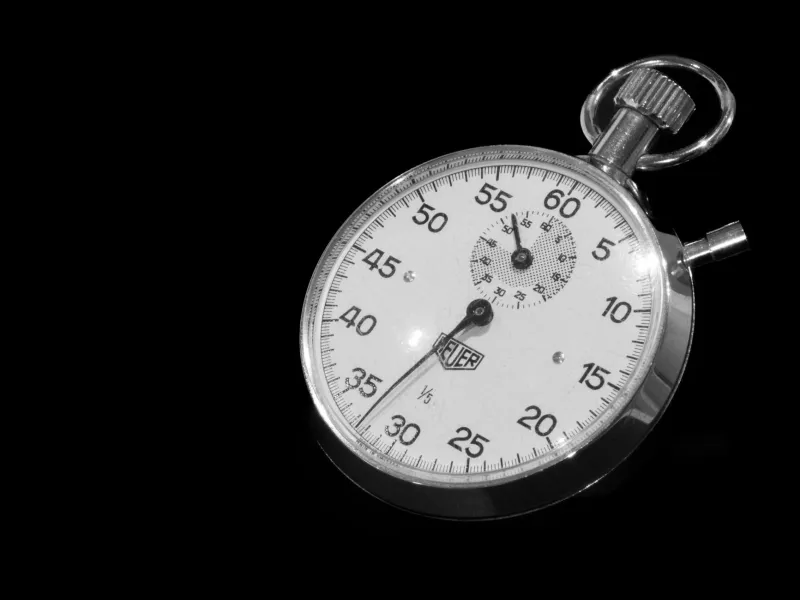
The Stopwatch That Changed Everything: How One Man's Obsession With Speed Gave America Its First Athletic Identity
In 1876, while most Americans were celebrating the centennial of their independence, a quiet revolution was brewing on college campuses across the nation. It wasn't political or industrial — it was chronological. For the first time in human history, athletic performance was being measured not just by who won, but by exactly how fast they did it.
The Birth of American Time Obsession
The man who started it all wasn't a famous athlete or wealthy benefactor. He was a college professor named William Curtis, who carried a pocket watch to track meets at Princeton University. Curtis had a radical idea: what if winning wasn't enough? What if Americans could chase something bigger than just beating the guy next to them?
 Photo: Princeton University, via www.grundschule-wildau.de
 Photo: William Curtis, via hips.hearstapps.com
This obsession with precision timing would become uniquely American. While European athletics still focused on classical Olympic ideals of participation and honor, Americans were busy creating something entirely new — the cult of the record.
"Time doesn't lie," Curtis reportedly told his athletes. "It doesn't care about your family name or your connections. It only cares about how fast you can move."
From College Meets to National Mania
By the 1880s, Curtis's timing methods had spread like wildfire across American universities. Harvard, Yale, and Princeton weren't just competing against each other anymore — they were competing against the clock itself. Students would gather around hand-written record boards, studying times down to the tenth of a second.
The impact was immediate and profound. American college students began training with an intensity that shocked European visitors. They weren't just running for fun or fitness — they were chasing numbers that would outlast their names.
This period saw the birth of the Amateur Athletic Union (AAU) in 1888, an organization that would standardize American athletics around one core principle: official records. The AAU didn't just sanction competitions — it created a national database of American athletic achievement.
 Photo: Amateur Athletic Union, via www.costaturkiye.com
The Psychology of the Pursuit
What Curtis had accidentally created was a uniquely American approach to competition. Unlike ancient Greek athletics, which celebrated the ideal human form, or British sport, which emphasized character building, American athletics became about measurable improvement.
This shift had profound psychological effects. American athletes weren't just competing against opponents — they were competing against history itself. Every race became a chance to join an exclusive club of record holders, to have your name written in the books alongside the fastest humans who had ever lived.
The stopwatch democratized athletic greatness in a way that perfectly matched American ideals. It didn't matter if you were rich or poor, connected or unknown — if you could run a faster time, you earned your place in history.
Building a National Identity Through Numbers
By the 1890s, American newspapers were publishing weekly updates on national records. Citizens who had never set foot on a track could tell you the current record in the mile run or the 100-yard dash. Athletic achievement had become a source of national pride in a way that was unprecedented in human history.
When American athletes began competing internationally, they brought this record-obsessed mentality with them. European competitors were often stunned by the American approach — the detailed training logs, the obsession with split times, the celebration of marginal improvements.
The Template for American Greatness
Curtis's timing revolution created a template that extended far beyond athletics. The American obsession with quantifiable improvement, with breaking barriers and setting new standards, became embedded in the national DNA.
This mentality would later drive American dominance in everything from aviation records to space exploration. The same culture that celebrated a runner shaving a tenth of a second off the 100-yard dash would eventually celebrate breaking the sound barrier and reaching the moon.
Ancient Greece vs. American Innovation
The contrast with ancient Greek athletics couldn't be more stark. Greek Olympic champions were celebrated for embodying physical perfection and honoring the gods. American record holders were celebrated for pushing human limits and proving what was possible.
Where ancient Greek athletics looked backward to mythical ideals, American athletics looked forward to undefined possibilities. The stopwatch became a tool for measuring not just speed, but human potential itself.
The Legacy Lives On
Today, American athletics remains defined by the culture Curtis created over 140 years ago. Every high school track meet features electronic timing to the hundredth of a second. Every college program tracks performance metrics that would astound those early Princeton runners.
The modern American sports obsession with statistics, with breaking down performance into measurable components, with celebrating marginal gains — all of it traces back to one professor with a pocket watch who believed that time was the ultimate judge of athletic greatness.
When you watch American athletes today, whether they're chasing world records or personal bests, you're witnessing the continuation of Curtis's revolution. The stopwatch that changed everything is still ticking, still pushing Americans to run faster, jump higher, and throw farther than anyone thought possible.
In a nation built on the idea that anyone can achieve greatness through hard work and determination, the stopwatch became the perfect measuring stick. It doesn't care about your background — only about your results. And in that simple truth, William Curtis gave America its first athletic identity: a nation that measures greatness in seconds, and never stops chasing the next record to break.